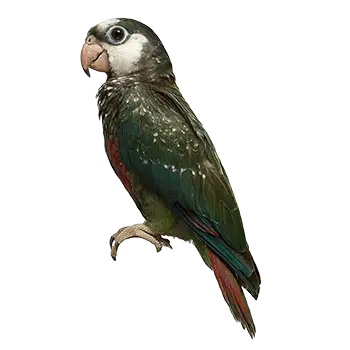

Weaning is one of the most consequential developmental events in a young White-Capped Pionus's life, and how it is managed has lasting effects on the bird's physical health, psychological stability, and relationship with food. Unlike some parrot species that wean relatively quickly, Pionus parrots often take a gradual, sometimes unpredictable path toward dietary independence. The process typically begins around eight to ten weeks of age and can extend to fourteen weeks or beyond, depending on the individual bird's readiness and temperament.
The transition should always be guided by the chick's behavior rather than imposed by a predetermined schedule. A juvenile White-Capped Pionus that is approaching readiness for weaning will begin showing interest in solid foods, mouthing and manipulating items in its environment, and may start refusing the syringe or spoon during some feeding sessions. These are encouraging signs, but they do not mean the chick is ready to sustain itself on solid food alone. Continue offering hand-feedings alongside an increasing variety of weaning foods, and allow the chick to determine the pace of the transition.
Appropriate weaning foods for a juvenile White-Capped Pionus include softened, high-quality pellets, finely chopped warm vegetables such as sweet potato, carrot, and peas, cooked whole grains like quinoa and brown rice, and small pieces of soft fruit. Present these foods in shallow, stable dishes at the bottom of the cage or weaning enclosure where the chick can easily access them. Scatter some food directly on a clean surface to encourage foraging behavior, which is instinctive and psychologically enriching even in a hand-raised bird.
Forced weaning, the practice of abruptly withdrawing hand-feedings on a fixed date regardless of the chick's consumption of solid food, is harmful and should never be used. A chick that is force-weaned may become chronically stressed, lose weight to a dangerous degree, develop food aversions, or regress behaviorally. Weight monitoring during the weaning period is essential. A modest weight loss of five to ten percent from peak baby weight is normal as the chick becomes more active, but losses beyond this range or any rapid decline require a return to supplemental hand-feedings and a veterinary consultation.