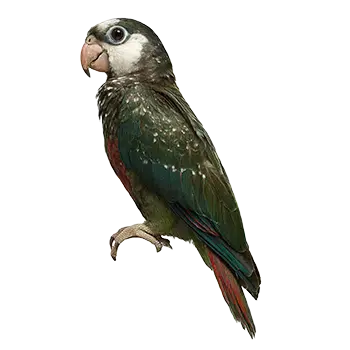

The First 24 Hours

White-Capped Pionus chicks hatch after an incubation period of approximately 24 to 26 days, emerging as tiny, nearly helpless creatures weighing between 6 and 8 grams. Like all Pionus species, they are altricial at birth, meaning they arrive blind, essentially naked except for sparse tufts of pale down, and entirely reliant on external warmth and feeding. The first day of a chick's life outside the egg is a precarious transition, and the caregiver's role during these hours is to ensure stable warmth, a clean environment, and the correct timing of the first feeding.

In a parent-raised clutch, the hen typically begins feeding the chick within hours of hatching. She provides crop milk and partially digested food that delivers not only essential calories but also beneficial gut flora critical for establishing the chick's digestive microbiome. If you are hand-raising the chick, the first feeding should not be attempted until the residual yolk sac has been fully absorbed. This process generally takes between eight and twelve hours after hatching. Feeding before the yolk sac is absorbed risks digestive obstruction and can introduce bacteria into an immature gut that is not yet ready to process external food.

The brooder must be prepared well before the expected hatch date. For a newly hatched White-Capped Pionus, maintain the brooder temperature between 96 and 99 degrees Fahrenheit with a relative humidity of 60 to 65 percent. Use a reliable digital thermometer and hygrometer placed at chick level rather than mounted on the brooder wall, where readings can be misleading. Temperature is the single most critical variable during these hours, as the chick has no capacity to generate or retain its own body heat.

Assess the chick's condition immediately after hatching. A healthy newborn White-Capped Pionus will have pinkish skin with visible blood vessels beneath the surface, respond to gentle tactile stimulation near the beak with a feeding reflex, and vocalize softly when disturbed. A chick that appears pale, bluish, or unresponsive should be examined by an avian veterinarian without delay. Keep handling to an absolute minimum during the first 24 hours, as excessive manipulation adds stress during this vulnerable window.

Feeding & Nutrition

Nutrition during the newborn period lays the groundwork for every aspect of a White-Capped Pionus chick's future health, from skeletal density and feather integrity to immune resilience and neurological development. Although Pionus parrots are not as large as macaws or cockatoos, their nutritional requirements during the neonatal phase are no less exacting, and errors in formula preparation, feeding temperature, or feeding technique can produce consequences that persist long after the chick has fledged.

Hand-fed chicks should receive a commercially formulated hand-feeding mixture specifically designed for psittacine neonates. Mix the formula fresh for every feeding session according to the manufacturer's directions, paying close attention to the recommended consistency, which should be thinner during the first few days and gradually thickened as the chick's crop capacity and digestive efficiency increase. The formula temperature must be between 104 and 108 degrees Fahrenheit at the moment it enters the chick's beak. Always verify the temperature with a cooking or laboratory thermometer rather than estimating by touch, as formula that is even a few degrees too hot can cause thermal crop burns that may not become apparent for days.

During the first week, feedings should be spaced approximately every two to three hours, including through the night. A newborn White-Capped Pionus has a very small crop, so individual feeding volumes will be tiny, often just a fraction of a milliliter at first. As the chick grows and the crop stretches, both the volume per feeding and the interval between feedings will increase. By the end of the second week, most chicks can transition to feedings every three to four hours, and nighttime feedings may be reduced or eliminated if the chick's weight gain remains consistent.

Feeding technique is as important as formula quality. Use a small, needleless syringe or a bent spoon, depending on your comfort and experience. Deliver the formula slowly, allowing the chick to dictate the pace with its natural pumping motion. If the chick pauses or turns its head away, stop immediately. Forcing formula risks aspiration, a potentially fatal event in which liquid enters the trachea and lungs. After each feeding, gently clean any formula residue from the chick's beak and face with a warm, damp cloth to prevent bacterial buildup and skin irritation.

Maintain a detailed feeding log from the first day. Record the time of each feeding, the volume consumed, the formula consistency and temperature, and the chick's weight taken at the same time each day on a gram-accurate scale. Consistent weight gain of roughly 8 to 12 percent of body weight per day during the first two weeks is a strong indicator that the feeding regimen is appropriate. Any stall or decline in weight over two consecutive weigh-ins warrants an immediate veterinary evaluation.

Developmental Milestones

White-Capped Pionus chicks develop through a predictable sequence of milestones, though individual variation is normal. Understanding the typical developmental timeline allows caregivers to recognize healthy progress and to identify potential delays that may warrant veterinary attention. As a mid-sized Pionus species, the White-Capped Pionus develops somewhat more quickly than larger parrots but still requires weeks of attentive care before anything resembling independence emerges.

During the first week, the chick remains essentially immobile, blind, and covered only in thin natal down. Its activity is limited to feeding responses and slight shifts in position within the brooder. The crop should empty completely between feedings, typically within three to four hours, which indicates a functioning digestive system. By the end of the first week, the chick may have nearly doubled its hatch weight, a dramatic growth rate that underscores the importance of precise nutrition.

The eyes begin to slit open between days eight and twelve, and by the end of the second week, most chicks have their eyes fully open. This marks a significant shift in the chick's awareness of its surroundings. Pin feathers begin erupting along the wing margins and the dorsal tract during this same window, appearing as small, waxy tubes protruding through the skin. The emergence of pin feathers can cause mild discomfort, and the chick may scratch or fidget more than usual.

Between weeks three and five, feather development accelerates rapidly. The characteristic plumage of the White-Capped Pionus begins to show itself, with the distinctive white forehead patch becoming visible as facial feathers emerge. Body contour feathers replace down across the torso, and tail feathers begin extending. The chick's legs strengthen noticeably during this period, and it will begin attempting to grip the brooder substrate and eventually perch on flat surfaces. Vocalizations diversify beyond simple feeding calls, with the chick producing a wider repertoire of chirps and quiet squeaks that signal increasing neurological maturity.

Temperature & Environment

Environmental management is the cornerstone of neonatal survival for White-Capped Pionus chicks. Because they hatch without the insulating feather coat that adult birds rely on for thermoregulation, chicks are completely dependent on their surroundings for warmth during the first several weeks of life. A properly configured brooder is not a luxury but a survival necessity, and even experienced aviculturists can lose chicks to environmental failures if equipment malfunctions or monitoring lapses.

For the first week of life, the brooder temperature should be maintained between 96 and 99 degrees Fahrenheit. Beginning in the second week, reduce the temperature by approximately one to two degrees every three to four days, closely observing the chick's behavior for signs of thermal stress. A comfortable chick rests quietly, feeds eagerly, and shows relaxed body posture. A chick that is too cold will tremble, tuck itself into a tight ball, and vocalize persistently. Overheated chicks pant with open beaks, hold their wings away from the body, and may become lethargic. By the time the chick is four to five weeks old and substantially feathered, the brooder temperature can typically be reduced to the low 80s.

Humidity control is equally critical and receives less attention than it deserves in many care guides. The ideal relative humidity for a White-Capped Pionus neonate is 55 to 65 percent. Insufficient humidity can lead to dehydration, thickened crop contents that are difficult for the chick to process, and poor feather sheath development. Excessive humidity encourages the proliferation of bacteria and fungi, particularly Aspergillus, to which Pionus parrots as a genus carry a heightened susceptibility. Position a digital hygrometer inside the brooder and check it at every feeding interval.

The brooder substrate and cleanliness protocols matter more than many beginners realize. Use paper towels or soft, lint-free cloth liners during the first two weeks, as particulate bedding materials such as wood shavings or crushed walnut shells pose ingestion and respiratory hazards. Change the liner at every feeding or whenever it becomes soiled. The brooder walls and floor should be disinfected daily with an avian-safe disinfectant, rinsed thoroughly, and dried before the chick is returned. Ensure the brooder is positioned away from drafts, direct sunlight, and sources of vibration or sudden noise.

Ventilation is the final component of proper environmental management. The brooder must allow adequate air exchange to prevent the buildup of carbon dioxide, ammonia from droppings, and moisture. However, ventilation openings should be positioned so that incoming air does not create a direct draft across the chick. A gentle, indirect airflow that refreshes the atmosphere without chilling the occupant is the goal.

Early Socialization

White-Capped Pionus parrots are known among aviculturists for their gentle, somewhat reserved temperament. They tend to be less demanding than some other parrot species, but they are also more prone to shyness and nervousness if early socialization is inadequate. The neonatal and early post-hatch period is the beginning of a critical socialization window that will shape the bird's comfort with humans, tolerance of novel stimuli, and overall psychological resilience throughout its life.

For hand-raised chicks, the socialization process begins with every feeding interaction. The chick quickly learns to associate the sight, sound, and touch of its human caregiver with the comfort of a full crop and warmth. Speak softly and consistently during each feeding session, using a calm, even tone. Avoid wearing strong fragrances, brightly colored or patterned clothing that changes from day to day, or making abrupt movements that could startle the chick. Consistency and predictability build the trust that forms the foundation of the human-bird bond.

Once the chick's eyes are open and it begins responding to visual stimuli, typically around the second week, introduce mild environmental enrichment. Placing small, smooth, non-toxic objects of varied textures and muted colors near the chick in the brooder encourages tactile exploration and cognitive engagement. Soft background sounds such as quiet conversation, gentle instrumental music, or typical household ambient noise help the chick acclimate to the acoustic environment it will inhabit as a companion bird. Sudden loud noises, including barking dogs, slamming doors, or television at high volume, should be avoided during this early phase.

Parent-raised White-Capped Pionus chicks benefit from brief, gentle handling sessions beginning around two to three weeks of age. These sessions should last only a few minutes and should never agitate the parents to the point where they refuse to return to the nest. The purpose is to accustom the chick to human scent and touch while the parents continue to provide the primary caregiving and species-appropriate social modeling. Chicks that receive no human contact during the neonatal period often develop a lasting wariness of people that is difficult to overcome once the critical socialization window closes.

Health Screening & Veterinary Visits

Proactive veterinary care during the neonatal period can mean the difference between a thriving White-Capped Pionus and one that carries undetected health problems into later life. Not all veterinarians are equipped to evaluate psittacine neonates, so locate an avian veterinarian with specific experience in parrot chick medicine well before the expected hatch date. Ideally, this relationship should be established before breeding is even undertaken, so that emergency consultations can happen without the delay of finding a qualified practitioner.

The first veterinary examination should occur within the first three to five days of life. The veterinarian will perform a thorough physical assessment, evaluating the chick's hydration status, skin color and turgor, umbilical closure, musculoskeletal alignment, and overall body condition. A crop swab is typically collected and examined under a microscope to screen for bacterial overgrowth, yeast organisms such as Candida, and other abnormalities in the crop flora. A fecal gram stain provides additional information about gut health and can reveal early signs of infection.

Depending on the chick's origin and the veterinarian's clinical judgment, blood testing may be recommended to screen for significant avian diseases. Psittacine Beak and Feather Disease, Polyomavirus, and Chlamydiosis are among the most consequential conditions to rule out early. Pionus parrots as a genus are notably susceptible to Aspergillosis, a fungal respiratory infection, so the veterinarian may also evaluate the chick's respiratory function with particular care, listening for any abnormal sounds and assessing the nares for discharge.

Between veterinary visits, the caregiver serves as the chick's first line of health surveillance. Weigh the chick daily on a gram-accurate scale at a consistent time, preferably before the first feeding of the day. Record weights alongside feeding volumes, crop emptying times, and a description of droppings. Normal droppings consist of a formed dark fecal component, a white to off-white urate portion, and a small amount of clear urine. Any shift toward watery, discolored, foul-smelling, or abnormally frequent droppings should be reported to the veterinarian promptly.

Respiratory monitoring deserves special emphasis with Pionus chicks. Listen for any clicking, wheezing, or raspy breathing sounds, particularly after feedings or during handling. White-Capped Pionus parrots sometimes exhibit a wheezing sound when stressed that can be mistaken for respiratory illness; an experienced avian veterinarian can help distinguish between stress-related vocalizations and genuine respiratory compromise. Any nasal discharge, periorbital swelling, or open-mouth breathing at rest is abnormal and requires immediate evaluation.

When to Worry

Learning to distinguish between normal newborn behavior and genuine warning signs is a skill that develops with experience, but certain red flags should prompt immediate action regardless of a caregiver's experience level. White-Capped Pionus chicks, like all parrot neonates, can deteriorate rapidly once illness takes hold, so erring on the side of caution is always the safer course.

Weight loss or stagnation is the single most reliable early indicator of trouble. A healthy chick gaining weight steadily and then showing a flat or declining weight curve over two or more consecutive weigh-ins is telling you that something has changed. The cause could be an infection brewing in the crop or gut, an environmental stressor that is suppressing appetite, formula that has been improperly prepared, or the early stages of a systemic illness. Do not wait to see if the trend reverses on its own. Contact your avian veterinarian and provide your weight log so the severity of the decline can be assessed in context.

Crop function abnormalities are another major category of concern. The crop should empty fully between feedings within a predictable window, generally three to four hours for a very young chick. A crop that remains distended, feels doughy or firm, or emits a sour odor is exhibiting signs of crop stasis, a condition in which the crop contents are not passing into the lower digestive tract at a normal rate. Crop stasis can result from feeding formula at the wrong temperature, bacterial or fungal overgrowth in the crop, or a foreign body obstruction. It requires veterinary diagnosis and treatment, as continued feeding into a static crop risks aspiration and worsens the underlying condition.

Respiratory signs in a newborn White-Capped Pionus should never be dismissed. Audible breathing sounds such as clicking, wheezing, or gurgling can indicate aspiration of formula, a developing respiratory infection, or Aspergillosis, which is a particular concern in the Pionus genus. Tail bobbing, where the chick's tail moves rhythmically with each breath, is a sign of respiratory effort and indicates that the chick is working harder than normal to breathe. Open-mouth breathing at rest, nasal discharge of any color or consistency, and periorbital puffiness are additional respiratory red flags.

Behavioral changes can be subtle but significant. A chick that was previously responsive to feeding cues and active between meals but becomes limp, quiet, or unresponsive is communicating distress. Similarly, a chick that suddenly refuses to feed or feeds with markedly less vigor than in previous sessions may be experiencing pain, nausea, or systemic malaise. Changes in the character of the chick's vocalizations, particularly a shift from normal contact calls to persistent, high-pitched distress calls or, conversely, an unusual silence, are also meaningful.

Always consult a qualified professional before making any health-related decisions. This content is provided for informational reference only and should not replace professional guidance specific to your animal.