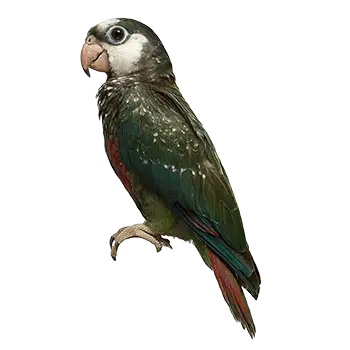

Recognizing the End-of-Life Stage

Determining that a White-Capped Pionus has entered the end-of-life stage is one of the most difficult assessments a caregiver will face. Unlike an acute emergency, the transition from manageable geriatric decline to terminal trajectory is often gradual, and the line between the two can be unclear for weeks or even months. Learning to read the signs that distinguish a bird whose condition is stabilized with supportive care from one whose decline has become irreversible is essential for making compassionate, well-timed decisions.

Weight loss that continues despite adequate caloric availability and dietary support is one of the most significant indicators. A senior White-Capped Pionus in stable geriatric condition may maintain a slightly lower weight than during its prime years, but progressive, unrelenting weight loss that does not respond to nutritional intervention suggests that the body's ability to metabolize and utilize nutrients is failing. The keel bone becomes increasingly prominent, and the bird's overall musculature diminishes visibly over a period of weeks.

Behavioral withdrawal is another hallmark of the end-of-life stage. A bird that previously sought interaction, responded to its caregiver's voice, and maintained interest in its environment may become increasingly passive, spending long periods in a motionless, fluffed posture on its preferred perch or on the cage floor. The bird may stop vocalizing, cease preening, and show little response to stimuli that would normally provoke alertness or curiosity. This withdrawal reflects both the physical exhaustion of a body in systemic decline and, potentially, the neurological effects of organ failure.

Changes in droppings often accompany the end-of-life stage. The droppings may become watery, scanty, or discolored, reflecting reduced food intake, kidney or liver dysfunction, or gastrointestinal compromise. Urates that shift from white to yellow or green may indicate liver failure, while urates that become gritty or chalky may signal renal insufficiency. These changes should be documented and shared with the avian veterinarian, as they provide important diagnostic context.

Respiratory compromise in a terminally declining White-Capped Pionus may manifest as persistent tail bobbing, open-mouth breathing at rest, audible respiratory sounds, or episodes of labored breathing that do not resolve with rest. If Aspergillosis or another chronic respiratory condition has been an ongoing issue, the bird may reach a point where antifungal therapy and supportive care can no longer maintain adequate respiratory function. The veterinarian can help assess whether the respiratory decline is treatable or whether it represents a terminal progression.

Quality-of-Life Assessment

Evaluating quality of life in a declining White-Capped Pionus requires honest, ongoing assessment that balances the caregiver's emotional attachment with an objective appraisal of the bird's daily experience. Several structured quality-of-life scales have been developed for companion animals, and while most were designed with dogs and cats in mind, their underlying principles apply equally to avian patients. The core question is whether the bird is experiencing more comfort than discomfort, more engagement than withdrawal, and more good days than bad ones.

Pain assessment in birds is inherently challenging because parrots, as prey animals, are evolutionarily programmed to conceal pain. However, a White-Capped Pionus in significant pain may display certain behaviors that, taken together, suggest discomfort. These include reluctance to move or shift position, guarding of a particular body part, feather ruffling without apparent temperature cause, appetite suppression, aggression or withdrawal when touched in a specific area, and changes in posture that favor one side of the body. An avian veterinarian experienced in pain assessment can help identify these signals and determine whether pain management is appropriate and effective.

Appetite and eating ability are fundamental quality-of-life indicators. A White-Capped Pionus that can still eat and shows interest in food, even if consumption is reduced, retains one of the most basic sources of comfort and pleasure available to it. A bird that has stopped eating entirely, or that attempts to eat but is physically unable to manipulate or swallow food due to beak deformity, weakness, or neurological decline, is experiencing a significant loss of quality of life. Assisted feeding can extend life, but the caregiver must consider whether the stress of syringe feeding adds more discomfort than the nutrition provides benefit.

Mobility and the ability to maintain a normal roosting position matter more than many caregivers initially realize. A White-Capped Pionus that can perch, even on a low, wide perch with minimal effort, retains a species-appropriate posture and the ability to choose where in its environment to rest. A bird that has fallen to the cage floor and is unable to return to a perch, or that repeatedly falls from perches and cannot right itself, is experiencing a level of physical debility that substantially diminishes its experience. Environmental modifications can extend the period of functional mobility, but there comes a point where the bird's body can no longer maintain even basic postural control.

The frequency and duration of good days versus bad days should be tracked over time. A good day for a terminally declining bird might include periods of alertness, willingness to accept a favorite food, engagement with the caregiver through eye contact or soft vocalization, and apparent comfort at rest. A bad day might be characterized by unrelieved lethargy, refusal of all food, labored breathing, visible distress, or pain behaviors. When bad days consistently outnumber good days, or when good days become indistinguishable from bad ones, the quality-of-life balance has shifted in a direction that warrants a conversation with the avian veterinarian about next steps.

Comfort & Palliative Care

Palliative care for a White-Capped Pionus in the end-of-life stage focuses on maximizing comfort rather than pursuing curative treatment. The shift from curative to palliative intent is not an abandonment of care; it is a redirection of effort toward the aspects of the bird's experience that can still be positively influenced. Many caregivers find that this shift, once made, allows them to focus on the bird's immediate well-being rather than the anxiety of trying to reverse an irreversible decline.

Environmental comfort is the foundation of palliative care. Keep the bird in a warm, quiet, draft-free space with familiar sights, sounds, and the presence of its caregiver. If the bird can no longer perch, create a soft, padded resting area on the cage floor using clean towels or a small, cushioned basket that supports the bird in a natural upright position. A small, low-sided enclosure or hospital cage may be more appropriate than a full-sized cage at this stage, as it reduces the space the bird must navigate and keeps food and water within easy reach.

Pain management in avian patients is an evolving field, and the options available depend on the nature of the bird's condition and the expertise of the attending veterinarian. Non-steroidal anti-inflammatory drugs, opioid analgesics, and other pain-relieving agents can be used in birds under veterinary supervision, though dosing must be precise and species-appropriate. A bird receiving pain medication should be monitored for both efficacy, indicated by reduced pain behaviors and improved engagement, and adverse effects such as lethargy, gastrointestinal upset, or changes in droppings.

Nutritional support during palliative care should prioritize the bird's preferences and comfort over nutritional balance. If the bird will eat only its favorite treat food and refuses its usual pellets and vegetables, allow it the pleasure of eating what it enjoys. Offer warm, soft foods that are easy to consume, such as warmed fruit, soaked pellets, or a small amount of warmed hand-feeding formula if the bird accepts it willingly. Forced feeding should be avoided unless the veterinarian has determined that a specific assisted feeding protocol is appropriate and is not causing the bird significant stress.

Hydration support may involve offering water through a shallow dish placed directly beside the bird, administering subcutaneous fluids under veterinary direction, or providing water-rich foods. Dehydration accelerates decline and increases discomfort, so maintaining adequate hydration is a meaningful comfort measure even when other aspects of the bird's condition are beyond intervention.

The Euthanasia Decision

Euthanasia is the most difficult decision a companion animal caregiver will ever face, and the emotional weight of this decision is not diminished by the fact that it is sometimes the most compassionate choice available. For a White-Capped Pionus that is suffering and whose quality of life has declined beyond the reach of palliative measures, euthanasia provides a peaceful, controlled end that spares the bird from prolonged distress. Understanding the process, preparing for the decision, and allowing yourself permission to choose this path when the time comes are all part of responsible end-of-life stewardship.

The decision to euthanize should be made in consultation with your avian veterinarian, who can provide an objective clinical assessment of the bird's condition and prognosis. The veterinarian's role is not to make the decision for you but to give you the medical information you need to make an informed choice. Ask your veterinarian to describe the bird's current level of suffering, the likelihood of improvement with continued treatment, the expected trajectory if care continues without euthanasia, and any options that have not yet been explored. If you are uncertain, ask the veterinarian what they would do if this were their bird. Most avian practitioners will answer this question with compassionate candor.

Avian euthanasia is typically performed using an injectable anesthetic agent administered at a dose sufficient to induce rapid, painless loss of consciousness followed by cardiac and respiratory arrest. The bird may be sedated first with an inhalant anesthetic such as isoflurane to eliminate any stress associated with the injection. The procedure is quick, and most birds transition from consciousness to unconsciousness within seconds. You may choose to be present during the procedure, holding or touching the bird, or you may prefer to say your goodbye beforehand and allow the veterinarian to perform the euthanasia in your absence. Neither choice is more or less loving than the other.

Some caregivers struggle with the timing of the euthanasia decision, worrying that they will act too soon and deny the bird time it might have enjoyed, or too late and allow unnecessary suffering. There is a concept in veterinary palliative care that a day too early is better than an hour too late, because the consequences of waiting too long are borne entirely by the animal. If you are questioning whether the time has come, it is appropriate to schedule a quality-of-life evaluation with your veterinarian and to have an open, thorough conversation about what the bird's remaining days are likely to look like.

After-Death Arrangements

Deciding how to handle the physical remains of your White-Capped Pionus is a practical matter that benefits from advance planning, so that it does not need to be addressed in the immediate aftermath of loss when emotional distress makes decision-making more difficult. Several options are available, and the choice is entirely personal, driven by the caregiver's values, circumstances, and sense of what best honors the bird's memory.

Private cremation, in which the bird's body is cremated individually and the ashes returned to the caregiver, is the most commonly chosen option among companion bird owners. The ashes can be kept in a decorative urn, scattered in a meaningful location, or incorporated into a memorial item such as a glass keepsake or a piece of jewelry. Communal cremation, in which the bird's body is cremated alongside other animals and the ashes are not returned, is a less expensive option for caregivers who do not wish to retain the remains.

Home burial is permitted in some jurisdictions and is chosen by caregivers who want the bird to rest on familiar ground. Check local regulations before proceeding, as some municipalities prohibit the burial of animal remains within residential areas. If home burial is permitted, the grave should be at least two to three feet deep to prevent disturbance by scavengers, and the body should be placed in a biodegradable container or wrapped in a natural fabric. Select a location that is unlikely to be disturbed by future construction or landscaping.

Necropsy, a post-mortem examination performed by a veterinary pathologist, can provide valuable information about the cause of death, particularly if the bird's decline was rapid, unexplained, or occurred at a younger age than expected. The information gained from a necropsy can benefit other birds in the household by identifying infectious or environmental causes of death, and it contributes to the broader body of knowledge about avian pathology. Discuss the option of necropsy with your avian veterinarian before or at the time of death, as the procedure should be performed soon after death for optimal diagnostic value.

Some caregivers find comfort in creating a tangible memorial for their White-Capped Pionus. This might include a shadow box containing a favorite toy and a molted feather, a framed photograph, a donation to an avian rescue organization in the bird's name, or a planted tree or garden feature that serves as a living memorial. The form of the memorial matters less than the act of honoring the relationship and acknowledging the significance of the loss.

Grieving the Loss of a Companion Bird

The grief that follows the death of a long-lived companion parrot is a legitimate and often profound emotional experience that deserves acknowledgment and support. A White-Capped Pionus that has shared a household for 20, 30, or more years has been a constant presence through major life transitions, and the void left by its absence can be disorienting in ways that people who have not bonded with a companion bird may struggle to understand.

Grief does not follow a predictable timeline or a neat sequence of stages. Some caregivers experience acute, overwhelming sadness in the days immediately following the loss, followed by a gradual easing. Others may feel numb or disconnected at first, with the full emotional impact arriving days or weeks later. Guilt is an extremely common component of grief after the death of a companion animal, particularly if euthanasia was involved. Caregivers may question whether they made the right decision, whether they acted too soon or too late, or whether they missed signs of illness that might have been treated. These feelings are normal and do not reflect actual failure in caregiving.

Seeking support from others who understand the bond between humans and companion birds can be enormously helpful. Online communities dedicated to avian companionship, pet loss support groups, and friends or family members who have experienced similar losses can provide validation and comfort. Some communities have pet loss hotlines or counseling services staffed by professionals who specialize in companion animal bereavement. The depth of grief over a bird's death is not a measure of sentimentality or disproportionate attachment; it is a natural response to the loss of a genuine relationship.

Other birds in the household may also exhibit signs of grief or behavioral change following the death of a companion. A bonded mate or a bird that shared auditory and visual contact with the deceased may show decreased appetite, increased vocalization, lethargy, or changes in routine. Monitor surviving birds closely during the weeks following a death, provide extra social attention, and consult your avian veterinarian if behavioral or physical changes persist. The surviving bird's grief is real and should be treated with the same respect as the caregiver's own.

The question of whether and when to acquire another bird is deeply personal and should not be rushed. Some caregivers find that the presence of another bird in the household eases the loneliness, while others need a significant period without an avian companion before they are ready to open their home and heart to another. There is no correct answer, and no one else can dictate the right timeline. When the decision is made, it should be made for the right reasons, with a clear understanding that the new bird is its own individual, not a replacement for the one that was lost.

Legacy & Remembrance

A White-Capped Pionus that has been part of a household for decades leaves a legacy that extends beyond the grief of its passing. The bird has shaped daily routines, prompted learning about avian biology and behavior, fostered a deeper appreciation for the natural world, and provided a relationship unlike any other. Honoring that legacy is not sentimental indulgence; it is a meaningful way of integrating the experience of companionship into the ongoing narrative of the caregiver's life.

Many caregivers find that sharing stories about their bird with others who appreciate companion animals helps keep the memory alive and provides a sense of continuity. Writing about the bird, whether in a private journal, a letter, or a post in an online community, can be a therapeutic exercise that processes grief while preserving the specific details of the bird's personality, habits, and the moments of connection that defined the relationship. Over time, the sharpness of grief softens, and what remains is a collection of memories that can be revisited with more warmth than pain.

Contributing to the welfare of other birds is a form of legacy that transforms personal loss into broader benefit. Donating to avian research, supporting parrot rescue and sanctuary organizations, volunteering time or expertise to help other bird caregivers, or mentoring someone who is new to Pionus ownership are all ways of channeling the knowledge and love that grew from the relationship into outcomes that benefit other birds and their people.

For caregivers who have participated in breeding programs, the legacy may be quite literal. Offspring of a beloved White-Capped Pionus carry forward the genetic contribution of the original bird, and knowing that descendants are thriving in other homes provides a tangible sense of continuity. Maintaining contact with the families who adopted offspring, sharing updates and photographs, and offering ongoing guidance strengthens the extended community that formed around the original bird.

Ultimately, the measure of a companion bird's life is found in the quality of the care it received and the depth of the relationship it shared with its human family. A White-Capped Pionus that was fed well, housed thoughtfully, provided with enrichment and veterinary care, and treated with respect and affection throughout its life has lived a good life, regardless of the number of years it achieved. The caregiver who provided that life has honored a commitment that deserves recognition, and the grief that follows is the cost of having loved well.

Always consult a qualified professional before making any health-related decisions. This content is provided for informational reference only and should not replace professional guidance specific to your animal.