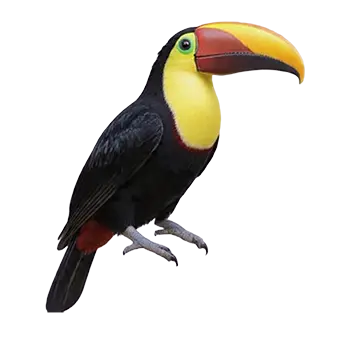

Successful breeding of Swainson's Toucans in captivity begins long before the first egg is laid. It starts with the careful selection and pairing of compatible adults whose genetics, health, and temperament make them suitable candidates for reproduction. Swainson's Toucans are monomorphic, meaning males and females are visually identical, so surgical sexing via endoscopy or DNA sexing from a blood or feather sample is essential to confirm the sex of prospective breeding birds before any pairing is attempted.
Genetic diversity should be a primary consideration in pair selection. The captive population of Swainson's Toucans is relatively small compared to many parrot species, and inbreeding can produce offspring with reduced immune function, poor fertility, and increased susceptibility to disease. If possible, obtain breeding stock from unrelated bloodlines and maintain records of parentage that can be shared with other breeders. Participation in a cooperative breeding program or studbook, where one exists, helps ensure that pairings contribute to the long-term genetic health of the captive population rather than narrowing it.
Health screening of both prospective breeders must be comprehensive and current before the pair is introduced. Each bird should undergo a complete physical examination, blood work including a full iron panel, fecal analysis, and testing for common avian pathogens. Birds with elevated iron levels, active infections, or chronic health conditions should not be bred until their issues are resolved or deemed manageable by a qualified avian veterinarian. Breeding places substantial metabolic demands on both the hen and the cock, and birds entering the process in compromised health face elevated risks of egg binding, poor fertility, and inability to sustain the demands of chick rearing.
Temperament compatibility is the most unpredictable element of pair formation in ramphastids. Not every male-female combination will bond successfully, and forcing two incompatible birds into a shared breeding enclosure can result in aggression, injury, or chronic stress that suppresses reproductive behavior entirely. Introduce prospective pairs in adjacent enclosures where they can see and hear each other without physical contact. Observe their interactions through the barrier for several weeks before attempting a physical introduction. Signs of compatibility include mutual interest, synchronized feeding or bathing behavior, and relaxed body posture in each other's presence. Persistent aggression, avoidance, or stress behaviors such as panting and fluffed plumage indicate that the pairing is unlikely to succeed.