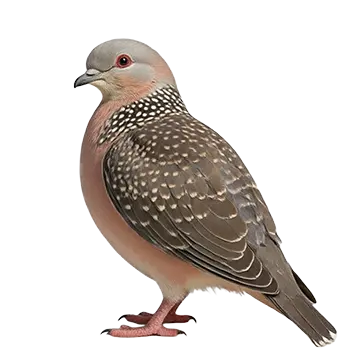

Nutrition & Daily Diet

An adult Spotted Dove's diet forms the foundation of its long-term health, and the nutritional choices made during the prime years have cascading effects on feather quality, immune resilience, reproductive fitness, and longevity. Spotted Doves are granivorous by nature, meaning seeds and grains constitute the core of their diet both in the wild and in captivity. However, a seed-only diet without supplementation is nutritionally incomplete and will eventually lead to deficiency-related health problems, particularly in calcium, vitamin A, and certain amino acids.

The primary diet should consist of a high-quality dove and pigeon seed mix that includes a variety of small grains such as white millet, red millet, canary grass seed, safflower, and small amounts of hemp seed. Some keepers incorporate a pellet component designed for columbids, which offers a more nutritionally complete baseline than seed alone. If pellets are introduced, they should be offered alongside the seed mix rather than as a total replacement, as most Spotted Doves strongly prefer seeds and may refuse pellets if given no familiar alternative. Gradual introduction over several weeks improves acceptance.

Fresh foods should be offered daily as a supplement to the seed or seed-and-pellet base. Finely chopped dark leafy greens such as kale, dandelion greens, endive, and romaine lettuce provide vitamin A precursors and calcium. Grated carrot, diced sweet potato, and finely chopped broccoli florets are also accepted by many doves. Fruit can be offered sparingly as a treat, with small pieces of apple, pear, or berries being common favorites. Avoid avocado, onion, garlic, chocolate, and caffeine-containing foods, all of which are toxic to birds. Sprouted seeds are a particularly valuable dietary addition, as the germination process converts stored starches into more bioavailable nutrients and increases vitamin content substantially.

Calcium supplementation is non-negotiable for adult doves, particularly for laying females but also for males and non-breeding birds. Crushed oyster shell, cuttlebone, or a calcium mineral block should be available at all times. Grit, both soluble mineral grit and insoluble granite grit, is essential for proper digestion in columbids and should be provided in a separate dish. Fresh, clean water must be available continuously in a container that allows the dove to drink in its characteristic manner, submerging the beak and drawing water by suction without lifting the head between swallows.

Housing & Living Space

Adult Spotted Doves require housing that accommodates their size, their preference for horizontal flight, and their need for both activity and restful retreat. A single adult dove should be housed in a flight cage measuring at minimum 36 inches long by 24 inches wide by 24 inches high, though a cage of 48 inches or more in length is strongly recommended. Doves fly horizontally rather than climbing vertically like parrots, so length matters more than height when selecting an enclosure. For pairs or small groups, an indoor aviary or a walk-in outdoor aviary with appropriate weather protection is the gold standard for housing.

Cage placement affects the bird's psychological wellbeing as much as its physical health. Position the cage at chest height against a solid wall, which provides a sense of security by eliminating the possibility of approach from behind. Avoid locations near kitchen fumes, which can be toxic, and away from drafty windows or doorways. Spotted Doves benefit from exposure to natural light, including some direct sunlight, for vitamin D3 synthesis and circadian rhythm regulation. If natural sunlight exposure is limited, consider a full-spectrum avian lighting system placed above the cage on a timer that mimics natural day-length cycles.

The interior arrangement of the enclosure should reflect the dove's natural behavior. Provide multiple perches at varying heights and positions, using natural branches of appropriate diameter where possible. A flat shelf or platform perch is appreciated by doves, who often prefer a flat surface for resting over a round perch, particularly for sleeping. Position food and water stations away from perches to prevent contamination by droppings. A separate bathing dish, shallow and wide, should be offered daily or placed on a schedule that allows the bird regular access without the dish remaining in the cage to become soiled.

Outdoor housing is an excellent option for Spotted Doves in appropriate climates. This species is hardy and tolerates a broad temperature range, thriving in outdoor aviaries in regions where temperatures remain between 40 and 100 degrees Fahrenheit. Outdoor aviaries must be fully enclosed with hardware cloth of half-inch mesh or smaller to exclude predators, including snakes and rodents, and must include a sheltered, draft-free roosting area where the birds can retreat during inclement weather. Double-door entry vestibules prevent accidental escapes during keeper access. Even in mild climates, supplemental heat should be available for unseasonable cold snaps, and shade must be provided during peak summer temperatures.

Behavioral Enrichment & Daily Interaction

Adult Spotted Doves are quiet, contemplative birds whose enrichment needs differ fundamentally from the demanding stimulation requirements of parrots. Attempting to engage a dove with the same toys, puzzles, and interactive play that satisfy a cockatiel or conure will usually result in indifference from the dove and frustration for the keeper. Understanding the dove's natural behavioral repertoire and designing enrichment around those instincts produces a happier, more engaged bird and a more rewarding human-animal relationship.

Foraging enrichment is the most effective category for doves. In the wild, Spotted Doves spend a substantial portion of their day walking on the ground, gleaning seeds from soil and leaf litter. Replicate this behavior by scattering seed across the cage floor on top of clean paper substrate, encouraging the bird to walk and search rather than eat from a static bowl. You can also scatter seed over a tray of clean, dry sand or soil to mimic natural ground conditions. Leafy greens clipped to the cage bars or placed in a shallow foraging tray add variety. These simple modifications engage the bird's foraging instinct and increase the time spent in active, purposeful movement.

Social enrichment is equally important and often underestimated. Spotted Doves are flock-oriented birds that form strong pair bonds in the wild and do not thrive in total isolation. A single dove benefits enormously from the companionship of a second dove, and keeping Spotted Doves in pairs is generally recommended unless specific circumstances prevent it. If keeping a single bird, compensate with regular, gentle human interaction. Sit near the cage and talk softly to the bird, allow supervised out-of-cage time where the bird can be in your presence, and provide visual access to household activity so the bird feels included in the social life of the home.

Environmental enrichment rounds out the dove's stimulation needs. Spotted Doves appreciate a view, so positioning the cage near a window where the bird can observe outdoor activity, including wild birds at a feeder, provides passive but meaningful mental engagement. Gentle background music or ambient sound during the day creates an auditory landscape that prevents the sensory deprivation of a silent room. Bathing opportunities are both hygienic and enriching, and many doves display obvious enjoyment during bathing, splashing vigorously and then preening methodically as they dry. Rotate the cage arrangement periodically, shifting perch positions and rearranging accessories to maintain novelty without overwhelming the bird's preference for predictable routines.

Annual Health Maintenance

Preventive veterinary care is the cornerstone of keeping an adult Spotted Dove healthy through its prime years. Unlike dogs and cats, whose annual vaccination schedules drive regular veterinary contact, companion doves often go years without professional examination unless the owner is proactive about scheduling wellness visits. This oversight can allow subclinical conditions to progress undetected until they become difficult or impossible to treat. An annual veterinary examination should be considered a minimum standard of care for any kept dove.

The annual wellness exam for an adult Spotted Dove typically includes a thorough physical examination assessing body condition, keel prominence, pectoral muscle mass, feather quality, eye clarity, nare patency, and vent cleanliness. The veterinarian will palpate the abdomen to check for organ enlargement or masses and examine the oral cavity and choana for lesions consistent with trichomoniasis or other infections. A crop swab and fecal analysis should be performed annually at minimum, and more frequently if the bird is housed outdoors, exposed to wild birds, or kept in a multi-bird collection where disease transmission risk is elevated.

Blood work is not always performed at every annual visit but should be included periodically, particularly for birds approaching middle age or showing any subtle changes in behavior or condition. A complete blood count and basic biochemistry panel can reveal liver or kidney dysfunction, calcium imbalances, infection, and other systemic conditions long before clinical signs become apparent. Establishing baseline blood values while the bird is healthy creates a reference point that makes future abnormalities easier to interpret.

Between veterinary visits, the owner's daily observations are the primary surveillance system. Weigh the bird weekly on a gram scale and record the results. A gradual, unexplained weight change of more than ten percent in either direction warrants investigation. Monitor droppings daily for changes in color, consistency, volume, or odor. Observe the bird's activity level, appetite, vocalization patterns, and posture for any deviations from its established norm. Spotted Doves, like all prey species, are evolutionarily programmed to conceal signs of illness, which means that by the time a dove looks obviously sick, the disease process may be significantly advanced. The keeper who notices the earliest, most subtle changes and acts on them promptly gives the bird the best chance of successful treatment.

Seasonal Considerations

The adult Spotted Dove's physiology and behavior are influenced by seasonal changes, even in an indoor captive environment where temperature and light are partially controlled. Understanding these seasonal rhythms allows the keeper to adjust care proactively rather than reacting to problems after they appear. Light exposure, ambient temperature, humidity, and food availability all serve as environmental cues that drive hormonal cycles, molting schedules, and breeding behavior in this species.

The annual molt is the most visible seasonal event in an adult Spotted Dove's year. Most individuals undergo a complete molt once per year, typically triggered by declining day length in late summer or early autumn. During the molt, the bird replaces all of its flight feathers, body feathers, and tail feathers in a symmetrical, sequential pattern that maintains flight capability throughout the process. Nutritional demands increase significantly during active molt, and the bird's diet should be enriched with protein sources, additional minerals, and bathing opportunities to support feather production. Some birds become quieter and less active during heavy molt, which is a normal energy-conservation response and not cause for alarm unless accompanied by other signs of illness.

In regions with distinct seasons, outdoor-housed birds experience temperature fluctuations that require management. Spotted Doves are relatively cold-hardy for a species of tropical and subtropical origin, tolerating temperatures into the low 40s Fahrenheit without difficulty as long as they have access to a dry, draft-free shelter. However, prolonged exposure to temperatures below freezing can cause frostbite on unfeathered areas such as the toes and should be prevented with supplemental heating or temporary indoor housing. Summer heat is generally well tolerated by this species, but temperatures exceeding 95 degrees Fahrenheit require shade, air circulation, and additional water availability to prevent heat stress.

Photoperiod manipulation is a powerful tool for managing seasonal breeding behavior. Spotted Doves are prolific breeders that will produce clutch after clutch if environmental conditions signal an extended breeding season. For keepers who do not wish to breed, reducing artificial light exposure to ten hours or fewer per day during the autumn and winter months suppresses the hormonal cascade that drives courtship, nest-building, and egg-laying. Allowing the bird to experience a natural decline and increase in day length mimics the wild seasonal cycle and supports overall hormonal health. Conversely, keepers managing chronic egg-laying in unmated females should consult an avian veterinarian about hormonal management options if photoperiod adjustment alone is insufficient.

Common Adult Health Concerns

While Spotted Doves are generally robust birds, several health conditions occur with particular frequency during the adult years and warrant the keeper's awareness. Early recognition of these conditions and prompt veterinary intervention dramatically improve outcomes. The most common health challenges in adult Spotted Doves fall into the categories of infectious disease, nutritional imbalance, reproductive complications, and traumatic injury.

Trichomoniasis remains a significant concern throughout the adult Spotted Dove's life. Adult birds may carry Trichomonas gallinae as subclinical infections that flare under stress, during molt, or in association with other illness. Clinical signs include white or yellowish caseous lesions in the mouth, throat, or crop, difficulty swallowing, weight loss, and a reluctance to eat. Regurgitation of food and drooling may also occur. Treatment with an appropriate antiprotozoal medication prescribed by an avian veterinarian is usually effective when initiated promptly, but untreated canker can progress to involve the liver and other organs, at which point the prognosis becomes guarded.

Nutritional secondary hyperparathyroidism, resulting from chronic calcium deficiency or vitamin D3 insufficiency, is one of the most common metabolic conditions in captive doves. This condition weakens the bones by drawing calcium from the skeleton to maintain critical blood calcium levels. Affected birds may develop pathological fractures from normal activity, show tremors or seizures, or produce thin-shelled or shell-less eggs if female. Prevention through adequate dietary calcium, appropriate vitamin D3 supplementation, and exposure to unfiltered natural sunlight or full-spectrum artificial lighting is far more effective than attempting to reverse established skeletal demineralization.

Reproductive complications affect adult female Spotted Doves with notable frequency, especially birds that are chronically stimulated to lay by long photoperiods, warm temperatures, and abundant food. Egg binding, the failure of a formed egg to pass through the oviduct in a normal timeframe, is a veterinary emergency. Signs include straining, abdominal distension, fluffed feathers, lethargy, and cessation of droppings. Chronic egg laying without adequate calcium replacement can also lead to egg yolk peritonitis, a life-threatening condition in which yolk material enters the abdominal cavity and causes inflammation and infection. Any female dove that appears lethargic, strains repeatedly, or sits fluffed on the cage floor should be evaluated by a veterinarian without delay.

Traumatic injuries are a common adult health concern, particularly for free-flighted indoor birds. Window strikes, ceiling fan injuries, crushing injuries from doors, and predator attacks on outdoor-housed birds account for a substantial proportion of emergency veterinary visits. Prevention is the most effective strategy. Cover or decal windows, permanently disable ceiling fans in bird-accessible areas, educate household members about checking for the bird before closing doors, and ensure outdoor aviaries are constructed to exclude all potential predators including cats, raccoons, raptors, and snakes.

Building the Long-Term Bond

The adult years of a Spotted Dove's life represent the longest stage and the period during which the relationship between bird and keeper deepens into its most rewarding form. Spotted Doves are not showy, demanding companions. They do not perform tricks, learn to talk, or seek constant interaction in the way many parrots do. Instead, they offer a quieter, steadier form of companionship characterized by calm presence, gentle trust, and the soothing rhythm of their cooing. Appreciating the dove for what it is, rather than wishing it were a different kind of bird, is the key to a fulfilling relationship.

Trust with a Spotted Dove is built through consistency and patience. The bird learns your routines and comes to anticipate your approach, your voice, and the daily rituals of feeding, cage cleaning, and interaction time. Over months and years, an adult Spotted Dove that was properly socialized as a juvenile will often fly to your hand voluntarily, sit calmly on your shoulder while you move through the house, and coo softly when you speak to it. These behaviors emerge naturally from a foundation of positive experience and predictable, gentle handling. They cannot be rushed or forced, and attempts to accelerate the bonding process through excessive handling or restriction of the bird's choice to retreat usually produce the opposite of the intended effect.

Respect the dove's autonomy during interactions. Unlike parrots, which often solicit and enjoy physical contact such as head scratching and cuddling, most doves prefer a more reserved style of companionship. They enjoy being near you without necessarily wanting to be touched. Perching on your hand or shoulder, sharing the room while you read or work, and responding to your voice from across the room are the expressions of trust and affection that come naturally to this species. Some individuals do develop a tolerance or even enjoyment of gentle head and neck stroking, but this varies by bird and should always be offered rather than imposed.

The daily cooing of an adult Spotted Dove becomes one of the most cherished aspects of life with this species. The three-note call, soft and rhythmic, is one of the most pleasant vocalizations in the avian world, and unlike the screaming or screeching that can accompany parrot ownership, the dove's cooing rarely causes noise complaints even in apartment settings. Many keepers find the sound genuinely calming and report that the dove's vocalization becomes a comforting background soundtrack to their daily life. Responding to the bird's cooing with your own soft vocalization or whistle reinforces the social bond and often stimulates the bird to vocalize more, creating a gentle dialogue that enriches both participants.

Always consult a qualified professional before making any health-related decisions. This content is provided for informational reference only and should not replace professional guidance specific to your animal.