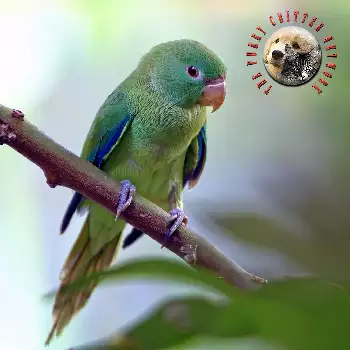

The Weaning Process

Weaning is one of the most consequential transitions in a Spectacled Parrotlet's early life, and how it is managed has lasting implications for the bird's physical health, emotional stability, and relationship with food. Unlike abrupt weaning practices that were once common in aviculture, modern best practice for parrotlets emphasizes abundance weaning, a method in which the chick is given continuous access to a wide variety of solid foods while formula feedings are reduced gradually based on the chick's own readiness rather than an arbitrary schedule.

Spectacled Parrotlet chicks typically begin showing interest in solid food between four and six weeks of age. This interest may manifest as mouthing or tonguing soft foods placed in the brooder, picking at millet sprays, or attempting to eat from the food dishes of nearby adult birds. These exploratory behaviors do not mean the chick is ready to sustain itself on solid food. The crop may still contain mostly formula at this stage, and the chick's ability to hull seeds and process harder foods is still developing. Provide an assortment of warm, soft foods such as cooked sweet potato, steamed broccoli florets, soaked and sprouted seeds, and small-pellet formulations designed for small parrots.

As the chick begins consuming measurable amounts of solid food, formula feedings can be gradually reduced. Drop one feeding at a time, typically eliminating the midday feeding first while maintaining the morning and evening feedings. Monitor weight daily throughout the weaning process. A gradual, modest decline in weight of up to ten percent from peak pre-weaning weight is normal as the chick transitions from the calorie-dense formula to a more varied diet. Weight loss exceeding ten percent, or rapid weight loss over a day or two, indicates that the chick is not yet eating enough solid food to sustain itself and formula feedings should be reinstated or increased.

The final formula feeding to be eliminated is typically the evening feeding, as many chicks cling to this feeding longest for both nutritional and comfort reasons. Do not rush this step. Some chicks complete weaning by six to seven weeks of age, while others, particularly those that were slower to develop or that were stressed during the process, may not fully wean until eight or nine weeks. Forcing a chick off formula before it is ready can create food anxiety and lead to behavioral problems around eating that persist into adulthood.

Throughout the weaning period, ensure that fresh water is always available in a shallow dish the chick can access without risk of drowning. Many chicks learn to drink by watching older birds or by accidentally stepping into the water dish. Once you observe the chick drinking independently, you can be more confident that the weaning process is progressing well.

Fledging & First Flight

Fledging represents a dramatic physical and psychological milestone for a young Spectacled Parrotlet. The first sustained flight transforms the chick from a grounded, dependent creature into a mobile, spatially aware individual capable of navigating its environment in three dimensions. This transition typically occurs between five and seven weeks of age in parrotlets, somewhat earlier than in larger parrot species due to their lighter body mass and proportionally powerful flight muscles.

The days leading up to the first flight are marked by increasingly vigorous wing-flapping exercises. The chick will perch on the edge of its brooder or cage and beat its wings rapidly, building the pectoral muscle strength needed for sustained flight. These exercises are not merely physical conditioning but also neurological rehearsal, as the chick's brain develops the motor coordination required for takeoff, sustained flight, turning, and landing. Do not clip the chick's wings during this critical developmental period. Flight is essential for the parrotlet's physical development, spatial cognition, and emotional confidence.

The first flight is usually brief, uncontrolled, and often ends in a somewhat graceless landing or collision. This is entirely normal. Prepare the environment by removing hazards such as open water containers, mirrors, exposed windows, ceiling fans, and toxic plants. Close all windows and doors, cover large expanses of glass with curtains or decals to prevent collision injuries, and lower the height from which the chick might launch to reduce the impact of crash landings. Supervise all early flight sessions closely.

Over the following days and weeks, the fledgling's flight skills improve rapidly. Landings become more controlled, turning more precise, and the bird begins to develop the spatial map of its environment that allows confident navigation. Allow the bird supervised flight time daily in a safe, enclosed room. This exercise is not optional enrichment but a fundamental developmental need. Parrotlets that are denied flight during the fledging period often develop fear-based behaviors, poor coordination, and an over-reliance on climbing that can lead to foot and leg problems later in life.

If wing clipping is desired for safety reasons in a particular household, it should only be considered after the chick has fully fledged and gained competent flight skills, never before. A parrotlet that learns to fly before being clipped retains the muscle memory, coordination, and confidence it developed during the fledging period, which benefits the bird even during periods when it cannot fly. A bird that is clipped before it ever fledges misses this developmental window entirely, and the resulting deficits in coordination and confidence are difficult to recover.

Juvenile Diet & Nutrition

Once a Spectacled Parrotlet has completed weaning, establishing a nutritionally complete diet becomes a primary focus of daily care. Parrotlets have fast metabolisms relative to their body size, and even short periods of inadequate nutrition can have outsized effects on a juvenile bird that is still growing, developing plumage, and building bone density. The goal during this period is to establish eating habits and food preferences that will support the bird's health throughout its potentially three-decade lifespan.

A high-quality pelleted diet formulated for small parrots should form the foundation of the juvenile parrotlet's nutrition, comprising approximately 60 to 70 percent of the total daily intake. Pellets provide balanced nutrition that seed-based diets cannot match, as seeds are high in fat and deficient in several vitamins and minerals critical for avian health. Introduce pellets during the weaning process so they become a familiar and accepted food from the start. If the chick resists pellets initially, try several different brands, sizes, and flavors, as individual parrotlets can be surprisingly particular about pellet preferences.

Fresh vegetables and fruits should constitute approximately 20 to 30 percent of the diet. Offer a rotating selection of nutrient-dense vegetables such as kale, dandelion greens, carrots, bell peppers, broccoli, snap peas, and cooked sweet potato. Fruits should be offered in smaller quantities due to their sugar content, with options like blueberries, papaya, mango, and apple slices being well accepted by most parrotlets. Introduce a wide variety of produce during the juvenile period, as food preferences established now tend to persist into adulthood. A bird that learns to eat only a few foods as a juvenile is much harder to convert to a varied diet later.

Seeds and nuts should be limited to no more than ten percent of the total diet and used primarily as training rewards or foraging enrichment rather than as a staple food. Spectacled Parrotlets, like all parrotlets, will readily over-consume seeds if given unlimited access, leading to obesity, fatty liver disease, and nutritional deficiencies over time. Small seeds such as millet, canary grass seed, and flax can be offered in limited quantities. Larger nuts should be broken into small pieces appropriate for the parrotlet's beak size.

Calcium supplementation deserves specific attention during the juvenile growth period. A cuttlebone or mineral block should be available in the cage at all times. Dark leafy greens provide dietary calcium, but supplemental sources help ensure adequate intake during a period when the skeleton is still developing. Vitamin D3, which is essential for calcium absorption, is produced naturally when the bird is exposed to unfiltered sunlight or full-spectrum avian lighting. If your parrotlet does not have access to natural sunlight, a full-spectrum UVB light placed appropriately near the cage provides this essential spectrum.

Behavioral Development & Training

The juvenile period is the ideal window for establishing the behavioral patterns and training foundations that will define your Spectacled Parrotlet's temperament for years to come. Parrotlets are intelligent, opinionated birds with strong personalities, and the adolescent phase between roughly two and six months of age is when these personality traits begin to crystallize. Consistent, positive-reinforcement-based training during this period channels the parrotlet's natural boldness and intelligence into desirable behaviors and builds a cooperative relationship between bird and caregiver.

Step-up training should be the first formal command the juvenile parrotlet learns. Present your finger or a handheld perch at the bird's lower chest level and use a consistent verbal cue such as "step up" or "up." When the bird steps onto your finger, immediately reward with verbal praise and a small treat. Repeat this exercise in short, frequent sessions of five to ten minutes several times daily. Most parrotlet juveniles learn the step-up command within a few days if the training is consistent and the rewards are motivating. Once step-up is reliable, it becomes the foundation for all subsequent handling and training.

Biting is a common behavioral challenge during the juvenile period and must be addressed thoughtfully. Juvenile parrotlets use their beaks to explore the world, and what begins as exploratory nibbling can escalate into habitual biting if the bird learns that biting produces a reaction. When the parrotlet bites, avoid pulling away abruptly, yelping, or showing any dramatic reaction, as these responses can reinforce the behavior by providing the bird with an entertaining stimulus. Instead, calmly say "no" and either hold still until the bird releases or gently place the bird on a neutral perch and withdraw your attention for a brief period. Consistency from all household members is essential, as the parrotlet will quickly learn which people it can manipulate with its beak.

Target training, where the bird learns to touch its beak to a designated target such as a small stick or the end of a chopstick, is an excellent next step after step-up is established. Target training teaches the bird to follow a visual cue, which can later be used to guide the bird into its cage, onto a scale for weighing, or into a travel carrier without stress. This type of cooperative training is far more effective than physically placing the bird where you want it to go, which erodes trust and can trigger defensive biting.

The juvenile period also brings the first signs of the parrotlet's characteristic territorial behavior. Even at a young age, some parrotlets begin to display cage territoriality, defending their cage entrance or a favorite perch from perceived intruders. While a degree of territorial instinct is normal for the species, unchecked territoriality can develop into aggressive cage guarding that makes routine maintenance and interaction difficult. Address early territorial signs by regularly reaching into the cage for non-threatening purposes, rearranging perches and toys periodically to prevent over-attachment to specific spots, and always interacting with the bird outside of the cage for training and socialization.

Socialization & Environmental Enrichment

A juvenile Spectacled Parrotlet's brain is developing rapidly, and the quality and variety of social and environmental experiences during this period directly influence the bird's cognitive flexibility, stress resilience, and overall quality of life as an adult. Parrotlets that are raised in enriched environments with regular social interaction tend to be more adaptable, less prone to anxiety-based behaviors, and more engaged with their surroundings than birds raised in static, unstimulating conditions.

Social exposure should extend beyond the primary caregiver. Introduce the juvenile parrotlet to multiple family members and trusted visitors in calm, controlled settings. Allow each person to offer the bird treats and practice step-up so the parrotlet learns to accept handling from different individuals. A bird that bonds exclusively to one person and reacts with fear or aggression toward everyone else presents significant management challenges, particularly if the primary caregiver travels, becomes ill, or the bird needs veterinary handling by strangers.

Environmental enrichment for a juvenile parrotlet should engage the bird's natural foraging instincts, curiosity, and desire for physical activity. Rotate toys in and out of the cage on a weekly basis to maintain novelty. Parrotlets are particularly drawn to toys they can manipulate with their feet and beaks, such as small wooden blocks, leather strips, woven palm fronds, and puzzle feeders that require the bird to work for a food reward. Avoid toys with small, detachable parts that could be swallowed, as well as anything with zinc or lead components.

Foraging opportunities are especially important for developing cognitive skills and preventing the boredom that can lead to destructive behaviors. Instead of placing all food in a single open dish, distribute portions throughout the cage in foraging cups, wrap treats in unbleached paper for the bird to tear open, and thread vegetables onto skewers or clips at various heights. Wild parrotlets spend a significant portion of their day searching for and processing food, and replicating this activity pattern in captivity keeps the bird mentally stimulated and physically active.

Exposure to varied environments outside the cage is equally valuable. Supervised time in different rooms of the house, safe outdoor time in a secure travel cage on a temperate day, and car rides in a properly ventilated carrier all help the juvenile parrotlet develop comfort with change and novelty. A bird that has experienced only its cage and the room it lives in may become profoundly stressed when it inevitably needs to travel, even if only for a veterinary visit. Building tolerance for environmental variation during the flexible juvenile period prevents much of this stress.

Health Monitoring During Growth

The juvenile growth period places significant demands on a Spectacled Parrotlet's developing body, and health monitoring during this time serves both to catch emerging problems early and to establish baseline data that will be invaluable for comparison throughout the bird's life. A juvenile parrotlet that appears healthy on the surface may be harboring subclinical nutritional deficiencies, low-grade infections, or developmental abnormalities that only become apparent through careful observation and periodic veterinary evaluation.

Continue weighing your juvenile parrotlet at least once weekly after weaning, using the same gram scale and weighing at the same time of day for consistency. A healthy juvenile will gradually gain weight as it reaches its adult body mass, which for a Spectacled Parrotlet is typically between 28 and 35 grams. Fluctuations of a gram or two between days are normal and reflect variations in crop contents and hydration, but a sustained downward trend over a week or more indicates a problem that needs investigation.

Feather development is a visible indicator of overall health during the juvenile period. The first full set of contour feathers should come in smoothly, with well-formed barbs and no stress bars, which are horizontal lines of weakness across the feather vane caused by interruptions in feather growth due to illness, malnutrition, or stress. Stress bars weaken the feather structurally and indicate that the bird experienced a health setback during the period when that section of the feather was growing. While a few mild stress bars are not uncommon in hand-raised birds that underwent the weaning transition, prominent or widespread stress bars warrant a nutritional review and possibly veterinary blood work.

Schedule a juvenile wellness examination with your avian veterinarian at approximately three to four months of age. This visit establishes post-weaning baseline values for weight, body condition, and overall health. Blood work at this age provides reference ranges for your individual bird that will be useful for comparison if the bird becomes ill later. The veterinarian will also evaluate the bird's beak, nails, and feather condition, check for any skeletal abnormalities that may have become apparent during growth, and discuss the long-term diet and husbandry plan.

Between veterinary visits, maintain awareness of the common health issues that affect juvenile parrotlets. Crop infections that began during hand-feeding may resurface during the stress of weaning. Respiratory infections, often secondary to environmental factors such as drafts, poor air quality, or exposure to other birds, can develop quickly in a young bird with an immature immune system. Intestinal parasites, while less common in indoor-kept parrotlets, should be considered if the bird shows signs such as weight loss, poor feather quality, or abnormal droppings. Any deviation from normal behavior, eating patterns, or droppings consistency should be noted and addressed promptly rather than watched passively.

Preparing for Adulthood

As a Spectacled Parrotlet approaches the end of its juvenile period, typically around five to seven months of age, the bird undergoes subtle but important transitions that signal its progression toward physical and behavioral maturity. Recognizing and supporting these transitions helps ensure a smooth entry into the adult life stage and prevents the common pitfall of continuing to treat a maturing bird as a baby, which can create dependency and delay the development of healthy independence.

Physically, the juvenile parrotlet reaches its adult weight and body dimensions by approximately four to five months of age. The first juvenile molt begins around this time, during which the bird gradually replaces its initial set of feathers with adult plumage. In male Spectacled Parrotlets, this molt brings the full expression of the blue periorbital ring and blue rump feathers that distinguish males from the all-green females. The molt is metabolically demanding, and the bird's diet should be adjusted to provide additional protein and calcium to support healthy feather production. Offering egg food, cooked quinoa, or a small amount of well-cooked chicken can supplement protein intake during heavy molting.

Behaviorally, the transition toward adulthood brings increased assertiveness, more defined territorial instincts, and the beginning of hormonal influence on behavior. A parrotlet that was compliant and eager to please during early juvenility may test boundaries, become more selective about when it will step up, or display increased beak pressure during interactions. These changes are normal and should not be interpreted as a training failure. Maintain consistency in training expectations and routines, continue to use positive reinforcement rather than punishment, and understand that the bird is developing the independence that is natural and healthy for the species.

The juvenile period is also the time to finalize the bird's permanent living arrangement. The cage should be appropriately sized for an adult parrotlet, with a minimum of 18 by 18 by 18 inches, though larger is always better. Arrange perches at multiple heights and positions using natural wood branches of varying diameters to promote foot health. Position food and water dishes where droppings from higher perches will not contaminate them. Establish the cage's location in a room where the bird will experience regular family activity without being overwhelmed, away from kitchens where cooking fumes pose a serious respiratory hazard, and out of direct drafts.

Finally, establish the daily routines that will carry into adulthood. Parrotlets thrive on predictability, and a consistent schedule of wake time, feeding, out-of-cage time, training, and bedtime provides the structure that supports emotional stability. Aim for ten to twelve hours of uninterrupted sleep each night in a quiet, dark environment. Develop a routine for cage cleaning, food preparation, and interaction that you can maintain consistently, as disruptions to an established routine are a common trigger for stress-related behavioral issues in parrotlets.

Always consult a qualified professional before making any health-related decisions. This content is provided for informational reference only and should not replace professional guidance specific to your animal.