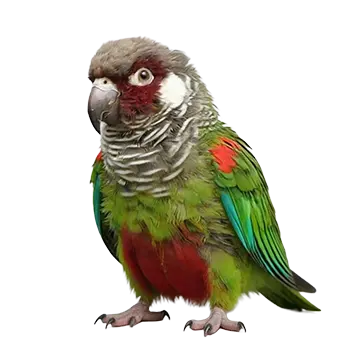

The juvenile period for a Scaly Breasted Parakeet begins when the fully feathered chick starts to leave the nest or brooder and explore its surroundings with increasing confidence, typically between six and eight weeks of age. This stage represents a fundamental shift from the complete dependency of the neonatal phase to a gradual, sometimes uneven march toward self-sufficiency. The juvenile period extends roughly from fledging through to the completion of the first adult molt, a span that can last several months and is characterized by rapid learning, physical refinement, and significant behavioral change.
During this transitional window the young bird must master several critical skills simultaneously. It must learn to fly with precision, develop the coordination to feed itself, navigate social hierarchies within a flock or household, and begin to interpret environmental cues that will keep it safe throughout its life. For caregivers, this is a period that demands patience, attentiveness, and a willingness to allow the bird to make small mistakes as part of the learning process while still maintaining a safe environment.
The psychological shift that accompanies the physical transition is just as important. A juvenile Scaly Breasted Parakeet is no longer content to sit passively and be fed. It becomes curious, assertive, and sometimes demanding. Vocalizations increase in frequency and complexity as the bird experiments with its voice. Exploratory behavior can verge on reckless as the young bird tests boundaries, chews on unfamiliar objects, and attempts flights to perches and surfaces it has never visited before. This is entirely normal and healthy, but it requires the caregiver to bird-proof the living space thoroughly.
Carefully managed independence is the goal of this stage. Rushing a juvenile toward full autonomy before it has developed the skills to cope can lead to injuries, nutritional deficits, and behavioral problems. Conversely, hovering too protectively can produce an overly dependent bird that struggles with confidence later in life. Striking the right balance means offering opportunities for exploration and self-feeding while maintaining the safety net of supplemental feedings and close supervision.