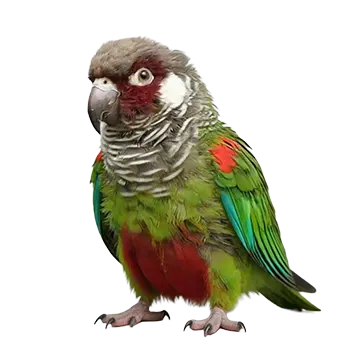

Scaly Breasted Parakeet chicks hatch after an incubation period of approximately 23 to 25 days. They emerge blind, almost entirely naked except for sparse tufts of pale down, and completely helpless. A newly hatched chick typically weighs between 4 and 6 grams, making it one of the smaller lorikeet hatchlings. During the initial hours of life the chick's most urgent requirements are stable warmth and its first feeding, both of which set the trajectory for healthy development in the days ahead.
In a parent-raised clutch the hen will begin feeding the chick within the first few hours after it breaks free of the shell. The crop milk she regurgitates is rich in proteins, fats, and beneficial microorganisms that help establish the chick's gastrointestinal flora. If you are hand-raising the chick, allow the yolk sac to absorb fully before attempting the first feeding, which usually takes eight to twelve hours post-hatch. Introducing formula before absorption is complete places unnecessary stress on the immature digestive tract and can lead to serious complications including yolk sac infection.
The brooder must be prepared and stabilized well before the anticipated hatch date. Temperatures should be maintained between 96 and 99 degrees Fahrenheit with relative humidity in the range of 60 to 65 percent. Scaly Breasted Parakeets are native to the warm, humid coastal regions of eastern Australia, and replicating these conditions in the brooder gives the chick the environmental foundation it needs. Drafts, temperature swings, and inadequate humidity can each independently prove fatal to a chick this small.
Watch the newly hatched chick closely for signs of vigor. A healthy hatchling will respond to gentle tactile stimulation near the beak with a feeding response, will have pinkish skin without dark discoloration, and will show small but purposeful movements when repositioning itself. Any chick that appears limp, cold to the touch, or unresponsive to feeding cues should be evaluated immediately by an avian veterinarian experienced with lorikeet species.