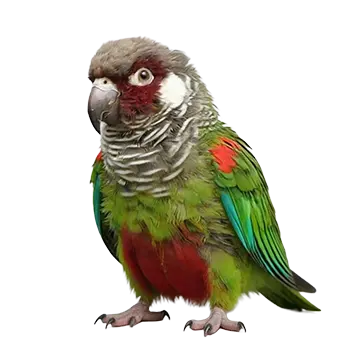

Breeding Scaly Breasted Parakeets responsibly begins well before a nest box is ever introduced. The breeder must first confirm that both the prospective parent birds are physically mature, in excellent health, and genetically suitable for pairing. Scaly Breasted Parakeets typically reach sexual maturity between twelve and eighteen months of age, though physiological maturity does not necessarily indicate readiness for the demands of breeding. Most experienced breeders recommend waiting until both birds are at least two years old before allowing a breeding attempt, as younger birds may lack the physical reserves or parental instincts needed to raise a clutch successfully.
Determining the sex of Scaly Breasted Parakeets requires either DNA testing or surgical sexing, as this species is monomorphic, meaning males and females are virtually identical in external appearance. DNA sexing from a blood or feather sample is the least invasive and most commonly used method. Relying on behavioral cues or head shape to determine sex is unreliable and can result in pairing two birds of the same sex, which leads to frustration for both the birds and the breeder.
Pair compatibility is as important as genetic suitability. Scaly Breasted Parakeets form monogamous pair bonds in the wild, and captive breeding is most successful when the pair has been allowed to bond naturally over time. Introduce prospective breeding pairs in a neutral space and observe their interactions over several weeks. Compatible birds will begin to perch together, allopreening will develop, and feeding behaviors directed at the partner may emerge. Aggression, persistent chasing, or one bird consistently excluding the other from food or perching sites are signs of incompatibility, and forcing an incompatible pairing risks injury and failed breeding attempts.
Before introducing the pair to breeding conditions, both birds should undergo a thorough veterinary examination. Blood work should confirm healthy organ function, appropriate calcium levels in the female, and the absence of infectious diseases that could be transmitted to chicks. Both birds should be at their optimal weight, free from parasites, and in full feather condition. A bird that is molting, recovering from illness, or underweight should not be placed in breeding condition, as the metabolic demands of reproduction will exacerbate existing deficits.