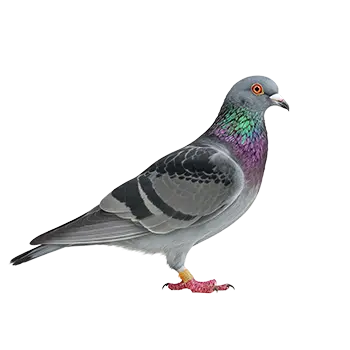

The weaning process for a Racing Homer Pigeon typically begins between four and five weeks of age, when the young bird transitions from dependence on parental feeding to self-sustained eating and drinking. This shift does not happen abruptly. The parent birds naturally reduce the frequency and volume of regurgitated feedings as the squab matures, and the young bird simultaneously develops the motor skills and behavioral drive to peck at grain on its own. In a well-managed racing loft, the weaning process should feel seamless, but it requires attentive management to ensure the young bird does not experience a nutritional gap during the transition.
Provide a high-quality weaning mix that is smaller in seed size than the standard racing blend. Young birds learning to eat independently have smaller gapes and less powerful jaw muscles than adults, and they are more successful with smaller grains such as millet, small peas, dari, and wheat. Scatter the weaning mix directly on a clean section of the loft floor or in a low-rimmed tray placed near the nest area so the young birds can find it easily. Watching experienced adult birds eat is one of the most effective teachers for juveniles, so housing weaned youngsters within sight of feeding adults accelerates the learning process.
Water intake becomes critically important at weaning. While squabs receive most of their hydration from crop milk and regurgitated food, a self-feeding juvenile must learn to drink independently. Place shallow water dishes at the loft floor level and gently dip the young bird's beak into the water to demonstrate its presence. Most Racing Homers figure out drinking within a day or two, but occasionally a slow learner needs repeated encouragement. Dehydration during the weaning transition is a genuine risk that can stall growth and compromise immune function, so monitoring water consumption and crop fullness in recently weaned juveniles is essential.
Grit and mineral supplementation should be introduced at weaning. Pigeons require insoluble grit to mechanically grind seeds in the gizzard, and they also benefit from minerite or a pigeon-specific mineral block that supplies calcium, phosphorus, and trace elements. These supplements support the rapid skeletal growth that continues through the juvenile phase and lay the groundwork for the strong, dense bone structure that a racing pigeon needs to endure the physical demands of competitive flight. Always provide grit and minerals in a separate container from the feed so the birds can self-regulate their intake.