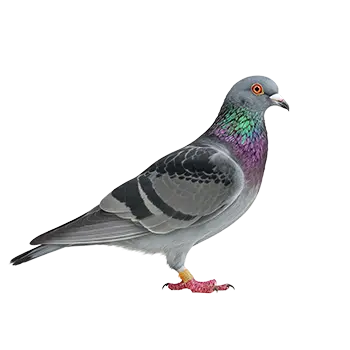

Recognizing the Senior Stage

Determining when a Racing Homer Pigeon transitions from a mature adult into the senior phase of life is not governed by a single birthday but by a constellation of gradual physical and behavioral changes. Most Racing Homers begin showing signs of aging between eight and twelve years of age, though individual variation is considerable. Birds that were raced intensively over many seasons may show earlier wear than those that were used primarily for breeding or light competition. Genetics also plays a role, with some bloodlines renowned for longevity and sustained vitality well into their second decade.

The most visible early indicators of aging are changes in plumage and body condition. Feathers may lose some of their youthful luster, appearing slightly duller or less tightly structured than in the bird's prime. The molt may take longer to complete, and the quality of newly grown feathers may not match the richness and strength seen in earlier years. Muscle mass along the breast gradually diminishes even in birds that remain reasonably active, and the keel bone becomes more prominent to the touch. The eye, which in a prime Racing Homer displays a vivid, well-defined iris, may develop a slightly faded or cloudy appearance as the bird ages.

Behavioral changes are equally telling. A senior Racing Homer is typically less aggressive in defending its perch or nest box territory, less interested in driving a mate, and more inclined to spend extended periods resting quietly. Flight activity during exercise sessions decreases in both duration and intensity, and the bird may prefer to land early and perch on the roof rather than continue circling with the younger members of the flock. These behavioral shifts are normal aspects of aging and should not be confused with illness, though any sudden change in behavior warrants a health evaluation to rule out an underlying medical cause.

Recognizing the transition to the senior stage matters because it triggers a shift in management priorities. While a prime-age Racing Homer's care revolves around conditioning for peak performance, the senior bird's care centers on maintaining comfort, managing age-related health conditions, and preserving quality of life. The goals change from pushing for competitive excellence to sustaining the bird's wellbeing for the remainder of what can still be many contented years.

Nutrition for the Aging Bird

The dietary needs of a senior Racing Homer Pigeon differ meaningfully from those of a bird in its competitive prime. As the bird ages, its metabolic rate slows, its activity level decreases, and the demands on its digestive system change. Continuing to feed a high-energy racing mix to a retired senior bird leads to obesity, fatty liver disease, and a cascade of associated health problems. Adjusting the diet to reflect the bird's reduced energy expenditure while maintaining adequate nutrient density is the central challenge of geriatric pigeon nutrition.

The base feed for a senior Racing Homer should shift toward a lighter mix with a higher proportion of smaller, lower-fat seeds. Barley, wheat, milo, and safflower in moderate amounts, supplemented with a reduced proportion of peas for protein, provide adequate calories without the caloric excess that corn and peanuts would contribute. The total daily ration should also be reduced, as the senior bird simply does not burn the calories it consumed during its racing years. Controlled feeding, where a measured amount is offered once or twice daily and uneaten grain is removed, prevents overconsumption.

Calcium and mineral supplementation become increasingly important for the senior pigeon. Bone density decreases with age, and a senior bird that does not receive adequate calcium and phosphorus is at greater risk for pathological fractures, particularly in the keel and leg bones. A quality mineral grit formulated for pigeons, supplemented with oyster shell or a calcium block, should be available at all times. Vitamin D3 supports calcium absorption and can be provided through a multivitamin supplement or through controlled sun exposure when weather permits.

Digestive efficiency may decline in aging pigeons, making nutrient absorption less reliable. Probiotics added to the drinking water two or three times per week support healthy gut flora and improve the bird's ability to extract nutrients from its food. Apple cider vinegar, used at the rate of a tablespoon per gallon of drinking water one or two days per week, provides mild acidification that discourages pathogenic bacteria and may improve mineral absorption. These simple interventions can make a measurable difference in a senior bird's overall condition without adding significant complexity to the daily routine.

Water consumption should be monitored closely in senior birds. Older pigeons are more susceptible to dehydration, particularly during warm weather, and may not drink as actively as younger birds. Ensuring that water is always fresh, clean, and easily accessible, with drinkers positioned near the senior bird's preferred perch or resting area, encourages adequate hydration. Any noticeable decrease in water intake or increase in urate thickness in the droppings should be investigated as a potential sign of kidney function changes.

Common Age-Related Health Conditions

Senior Racing Homer Pigeons are susceptible to a range of age-related health conditions that require ongoing monitoring and, in many cases, veterinary management. While some degree of physical decline is inevitable with age, many of these conditions can be managed effectively with early detection and appropriate care, allowing the bird to enjoy a good quality of life well into its senior years.

Arthritis and joint stiffness are among the most common age-related problems in older pigeons. Years of perching, walking, and the physical stresses of flight take a cumulative toll on the joints, particularly in the feet, hocks, and wing joints. An arthritic pigeon may be reluctant to grip the perch firmly, may shift its weight frequently, or may show visible swelling or heat in affected joints. Providing flat perching surfaces as an alternative to narrow round perches can reduce foot strain. Anti-inflammatory medications, prescribed by a veterinarian experienced in avian medicine, may be appropriate for birds with significant discomfort, though long-term use requires monitoring of kidney and liver function.

Tumors and neoplastic disease become more prevalent in aging pigeons. Internal tumors, particularly of the liver, kidney, and reproductive organs, may develop silently and present only when they have reached a size that affects organ function. External tumors or growths may appear as visible lumps on the body, wings, or feet. Any new growth should be evaluated by a veterinarian to determine whether it is benign, malignant, or amenable to surgical removal. The prognosis depends on the type, location, and stage of the tumor, and treatment decisions should weigh the bird's overall quality of life.

Kidney function tends to decline with age in pigeons, as it does in most species. The kidneys become less efficient at filtering metabolic waste and regulating fluid balance, which may manifest as increased thirst, changes in urate consistency, or general lethargy. Blood work, when available for avian patients, can reveal elevated uric acid levels that confirm renal compromise. Management typically involves dietary modification to reduce protein load on the kidneys, ensuring consistent hydration, and avoiding medications that are nephrotoxic.

Vision and hearing changes occur gradually in senior pigeons and may not be immediately obvious to the keeper. A bird that becomes more easily startled, less responsive to the handler's approach call, or that misjudges distances when landing may be experiencing sensory decline. These changes require environmental accommodations, such as consistent loft layout to avoid confusing a bird with reduced vision and gentler handling to avoid startling a bird that does not hear the keeper's approach as clearly as it once did.

Housing & Environmental Adjustments

The loft environment that served a Racing Homer Pigeon well during its competitive career may need modification as the bird enters its senior years. Age-related changes in mobility, thermoregulation, and social standing within the flock all influence the type of housing that best supports an older bird's comfort and safety. Thoughtful adjustments to the loft environment can significantly improve a senior bird's daily experience without requiring a complete overhaul of the existing setup.

Perching accommodations are often the first area that needs attention. A senior Racing Homer with arthritic feet or reduced grip strength may struggle on narrow, round perches that younger birds navigate easily. Replacing the perches in the area where the senior bird roosts with wider, flat surfaces gives the bird a more comfortable resting platform. Box perches, which provide a small enclosed space with a flat floor, are ideal for elderly pigeons because they offer security, shelter from drafts, and a surface that does not demand constant gripping effort. Positioning the senior bird's perch at a lower height reduces the risk of injury from falls, which become more consequential as bones become more fragile with age.

Temperature sensitivity increases in older pigeons as their metabolic capacity to generate heat declines. Senior Racing Homers benefit from protection against cold drafts during winter months. If the loft cannot be sectioned to provide a warmer zone for older birds, a sheltered box perch with bedding can serve as a microclimate within the larger loft. In extreme cold, supplemental heat may be necessary, though this should be introduced carefully to avoid creating humidity problems. Conversely, elderly pigeons are also less tolerant of extreme heat, so shade and adequate ventilation are essential during summer.

Social dynamics in the loft can become problematic for senior birds that are no longer able to defend their position against younger, more aggressive flock members. An older bird that is consistently displaced from its perch, excluded from the feeder, or harassed by dominant cocks may experience chronic stress that accelerates physical decline. Observe flock interactions carefully and consider separating senior birds into a dedicated section of the loft where they can live without competitive pressure. A quiet senior section with its own feed and water stations, lower perches, and reduced traffic provides the peaceful environment that aging birds need.

Bedding and loft floor conditions matter more for a senior pigeon that spends increasing amounts of time at ground level or resting in its box perch. Keep the floor and bedding clean and dry to prevent bumblefoot and other foot infections, which are more likely to develop in older birds with compromised circulation or weakened immune defenses. Inspect the feet of senior birds regularly for any signs of swelling, redness, or scab formation, and address problems promptly before they progress to deep tissue infection.

Exercise & Activity for Seniors

Maintaining some level of physical activity in a senior Racing Homer Pigeon supports cardiovascular health, joint flexibility, mental stimulation, and overall quality of life. The key distinction from the exercise regimen of a competitive adult bird is that activity for a senior is voluntary, gentle, and driven by the bird's own inclination rather than imposed through training protocols or motivational systems. Forcing an aging bird to fly when it shows reluctance causes stress and risks injury.

Most senior Racing Homers will continue to fly voluntarily during open-loft exercise sessions, though their duration and intensity diminish compared to their prime years. An older bird may fly for ten to twenty minutes before returning to the loft, or it may choose to sit on the roof and enjoy the fresh air and sunlight without taking wing at all. Both behaviors are acceptable and should be respected. The benefits of time spent outdoors extend beyond physical exercise to include sun exposure, which supports vitamin D synthesis and circadian rhythm regulation, and mental engagement from observing the surrounding environment.

For birds that can no longer fly or are unwilling to leave the loft, gentle handling sessions provide an alternative form of physical engagement. Taking the bird out of the loft, holding it in the sun for a few minutes, and allowing it to walk on a safe, enclosed surface gives the bird sensory stimulation and mild exercise. These sessions also serve as opportunities for the keeper to assess the bird's physical condition through direct handling, noting any changes in weight, muscle tone, joint flexibility, or alertness.

Bathing remains an important activity for senior pigeons. A shallow bath two to three times per week encourages preening, maintains feather condition, and provides gentle physical activity. Ensure the bath water is not too deep for a bird with reduced mobility, and supervise bathing sessions if the bird appears unsteady. After bathing, the bird should have access to a warm, dry area to preen and dry its plumage, as a wet senior bird is more vulnerable to chilling than a younger, more metabolically active individual.

Mental stimulation is an often overlooked component of senior bird care. Racing Homer Pigeons are intelligent birds that benefited from the mental challenges of navigation and racing during their competitive careers. Retirement can lead to boredom if the bird's environment offers no stimulation. Small enrichments, such as offering bathing opportunities, introducing novel but harmless objects to the perching area, varying the daily routine slightly, and providing time outside the loft, help keep the aging bird mentally engaged and responsive.

Veterinary Care for the Senior Bird

Veterinary care for the senior Racing Homer Pigeon shifts from the performance-oriented focus of the racing years to a wellness-centered approach aimed at early detection of age-related conditions and management of chronic health issues. Regular veterinary check-ups become more important as the bird ages, because many conditions that develop in senior pigeons progress silently until they reach an advanced stage. Establishing a twice-yearly examination schedule for senior birds allows the veterinarian to track trends in weight, body condition, and organ function over time.

The senior wellness examination typically includes a thorough physical assessment covering body weight, breast muscle condition, feather quality, joint flexibility, eye clarity, and oral health. Droppings analysis remains a standard component, screening for parasites that older birds may be less able to manage immunologically than they did in their prime. Where available, blood work provides valuable information about liver and kidney function, uric acid levels, and overall metabolic status. These baseline values become reference points against which future results can be compared, making it easier to detect gradual decline before it becomes clinically significant.

Medication management requires particular care in senior pigeons. Aging kidneys and liver may process drugs less efficiently, increasing the risk of toxicity at doses that would be safe for a younger bird. When medications are necessary, the veterinarian may adjust doses downward or select drugs with lower organ-system impact. Nonsteroidal anti-inflammatory drugs for arthritis, for example, must be used cautiously and with periodic monitoring of kidney function. Similarly, antiparasitic treatments should be chosen and dosed with awareness of the senior bird's reduced metabolic capacity.

Dental and oral health, while not involving teeth in birds, encompasses the condition of the beak, oral mucosa, and choana. Older pigeons may develop beak overgrowth if they are not wearing the beak down through normal feeding activity, and the beak may need periodic trimming by an experienced keeper or veterinarian. The oral cavity should be inspected for lesions, plaques, or signs of canker, which can flare in immunocompromised senior birds even in lofts where it is well controlled among younger stock.

Palliative care may become appropriate for senior Racing Homers with chronic conditions that cannot be cured but can be managed for comfort. This might include ongoing pain management for arthritis, supportive nutrition for a bird with compromised kidney function, or environmental modifications for a bird with declining vision. The goal of palliative care is not to extend life at all costs but to ensure the bird's remaining time is as comfortable and stress-free as possible, a philosophy that respects the years of service the bird has given as a competitor and companion.

Quality of Life Assessment

Evaluating the quality of life of a senior Racing Homer Pigeon is an ongoing responsibility that requires honest observation, practical judgment, and a willingness to prioritize the bird's welfare above sentimental attachment. Quality of life assessments are not a single event but a continuous process of monitoring the bird's daily experience and adjusting care to maintain the best possible standard of living for as long as it is achievable.

Several observable criteria help frame the quality of life evaluation. A senior pigeon with acceptable quality of life eats and drinks with reasonable appetite, maintains a stable body weight, rests comfortably on its perch without obvious distress, shows interest in its surroundings, interacts normally with flock mates or its handler, and produces droppings of normal consistency. The bird does not need to be active or vigorous by the standards of its youth, but it should appear content, alert, and free from persistent pain or discomfort.

Warning signs that quality of life is declining include progressive weight loss despite adequate food availability, persistent fluffing of the feathers indicating chronic discomfort or an inability to thermoregulate, withdrawal from social interaction, refusal to eat or drink, labored breathing at rest, inability to perch or maintain balance, and recurring infections that no longer respond to treatment. When multiple warning signs are present simultaneously, or when a single condition, such as a large internal tumor, is clearly causing suffering that cannot be alleviated, the keeper must weigh whether continued care is serving the bird's interests or merely prolonging its distress.

Consulting with a veterinarian experienced in avian medicine provides an objective perspective when quality of life decisions become difficult. The veterinarian can assess the bird's condition clinically, discuss prognosis and treatment options candidly, and help the keeper understand whether further intervention is likely to improve the bird's experience or simply delay an inevitable decline. This professional guidance is invaluable during what is often an emotionally difficult period for a keeper who has shared years or even decades with the bird.

Documenting daily observations of the senior bird's behavior, appetite, droppings, and activity level creates a record that makes trends visible over time. A keeper who reviews several weeks of notes may recognize a gradual decline that is difficult to perceive on a day-to-day basis. This documentation also provides useful context for veterinary consultations, ensuring the clinician has a comprehensive picture of the bird's trajectory rather than relying solely on a snapshot taken during a single office visit.

Always consult a qualified professional before making any health-related decisions. This content is provided for informational reference only and should not replace professional guidance specific to your animal.