
Growth & Physical Development

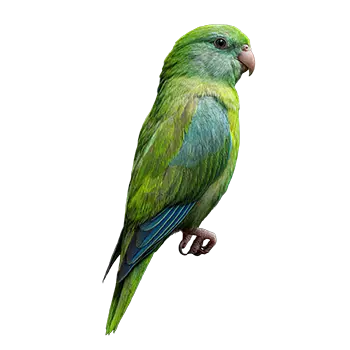
The juvenile phase for Green-rumped Parrotlets begins at approximately eight to ten weeks of age, once the bird is fully weaned and eating independently. At this stage, the bird has achieved most of its adult size, typically measuring around four and a half to five inches in length, though it may still be slightly lighter in weight than a fully mature adult. The plumage is complete but may appear slightly duller than that of an adult, particularly in males, where the characteristic blue wing markings and rump patch may not yet be fully vivid.

Over the next several months, the juvenile Parrotlet undergoes its first major molt, gradually replacing its baby feathers with adult plumage. This process can take several weeks and places increased nutritional demands on the bird. Feather quality during the first molt is a strong indicator of overall health, and pin feathers should develop smoothly without excessive flaking or stress bars, which appear as horizontal lines across the feather shaft and can indicate nutritional deficiency or stress.

Physical coordination continues to refine during the juvenile period. Flight skills improve dramatically as the bird practices takeoffs, landings, and aerial maneuvering. The beak and feet strengthen, and the bird becomes increasingly adept at manipulating objects, cracking seeds, and climbing. This is an important period for providing appropriate perches of varying diameters and textures to promote healthy foot development and prevent pressure sores.

Sexual dimorphism becomes more apparent during the juvenile phase. Males typically develop brighter blue markings on the wings and rump, while females retain a more uniformly green appearance, sometimes with a faint yellowish tinge on the face. However, visual sexing can be unreliable in some color mutations, and DNA sexing remains the most accurate method if confirmation is needed.

Nutrition & Diet Transition

A newly weaned Green-rumped Parrotlet should be transitioned onto a balanced diet that will support its rapid development and first molt. The foundation of the juvenile diet should be a high-quality pellet formulated for small parrots, making up approximately 60 to 70 percent of the total food intake. Pellets provide a nutritionally complete and consistent base that seed-heavy diets cannot match, though the transition from an all-formula or seed-based diet to pellets may require patience.

Fresh vegetables and fruits should comprise around 20 to 30 percent of the daily diet. Dark leafy greens such as kale, spinach, and Swiss chard, along with chopped carrots, bell peppers, broccoli, and small amounts of fruit like berries and apple slices, provide essential vitamins, minerals, and antioxidants. Introduce new foods gradually and consistently, as juvenile Parrotlets can be cautious about unfamiliar items. Offering vegetables in different forms, chopped, shredded, or hung in clips, can encourage exploration and acceptance.

Seeds and treats should be limited to no more than 10 percent of the diet. While Parrotlets enjoy seeds such as millet, safflower, and small sunflower seeds, an excess of seeds leads to obesity and nutritional imbalances, particularly fatty liver disease. Seeds are best used as training rewards or foraging enrichment rather than a dietary staple. Avoid offering avocado, chocolate, caffeine, alcohol, and any foods high in salt or sugar, as these are toxic or harmful to birds.

Clean, fresh water must be available at all times, changed at least twice daily. Some keepers use water bottles to reduce contamination from droppings and food debris, while others prefer open bowls. Whichever method is used, regular cleaning and monitoring of water intake is important. A calcium source such as a cuttlebone or mineral block should also be provided, especially during the first molt when calcium demands increase.

Behavioral Changes

The juvenile and adolescent period brings significant behavioral shifts as the Parrotlet's personality begins to emerge in full. Green-rumped Parrotlets are known for their bold, spirited temperament, and this becomes increasingly evident as the bird matures. Juvenile Parrotlets may test boundaries, display increased independence, and develop strong preferences for certain people, toys, or routines. This is a normal part of psychological development, though it can be challenging for owners who are unprepared.

Nippiness often increases during this stage as the bird experiments with its beak and learns about its social environment. Biting may be triggered by fear, overstimulation, hormonal changes, or simply as a way of communicating displeasure. It is essential to respond calmly and consistently rather than reacting with punishment, yelling, or sudden movements, which can reinforce fear-based biting or damage the bond of trust between bird and owner.

Juvenile Parrotlets may also begin to display territorial behavior, particularly around their cage or favorite perching spot. This can include lunging, hissing, or guarding food and toys. While this behavior is instinctive, it should be managed through positive reinforcement training and by establishing clear, gentle boundaries. Ensuring the bird has ample time outside the cage in a neutral space can help reduce cage-territorial aggression.

Vocalization patterns also develop during this period. While Green-rumped Parrotlets are not loud compared to larger parrots, juveniles may experiment with their vocal range, producing a variety of chirps, chatters, and contact calls. Some individuals may begin to mimic simple words or household sounds, though this species is not known as a prolific talker. Encouraging vocalization through verbal interaction reinforces the social bond and provides mental stimulation.

Training Priorities

The juvenile period is the optimal window for establishing foundational training with a Green-rumped Parrotlet. Their intelligence, curiosity, and food motivation make them highly trainable, and skills learned during this period tend to become deeply ingrained habits. Starting with basic commands and building gradually toward more complex behaviors sets the stage for a cooperative and enjoyable relationship.

Step-up training should be the first priority. Teaching the bird to step onto a finger or hand on cue is the most important skill for safe handling and is the foundation for all other training. Use a calm, consistent verbal cue paired with a gentle hand presentation, and reward successful step-ups immediately with a small treat and verbal praise. Short, frequent sessions of five to ten minutes are more effective than long, infrequent ones, as Parrotlets have limited attention spans.

Target training, where the bird learns to touch its beak to the tip of a stick or finger on cue, is an excellent follow-up skill. Target training can be used to guide the bird to specific locations, into a carrier, or onto a scale for weighing, all without the stress of chasing or grabbing. It also serves as the basis for teaching tricks and more advanced behaviors later in life.

Recall training, teaching the bird to fly to you on command, is particularly valuable for flighted Parrotlets. This skill provides a layer of safety in the event the bird escapes or needs to be retrieved quickly. Begin in a small, enclosed space and gradually increase distance as the bird becomes reliable. Consistency, patience, and positive reinforcement are the keys to success with any training goal during this formative period.

Exercise & Activity

Juvenile Green-rumped Parrotlets are energetic and require ample opportunities for physical activity to support their development and prevent behavioral problems associated with boredom and pent-up energy. Daily out-of-cage time in a safe, bird-proofed room is essential. A minimum of two to three hours of supervised free flight or play outside the cage each day allows the bird to exercise its wings, explore its environment, and engage in natural behaviors.

The cage itself should be appropriately sized for a small parrot, with enough room for the bird to spread its wings, climb, and move between perches and toys. Bar spacing should be no wider than half an inch to prevent escape or injury. Furnishing the cage with a variety of perches made from natural wood, rope, and textured materials at different heights and angles encourages climbing and foot exercise.

Toy rotation is an important strategy for keeping a juvenile Parrotlet mentally stimulated. These birds are intelligent and can quickly lose interest in toys they have seen every day. Rotating toys weekly, introducing new textures and challenges, and providing foraging opportunities where the bird must work to access food all help maintain engagement. Shreddable toys, small bells, and puzzle feeders are particularly popular with this species.

Bathing should be offered regularly, as Parrotlets generally enjoy water and bathing supports feather health, especially during the first molt. A shallow dish of lukewarm water, a gentle misting with a spray bottle, or access to wet leafy greens for leaf-bathing are all effective methods. Allow the bird to dry in a warm, draft-free area. Never use a hair dryer on a high heat setting, as this can cause burns or expose the bird to harmful fumes from the heating element.

Sexing & Early Pair Dynamics

Determining the sex of a juvenile Green-rumped Parrotlet becomes easier as the bird matures and sexual dimorphism becomes more pronounced. Males typically display a more vivid blue coloring on the rump and wing coverts, while females remain predominantly green with little to no blue marking. In standard green-colored birds, visual sexing is reasonably reliable by around three to four months of age, though some individuals may develop their full adult coloring more slowly.

For color mutations where visual sexing is less reliable, or when certainty is needed for breeding or aviary planning purposes, DNA sexing through a blood or feather sample is recommended. This is a simple, non-invasive procedure that your avian veterinarian or a specialized avian laboratory can perform. Knowing the sex of the bird also helps in understanding and anticipating certain behavioral tendencies as the bird approaches sexual maturity.

If you plan to house multiple Parrotlets together, the juvenile period is an important time to understand pair dynamics. Green-rumped Parrotlets can be aggressive toward other birds, including other Parrotlets, particularly in confined spaces. Introducing birds during the juvenile period, when they are more adaptable, gives the best chance of a successful pairing, but introductions must be done gradually, in neutral territory, and under close supervision.

Same-sex pairs can sometimes coexist peacefully, though male-male pairings tend to be more prone to aggression. Mixed-sex pairs may bond strongly but should not be housed with a nest box unless breeding is intended, as the presence of a nesting site can trigger hormonal behavior and egg-laying even in young birds. Monitoring interactions closely and being prepared to separate birds if aggression escalates is essential for multi-bird households.

Socialization & Exposure

Continued socialization during the juvenile period is vital for producing a well-rounded, confident companion Parrotlet. The experiences and exposures a bird receives during its first year of life have a lasting impact on its comfort level with people, environments, and stimuli. A bird that is sheltered from new experiences during this period may develop fearfulness, phobias, or excessive reactivity as an adult.

Gradually introduce the juvenile Parrotlet to a wide range of household sights, sounds, and activities. Allow the bird to observe normal household routines from a safe vantage point, and gently expose it to different rooms, objects, and textures. Playing varied types of music, running the vacuum cleaner at a distance, and allowing the bird to see visitors from within its cage all contribute to a broader comfort zone.

Handling by multiple trusted family members helps prevent the bird from becoming a one-person bird, a common tendency in Parrotlets that can lead to aggressive or possessive behavior toward the favored person and fear or hostility toward others. Each person who interacts with the bird should use the same training cues and handling techniques to maintain consistency and build the bird's confidence with different people.

Outdoor exposure can be beneficial but must be managed with extreme caution. A secure, well-ventilated travel cage or a properly fitted flight harness designed for small birds can allow supervised outdoor time. Fresh air and natural sunlight provide vitamin D synthesis and sensory enrichment. However, the risks of escape, predation by hawks or cats, exposure to wild bird diseases, and temperature extremes must all be carefully managed. Never take a Parrotlet outdoors unrestrained, regardless of how tame or bonded the bird appears.

Always consult a qualified professional before making any health-related decisions. This content is provided for informational reference only and should not replace professional guidance specific to your animal.