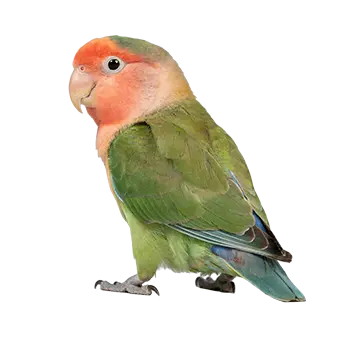

Recognizing when a peach-faced lovebird is approaching the end of its life requires attentive observation and a willingness to see what is truly happening rather than what one hopes to see. Birds are masters at concealing weakness, an instinct inherited from their wild ancestors for whom showing vulnerability meant attracting predators. By the time a lovebird overtly displays signs of serious decline, the underlying condition is often advanced. Knowing the subtle early indicators can help caregivers respond with appropriate compassion and medical support.
Progressive weight loss despite a maintained or even increased appetite is one of the more reliable indicators of serious systemic decline. Regular weigh-ins throughout the bird's life establish a baseline that makes losses easier to detect. A bird that has dropped below its normal weight range and does not recover with dietary adjustments may be experiencing organ failure, cancer, or another terminal condition. The keel bone, the ridge along the center of the chest, becomes prominently palpable in underweight birds and serves as a quick physical check.
Behavioral withdrawal is another significant signal. A bird that was once engaged, vocal, and interactive but progressively retreats to a corner of the cage, stops responding to familiar cues, and shows little interest in food, toys, or companionship is communicating a profound change in its internal state. Fluffed posture maintained throughout the day, closed or half-closed eyes during waking hours, and an inability or unwillingness to perch are signs that the bird's body is struggling to maintain basic functions.
Respiratory changes often accompany the final decline. Labored breathing, tail bobbing with each breath, open-mouth breathing, and audible wheezing or clicking can indicate respiratory failure, fluid accumulation, or systemic infection. These symptoms typically cause considerable distress to the bird and warrant immediate veterinary evaluation to determine whether treatment can provide relief or whether the bird's suffering should be addressed through other means.