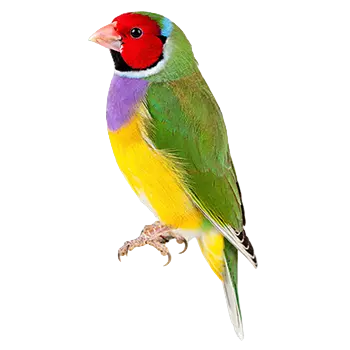

Gouldian Finches become sexually mature between nine and twelve months of age, but maturity is not the same thing as readiness, and the gap between them is where most breeding failures originate. The consensus among experienced breeders is that no Gouldian should be paired before twelve months, and that waiting until the bird has completed its first full adult molt produces markedly better outcomes. Birds bred at the earliest opportunity lay smaller clutches, abandon more often, feed their young less reliably, and have shorter productive lives.
Condition matters as much as age. A bird fit to breed is at a stable, healthy weight, carries dense and evenly colored plumage with no gaps or stress bars, is fully out of molt, and is behaviorally active and vocal. Any bird that is mid-molt, underweight, recovering from illness, or carrying a parasite burden should not be paired under any circumstances. Breeding is the most physiologically expensive thing a Gouldian does, and asking a compromised bird to do it frequently kills it.
Health screening before the season is one of the highest-value things a breeder can do. Air sac mite, in particular, is transmitted from parents to chicks during feeding, so a pair carrying a subclinical burden will pass it to every bird they raise. A pre-season veterinary check covering respiratory assessment, fecal examination for protozoa and worms, and body condition scoring should be routine rather than exceptional. Treat and allow full recovery before pairing; do not treat and breed simultaneously.
Sex identification is straightforward in normally colored adults. Cocks are more saturated throughout, with a deeper purple breast, brighter green mantle, and a longer central tail filament, and only cocks sing. Hens are paler, particularly across the breast, and the beak tip darkens toward black as they come into breeding condition while the cock's beak tip stays bright red or yellow. In heavily mutated birds where visual sexing is unreliable, song is the definitive behavioral indicator and DNA sexing from a feather or blood sample is available and inexpensive.
Finally, decide honestly whether to breed at all. Gouldians produce four to eight eggs per clutch and often raise multiple clutches, which means a single pair can generate twenty or more birds in a season. Every one of those birds needs housing, feeding, and eventually a home. Breeding without a plan for the offspring is the most common ethical failure in finch keeping, and it is entirely avoidable by thinking it through before the nest box goes up.