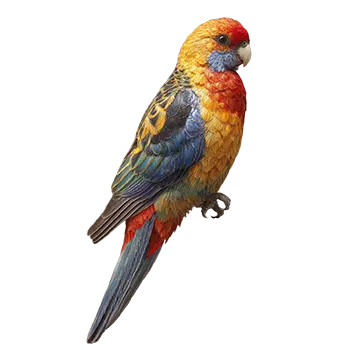

Weaning is one of the most consequential transitions in a young Golden-Mantled Rosella's life, marking the shift from complete dependence on hand-feeding formula or parental regurgitation to self-sufficient consumption of solid foods. In this species, the weaning process typically begins around six to seven weeks of age and may take an additional three to five weeks to complete fully. Rushing this process is one of the most common mistakes made by novice breeders and can lead to malnutrition, behavioral problems, and a weakened immune system during a period when the bird is already under developmental stress.
The first signs that a chick is ready to begin weaning are behavioral rather than age-based. A chick that begins refusing formula feeds, turning its head away from the syringe, or showing more interest in objects in its environment than in feeding time is signaling readiness. Introduce a shallow dish of warm, softened pellets alongside small pieces of fresh vegetables and sprouted seeds. Place these foods where the chick can explore them freely, and expect that initial interactions will involve more playing and flinging than actual consumption. This exploratory phase is a normal and necessary part of learning to eat.
During the active weaning period, continue offering formula feeds but reduce both their frequency and volume in response to the chick's increasing solid food intake. A typical pattern involves dropping from three daily formula feeds to two, then one, and finally none, over a period of several weeks. Monitor body weight daily throughout this transition. A chick that is weaning successfully will maintain or gradually increase its weight even as formula intake decreases. Persistent weight loss during weaning indicates that the chick is not consuming enough solid food to compensate and may need a slower transition pace.
Avoid the temptation to force-wean by abruptly withdrawing formula. Golden-Mantled Rosellas are sensitive birds, and abrupt weaning can trigger stress responses that suppress appetite and immune function simultaneously, creating a dangerous feedback loop. Let the chick drive the process at its own pace while you provide consistent access to appropriate solid foods. A well-weaned rosella transitions smoothly to independent eating and enters adolescence with the nutritional foundation it needs for healthy growth.
Parent-raised chicks in an aviary setting wean more naturally, as they observe the adults foraging and gradually begin imitating their behavior. Even so, monitor the chicks to confirm that they are eating independently before separating them from the parents. A juvenile rosella that has been separated prematurely may refuse solid food and lose condition rapidly without the behavioral cues that parental presence provides.