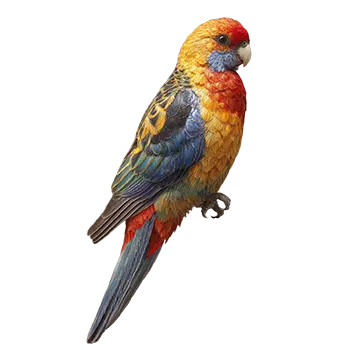

Successful breeding of Golden-Mantled Rosellas begins well before the first egg is laid, with careful assessment of both the individual birds and their suitability as a breeding pair. Rosellas reach sexual maturity at approximately 12 to 18 months of age, but responsible breeders generally wait until both birds are at least two years old before allowing breeding attempts. Breeding immature birds increases the risk of egg binding in young hens, poor parental behavior, and compromised chick health due to the parents' own incomplete physical development.
Pair selection should prioritize both genetic health and temperamental compatibility. If possible, obtain breeding stock from unrelated bloodlines to minimize the risk of inbreeding depression, which can manifest as reduced fertility, weakened immune function, and increased susceptibility to congenital defects in the offspring. Breeders working with Golden-Mantled Rosellas should be particularly attentive to subspecies integrity, as hybridization between rosella subspecies, while producing visually striking birds, muddies the genetic record and is discouraged by most aviculture organizations.
Both prospective breeding birds should be in excellent physical condition before pairing. This means a body weight within the normal range for the subspecies, vibrant plumage free of stress bars or structural defects, clear eyes and nares, and healthy feet and legs. A pre-breeding veterinary examination is strongly recommended and should include a complete blood panel, fecal analysis, and testing for Psittacine Beak and Feather Disease, Avian Polyomavirus, and Chlamydia psittaci. Breeding birds that carry these diseases risk transmitting them to their offspring or to each other.
Pair compatibility is not guaranteed even when both birds are healthy and of appropriate age. Rosellas can be selective about their mates, and a pair that the breeder has assembled may fail to bond. Signs of successful pair bonding include mutual preening, side-by-side perching, synchronized feeding, and the cock bird offering food to the hen. Aggression between paired birds, particularly persistent chasing, biting, or feather pulling, indicates incompatibility and the pair should be separated before injuries occur. Forced pairings rarely succeed and can result in serious harm to one or both birds.