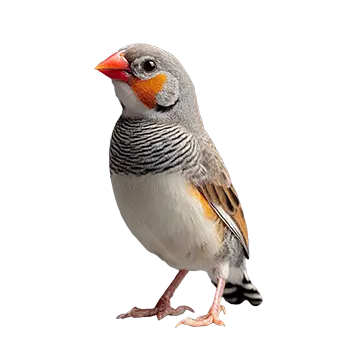

Once zebra finch chicks fledge from the nest at around three weeks of age, they enter a rapid period of physical maturation. Juvenile finches are immediately recognizable by their muted plumage, which lacks the bold markings of adult birds. Young males and females look nearly identical at this stage, with soft gray-brown feathering and pale, often dark-colored beaks that have not yet developed the characteristic bright orange or red hue of mature males.
Over the next several weeks, juvenile zebra finches undergo their first molt, gradually replacing their baby feathers with adult plumage. This process typically begins around five to six weeks of age and continues through roughly 12 weeks. During the molt, you may notice patchy feathering and an overall scruffy appearance, which is entirely normal. The birds may also seem slightly less active during heavy molting periods as their bodies redirect energy toward feather production.
By eight to ten weeks of age, sexual dimorphism becomes apparent. Males begin to display the trademark orange cheek patches, black-and-white barred chest markings, and chestnut flank spots that distinguish them from females. Female juveniles retain their more subdued gray coloring without these distinctive markings. Beak color also begins to shift during this time, with males developing a progressively deeper red-orange beak and females showing a lighter orange tone.
Physical growth in terms of body size is largely complete by the time the birds reach eight weeks, though they will continue to fill out slightly and refine their plumage over the following months. Monitoring weight gain during this period is useful, as consistent growth indicates proper nutrition and good health. A healthy juvenile zebra finch typically weighs between 10 and 16 grams.