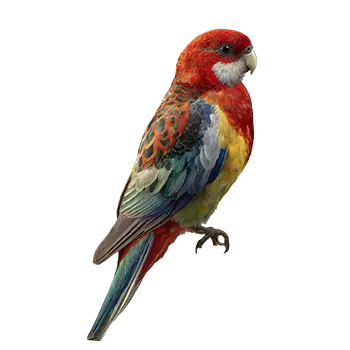

Recognizing the Senior Stage

Determining exactly when an Eastern Rosella enters its senior years is not as straightforward as consulting a calendar. Unlike mammals, where age-related physical decline follows relatively predictable timelines, birds can maintain a youthful appearance and activity level for years before signs of aging become apparent. As a general guideline, Eastern Rosellas are considered to be entering the senior phase around 15 to 18 years of age in captivity, though individual variation is substantial. A bird that has received excellent nutrition, regular veterinary care, and appropriate housing throughout its life may show few signs of aging well into its late teens, while a bird with a history of poor diet or chronic stress may display geriatric changes considerably earlier.

The earliest signs of aging in an Eastern Rosella are often subtle and easy to miss without careful, ongoing observation. A gradual decrease in overall activity level is common, with the bird spending more time resting and less time engaged in active play, flight, and exploration. Perching preferences may shift, with the bird favoring lower perches or wider, more stable platforms over the thinner, higher branches it once preferred. These changes occur incrementally and may only be noticeable when compared to behavior from months or years earlier.

Physical changes accompany the behavioral shifts, though they tend to develop slowly. The plumage may lose some of its former vibrancy, with colors appearing slightly less saturated after each successive molt. Feather quality may decline, with new feathers growing in more slowly or displaying subtle structural imperfections such as stress bars or frayed edges. The beak and nails may grow more quickly or unevenly as keratinization rates change, requiring more frequent trimming. Muscle tone along the keel bone may decrease, and some senior rosellas develop a slightly less sleek body profile as muscle mass gradually diminishes.

Recognizing these changes as normal age-related developments rather than acute medical problems helps calibrate expectations and care strategies appropriately. At the same time, the onset of the senior stage signals a need for increased veterinary surveillance and proactive adjustments to the bird's environment, diet, and daily routine that can significantly improve quality of life during the remaining years.

Geriatric Nutrition

Nutritional needs shift as an Eastern Rosella ages, and a diet that served the bird well during its active adult years may require modification to address the changing demands of a senior metabolism. The primary nutritional challenges in geriatric rosellas include maintaining adequate caloric intake without promoting obesity, supporting organ function as kidneys and liver age, preserving muscle mass and bone density, and ensuring sufficient micronutrient levels for immune health and feather production.

Caloric density may need to be adjusted based on the individual bird's activity level and body condition. A senior rosella that has become noticeably less active may require a modest reduction in overall food volume to prevent weight gain, which places additional strain on the cardiovascular system, liver, and joints. Conversely, some aging birds have difficulty maintaining weight and may need calorie-dense additions to their diet. Regular body condition assessments, feeling the muscle coverage over the keel bone and monitoring weight trends, guide these adjustments far more accurately than standard feeding charts.

Protein quality becomes particularly important in older birds. Aging kidneys are less efficient at processing protein waste products, so the emphasis should be on high-quality, easily digestible protein sources rather than simply increasing protein volume. Cooked egg, sprouted legumes, and well-formulated pellets provide excellent amino acid profiles without placing excessive burden on renal function. If blood work reveals elevated uric acid levels, suggesting renal compromise, your veterinarian may recommend specific protein restrictions tailored to your bird's condition.

Supplementation warrants careful consideration for senior Eastern Rosellas, but should be guided by veterinary assessment rather than guesswork. Calcium needs may increase if bone density is declining, but excessive supplementation can cause problems of its own, including renal calcification. Vitamin D3, whether from natural sunlight or avian lighting, remains essential for calcium metabolism. Omega-3 fatty acids from sources such as flaxseed may support cardiovascular and joint health. Probiotics can aid digestive efficiency in older birds whose gut flora may be less robust. Discuss any supplementation plan with your avian veterinarian to ensure it is appropriate and properly dosed for your bird's specific situation.

Environmental Adaptations

As an Eastern Rosella ages, thoughtful modifications to its living environment can make a meaningful difference in comfort, safety, and independence. The cage or aviary that worked perfectly for an energetic adult bird may present challenges for a senior with reduced mobility, diminished coordination, or declining vision. Adapting the environment proactively, before the bird has a fall or injury, demonstrates the kind of attentive care that supports dignity and well-being in the senior years.

Perch placement is often the first area to address. Lower the primary resting and sleeping perch so the bird does not need to climb as high, reducing the risk of falls during the night or in moments of disorientation. Replace thin, smooth dowel perches with wider, textured natural wood branches or flat platform perches that provide more secure footing for a bird whose grip strength may be declining. Rope perches with a slightly yielding surface can be easier on arthritic feet than rigid wood, though they should be inspected regularly for fraying that could entangle toes.

Food and water accessibility may need adjustment as the bird becomes less agile. Move dishes to positions that are easy to reach without significant climbing or stretching. Consider offering food in shallow, wide dishes rather than deep cups, as senior birds may have difficulty reaching the bottom of a tall vessel. If the bird is experiencing any balance issues, placing a dish on a stable platform rather than hanging it from the cage bars provides a steadier eating and drinking experience. Some keepers find that offering a secondary water source closer to the primary perch encourages adequate hydration in birds that might otherwise not make the trip down to the main water dish.

Cage floor management becomes more important as the bird ages, since senior rosellas are more likely to spend time on the cage bottom either by choice or due to accidental falls. Ensure the cage floor is padded with soft, absorbent material and free of any objects that could injure a bird that lands unexpectedly. Grate covers or removal of the grate entirely may be appropriate for birds that spend significant time on the floor, preventing toes and feet from getting caught in the wire grid.

Common Age-Related Health Issues

Senior Eastern Rosellas are susceptible to a range of age-related health conditions that require increased veterinary vigilance and often ongoing management. While not every bird will develop these conditions, awareness of the most common geriatric health issues enables earlier detection and more effective treatment. The transition from annual wellness visits to biannual examinations is generally recommended once a rosella enters its senior years, and more frequent visits may be warranted if chronic conditions are being managed.

Arthritis and joint degeneration are among the most common conditions affecting aging rosellas, manifesting as reluctance to perch on narrow surfaces, difficulty gripping, limping, or a preference for resting on flat surfaces rather than rounded perches. The feet and hock joints are most frequently affected. While arthritis cannot be reversed, pain management through veterinarian-prescribed anti-inflammatory medications, environmental modifications, and dietary support with omega-3 fatty acids can significantly improve the bird's comfort and mobility.

Renal disease is a significant concern in geriatric parrots, including Eastern Rosellas. The kidneys gradually lose functional capacity with age, and the effects of years of dietary choices accumulate. Symptoms of renal insufficiency may include increased water consumption, more dilute droppings, weight loss, and lethargy. Routine blood chemistry panels that measure uric acid, phosphorus, and calcium levels can detect renal changes before clinical symptoms appear, allowing dietary and medical interventions to slow progression.

Cataracts and other age-related vision changes can affect senior rosellas, leading to reduced visual acuity that impacts the bird's confidence in navigating its environment. A bird that suddenly becomes reluctant to fly, startles more easily, or has difficulty locating food may be experiencing vision decline. Your avian veterinarian can perform an ophthalmologic examination to assess the extent of any vision changes and recommend accommodations. Hepatic lipidosis, or fatty liver disease, may also surface in the senior years as the cumulative result of a high-fat diet, particularly in birds that have consumed a seed-heavy diet for much of their lives.

Neoplasia, or cancer, occurs in parrots with increasing frequency as they age. Tumors may develop in virtually any organ system, with the kidneys, liver, reproductive organs, and skin being among the more commonly affected sites in psittacines. Lumps, swelling, unexplained weight changes, or shifts in behavior or droppings that cannot be attributed to other causes should prompt veterinary investigation. Depending on the type and location, some tumors are amenable to surgical removal or medical management, while others may require a focus on palliative care.

Cognitive Health & Enrichment

Cognitive function in senior Eastern Rosellas deserves attention alongside physical health, as the avian brain is subject to age-related changes that can affect memory, learning, problem-solving, and emotional regulation. While research on avian cognitive decline is less extensive than for mammals, experienced aviculturists and avian veterinarians widely recognize behavioral patterns in aging parrots that suggest diminished cognitive processing, including increased confusion, altered sleep patterns, reduced interest in previously enjoyed activities, and changes in social behavior.

Maintaining cognitive stimulation through the senior years is one of the most important things a keeper can do to support mental acuity. Continue offering foraging challenges, but adjust their difficulty level to match the bird's current capabilities. A puzzle that was appropriately challenging for a sharp adult bird may be frustrating for a senior with slower processing speed. Simplify foraging tasks so the bird can succeed with reasonable effort, as the cognitive benefit comes from engagement and problem-solving rather than from difficulty per se.

Routine and predictability become increasingly important for senior rosellas that may experience some degree of cognitive decline. A consistent daily schedule for feeding, out-of-cage time, interaction, and bedtime provides a framework that reduces anxiety and helps the bird navigate its day with confidence. Major changes to the environment, such as rearranging the room, introducing new household members or pets, or moving the cage to a different location, should be approached gradually and with extra support, as senior birds may find such changes more disorienting than they would have in younger years.

Social engagement remains critical for cognitive health. Even if a senior rosella is less physically active or less interested in training sessions, it still benefits enormously from being part of the household's daily life. Position the cage where the bird can observe household activity without being overwhelmed, and continue to talk to, interact with, and spend time near the bird every day. Social isolation accelerates both cognitive and physical decline in parrots, and maintaining an engaged, connected relationship with a senior rosella contributes meaningfully to its quality of life.

Pain Recognition & Management

Recognizing and managing pain in a senior Eastern Rosella presents a unique challenge because birds, as prey animals, have evolved to conceal discomfort as a survival strategy. A wild bird that appears weak or injured attracts predators, so the instinct to mask pain is deeply ingrained. This means that by the time a rosella displays obvious signs of pain, the underlying condition has often progressed significantly. Developing sensitivity to the subtle behavioral changes that suggest discomfort is essential for any keeper caring for an aging bird.

Subtle indicators of pain in an Eastern Rosella may include a slight change in posture, such as a tendency to lean or shift weight off one foot, reluctance to use one wing fully, or a hunched appearance with the feathers slightly puffed. Reduced vocalization in a normally vocal bird, or conversely, unusual vocalizations that do not correspond to the bird's typical repertoire, can signal discomfort. Changes in sleeping patterns, such as restlessness at night or sleeping during the day more than previously, may also indicate that the bird is not resting comfortably.

Appetite changes often accompany pain, as discomfort suppresses the desire to eat in birds just as it does in other animals. A senior rosella that suddenly becomes less interested in food, takes longer to finish meals, or drops food repeatedly while eating may be experiencing oral pain from beak abnormalities, jaw arthritis, or internal discomfort that makes the act of eating unpleasant. Weight monitoring takes on renewed importance in this context, as weight loss secondary to pain-related appetite decline can itself become a medical emergency in a small bird with limited metabolic reserves.

Pain management in avian medicine has advanced considerably but still requires a veterinarian with specific expertise in psittacine care. Non-steroidal anti-inflammatory drugs formulated or dosed for avian patients are the most commonly used analgesics, though the range of available options is narrower than for mammals. Tramadol and gabapentin are sometimes used for specific pain conditions under veterinary supervision. Environmental modifications that reduce the physical demands on a painful joint or limb complement pharmaceutical management and should be implemented alongside any prescribed treatment plan.

Quality of Life Assessment

Assessing and maintaining quality of life is the overarching goal of senior care for an Eastern Rosella, and it is a process that requires ongoing, honest evaluation by the keeper in partnership with the avian veterinarian. Quality of life is not defined by a single metric but by the totality of the bird's daily experience, encompassing its ability to engage in natural behaviors, its comfort level, its social connections, and its overall demeanor. A structured approach to quality of life assessment helps prevent both premature despair and delayed recognition of suffering.

Several validated quality of life scales have been adapted for use with companion birds, and while none is perfect, they provide a useful framework for organizing observations. Key domains to evaluate include mobility and the ability to move around the cage or aviary with reasonable ease, appetite and the ability to eat and drink independently, engagement and interest in the bird's surroundings and social partners, comfort as evidenced by normal resting postures and absence of persistent pain behaviors, and hygiene as reflected in the bird's ability to preen and maintain its feathers.

Tracking these domains over time using a simple daily or weekly scoring system reveals trends that might not be apparent from day-to-day observation. A bird whose scores are gradually declining across multiple domains over weeks or months is telling a different story than one that has a single bad day but bounces back. Sharing these records with your avian veterinarian provides objective data that supports clinical decision-making and helps the care team determine whether current management is adequate or whether adjustments, including difficult decisions about the bird's future, need to be discussed.

The emotional dimension of quality of life assessment deserves acknowledgment as well. Caring for an aging bird inevitably confronts the keeper with the reality of the bird's mortality, and the desire to do everything possible can sometimes tip into doing more than is kind. Medical interventions that extend life but reduce comfort, or that require frequent stressful handling for a bird that finds restraint distressing, may not serve the bird's interests even though they come from a place of love. Maintaining an honest, compassionate dialogue with your veterinarian about when care is helping and when it has become burdensome is one of the most important responsibilities of stewardship during the senior years.

Always consult a qualified professional before making any health-related decisions. This content is provided for informational reference only and should not replace professional guidance specific to your animal.