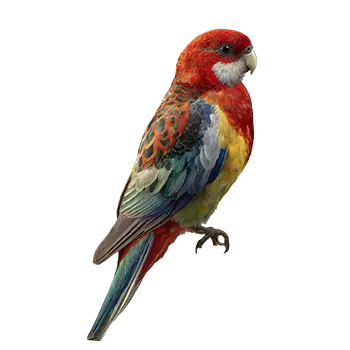

Successful Eastern Rosella breeding begins long before the first egg is laid, with careful assessment of whether breeding is appropriate and thoughtful selection of a compatible pair. Eastern Rosellas reach sexual maturity at approximately 12 to 18 months of age, but most experienced aviculturists recommend waiting until the birds are at least two years old before allowing breeding. Younger birds are more likely to produce infertile eggs, abandon nests, or display inadequate parental behavior, and the physical demands of egg production and chick rearing are better tolerated by fully mature individuals.
Pair compatibility is a critical factor in Eastern Rosella breeding and should not be taken for granted. Unlike some parrot species that will readily accept a partner chosen by the keeper, rosellas can be selective and sometimes aggressive toward prospective mates. Introducing a potential pair should be done gradually, housing the birds in adjacent cages where they can see and hear each other without physical contact. Observe their interactions through the cage bars over a period of weeks, looking for signs of mutual interest such as feeding near each other, calling back and forth, and calm body language in each other's presence.
Both birds must be in excellent health before breeding is attempted. Pre-breeding veterinary examinations should include physical assessments, blood work, fecal analysis, and screening for Psittacine Beak and Feather Disease, Polyomavirus, and Chlamydiosis. Any bird testing positive for a transmissible disease should not be bred, as these conditions can be passed to offspring or to the other parent. Nutritional conditioning in the weeks leading up to breeding season is equally important, with increased calcium, protein, and vitamin supplementation supporting the hen's egg production and the cock's reproductive vigor.
Genetic considerations deserve attention from responsible breeders. Eastern Rosellas are classified into several subspecies, including the nominate Platycercus eximius eximius, the golden-mantled P. e. cecilae, and the Tasmanian P. e. diemenensis. Breeding within the same subspecies preserves the genetic integrity of these naturally occurring populations. Additionally, related birds should never be paired, as inbreeding increases the risk of genetic defects, reduced immune competence, and diminished vitality in offspring.