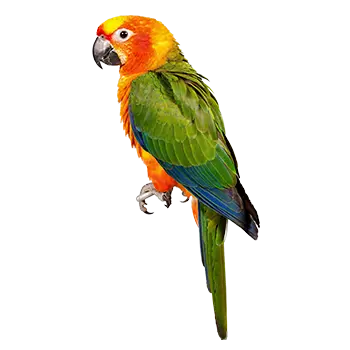

The First 24 Hours

A Jenday Conure chick enters the world blind, nearly featherless, and completely dependent on its parents or a dedicated hand-feeder. Hatching itself is an exhausting process that can take anywhere from a few hours to a full day, and the chick will spend much of its first hours resting and recovering from the effort. During this critical window, the most important factor is warmth. The hatchling cannot regulate its own body temperature and must be kept in a stable environment between 95°F and 98°F if being hand-raised, or nestled securely beneath a parent bird in a well-insulated nest box.

Within the first several hours after hatching, the chick will absorb the remaining yolk sac, which provides essential nutrients and energy. This internal reserve sustains the chick for roughly 8 to 12 hours, so there is no need to rush the first feeding. Attempting to feed too soon can actually be harmful, as the chick's digestive system needs time to begin functioning independently. Observing the crop area will help determine when the yolk has been sufficiently absorbed and the chick is ready for its first meal.

If the chick is parent-raised, the hen will instinctively begin feeding within the first day. For hand-reared chicks, the first feeding should consist of a thin, well-hydrated commercial hand-feeding formula offered at the appropriate temperature. The chick's feeding response at this stage is subtle, and care must be taken to avoid aspiration. Cleanliness is paramount from the very first moment, as hatchlings have virtually no immune defense and are highly susceptible to bacterial and fungal infections.

The nesting environment should be draft-free, dimly lit, and quiet. Whether in a brooder or a nest box with the parents, disturbances should be kept to an absolute minimum during this initial period. The chick's skin will appear translucent and fragile, and any handling should be done with clean, warm hands using the gentlest possible touch. Weighing the chick at hatching establishes a critical baseline for tracking growth and health going forward.

Feeding & Nutrition

Feeding a newborn Jenday Conure is a task that demands precision, patience, and consistency. Whether parent-raised or hand-fed, the chick requires frequent meals throughout the day during the first two weeks of life. Hand-fed chicks typically need to be fed every two hours during the first few days, gradually stretching to every three to four hours as the crop begins to handle larger volumes. Each feeding should deliver enough formula to gently fill the crop without overstretching it.

The formula must be prepared fresh for every feeding and served at a temperature between 104°F and 108°F. Formula that is too hot can cause severe crop burns, a devastating and sometimes fatal injury. Formula that is too cool will not be digested properly and can lead to crop stasis, where food sits unprocessed and begins to ferment. A reliable digital thermometer is an essential tool for every hand-feeder, and guessing temperatures should never be considered acceptable.

Feeding technique matters enormously with conure chicks. A small syringe or specialized spoon designed for parrot chicks allows for controlled delivery. The formula should be directed toward the right side of the chick's mouth, following the natural path to the crop and away from the tracheal opening. A chick that is being fed properly will bob its head rhythmically and swallow eagerly. If the chick is reluctant to feed, shows labored breathing, or if formula appears near the nostrils, feeding should be stopped immediately and the chick assessed for potential problems.

As the chick grows through its first two weeks, the formula consistency can be gradually thickened according to the manufacturer's guidelines. Monitoring crop emptying times between feedings provides valuable information about digestive health. A crop that empties within three to four hours is functioning normally, while significantly slower emptying may indicate infection, dehydration, or environmental temperatures that are too low.

Developmental Milestones

Jenday Conure chicks develop rapidly during the newborn period, and tracking milestones helps caregivers ensure everything is progressing normally. At hatching, the chick weighs roughly 5 to 7 grams and is covered in sparse, wispy down. By the end of the first week, a healthy chick should have approximately doubled its hatch weight, and the skin will begin to take on a slightly more opaque appearance as the body fills out.

Pin feathers begin to emerge along the wings and tail during the second week, appearing as small, dark quills pushing through the skin. The chick's eyes, which are sealed shut at hatching, will begin to slit open around days 10 to 14. This is a gradual process, and the eyes may appear cloudy or unfocused initially. Full visual clarity develops over the following week. The ear openings, initially covered by skin, also become more defined during this period.

Motor development follows a predictable sequence. During the first week, the chick can do little more than lift its head weakly during feedings. By the second week, head control improves noticeably, and the chick begins to show stronger feeding responses. Gripping reflexes in the feet develop early, and by the end of the second week, the chick can grasp a caregiver's finger with surprising strength. Vocalization begins as soft, barely audible peeping that gradually increases in volume and frequency.

Daily weight tracking is the single most reliable indicator of healthy development during the newborn phase. A consistent upward trend in weight, with gains of roughly 10 to 15 percent of body weight per day during the first week, signals that feeding and environmental conditions are appropriate. Any plateau or decline in weight lasting more than 24 hours warrants immediate attention and likely a veterinary consultation.

Temperature & Environment

Maintaining the correct environmental temperature is arguably the most critical aspect of newborn Jenday Conure care. Hatchlings are poikilothermic for the first several days, meaning they cannot generate sufficient body heat to maintain their own temperature. A brooder set between 95°F and 98°F is necessary for newly hatched chicks, and this temperature should be gradually reduced by about one degree per day as the chick grows and begins to develop the ability to thermoregulate.

Humidity is equally important but often overlooked. The brooder should maintain humidity levels between 55 and 65 percent to prevent dehydration of the chick's delicate skin and to support healthy feather development as pin feathers begin to emerge. Humidity that is too low can cause feather abnormalities and cracked, dry skin. Humidity that is too high creates conditions favorable for bacterial and fungal growth. A quality hygrometer placed inside the brooder provides accurate monitoring.

Bedding in the brooder should be soft, non-toxic, and easy to clean. Paper towels layered over a soft cloth provide adequate cushioning while allowing caregivers to monitor droppings and detect any abnormalities. Loose substrates such as wood shavings or sand are inappropriate for newborn chicks, as they can be ingested and cause crop impaction. The bedding should be changed frequently, ideally after each feeding, to maintain a sanitary environment.

The brooder should be placed in a quiet area of the home, away from direct sunlight, drafts, and household traffic. Sudden temperature fluctuations are extremely dangerous for newborn chicks and can cause stress, digestive upset, or even death. A reliable thermostat-controlled brooder is a worthwhile investment for anyone undertaking hand-rearing, as it maintains consistent temperatures regardless of ambient room conditions.

Early Socialization

The socialization window for Jenday Conures begins surprisingly early, and the groundwork laid during the newborn period has lasting effects on the bird's temperament and bond with humans. While the chick is too young and fragile for extensive handling in the first few days, the simple act of hand-feeding creates a powerful association between human contact and comfort. Chicks that are hand-raised from an early age typically develop into more confident, trusting companion birds.

During the first two weeks, socialization should be gentle and limited primarily to feeding interactions and brief, careful handling for health checks and weighing. Speaking softly to the chick during these interactions helps it acclimate to human voices. The chick cannot see clearly during most of this period, but it can hear, and consistent vocal cues create a sense of familiarity and security that pays dividends later in development.

If the chick is parent-raised with the intention of eventual human companionship, brief daily handling sessions can begin near the end of the second week, once the chick's eyes are open and it has gained enough size and strength to tolerate gentle contact. These sessions should last no more than a few minutes and should always end with the chick being returned to its parents in a calm, unhurried manner. The goal is to create positive associations with human touch without causing undue stress.

It is important to note that socialization during the newborn phase is not about training or teaching behaviors. It is about establishing trust and comfort. A chick that feels safe and well-cared-for during its earliest days develops a foundation of emotional security that supports all future learning and bonding. Overstimulation or rough handling during this sensitive period can create fear responses that are difficult to overcome later in life.

Health Screening & Vet Visits

A veterinary examination by an avian-experienced veterinarian should be scheduled within the first few days after hatching or as soon as possible after acquiring a newborn Jenday Conure chick. This initial wellness check establishes a health baseline and allows for early detection of congenital issues, infections, or developmental concerns that may not be apparent to even experienced breeders. The veterinarian will assess the chick's overall condition, check for deformities, and may take baseline cultures.

Common health concerns during the newborn period include yeast infections of the crop, bacterial infections, and developmental abnormalities of the beak, feet, or spine. Candida, a yeast organism, thrives in the warm, moist environment of a young bird's crop and can proliferate rapidly if hygiene is imperfect or if the chick's immune system is compromised. Symptoms include slow crop emptying, a thickened or discolored crop lining visible through the skin, and a sour odor from the mouth. Early detection and treatment are essential.

Splay leg is a developmental condition where one or both legs splay outward rather than positioning correctly beneath the body. It is most common in chicks raised on slippery or overly smooth surfaces that do not allow the feet to grip properly. When caught early, splay leg can often be corrected with simple hobble braces that hold the legs in proper alignment while the bones and joints strengthen. Left untreated, it can become permanent and severely impact the bird's quality of life.

Keeping detailed records from day one is invaluable for both the caregiver and the veterinarian. A daily log should include weight measurements taken at the same time each day, feeding times and amounts consumed, crop emptying times, descriptions of droppings, and notes on any behavioral changes or concerns. This record creates a comprehensive picture of the chick's health trajectory and makes it far easier to identify emerging problems before they become critical.

When to Worry

Caring for a newborn Jenday Conure means being vigilant about signs that something may be going wrong. Because chicks are so fragile and their condition can deteriorate rapidly, early recognition of warning signs is often the difference between a minor setback and a life-threatening emergency. Any sudden change in behavior, appetite, or appearance should be taken seriously and addressed promptly.

Weight loss or failure to gain weight is the most reliable early warning sign of trouble. A chick that has not gained weight in 24 hours or has lost weight should be evaluated immediately. Other red flags include a crop that is not emptying within the expected timeframe, formula or liquid appearing at the nostrils, labored or noisy breathing, a change in the color or consistency of droppings, and lethargy or an unwillingness to feed. A healthy chick is responsive during feedings and active between them, even if that activity is limited to wriggling and vocalizing.

Dehydration is a serious and common threat to newborn chicks. Signs include wrinkled or tenting skin, darkened or concentrated urates, and a sunken appearance around the eyes. Dehydration can develop quickly if the brooder temperature is too high, humidity is too low, or the chick is not consuming enough formula. Mild dehydration can sometimes be addressed by adjusting environmental conditions and ensuring adequate fluid intake, but significant dehydration requires veterinary intervention including possible subcutaneous fluid administration.

It is always better to consult an avian veterinarian unnecessarily than to wait too long when a chick's health is in question. Newborn parrots have very limited reserves, and conditions that might be minor inconveniences in an adult bird can become fatal within hours in a hatchling. Establishing a relationship with a qualified avian veterinarian before the chick arrives ensures that expert help is available without delay when it is needed most.

Always consult a qualified professional before making any health-related decisions. This content is provided for informational reference only and should not replace professional guidance specific to your animal.