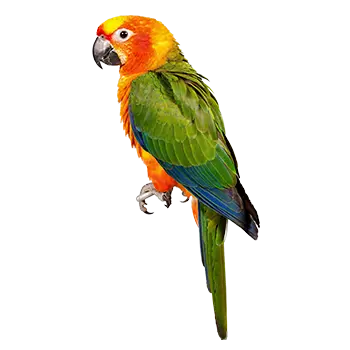

The juvenile stage of a Jenday Conure begins around the time of weaning, typically between 8 and 12 weeks of age, and extends through approximately the first year of life. During this period, the bird undergoes a remarkable physical transformation. The soft, fluffy down of infancy is replaced by a full coat of contour feathers, and the bird reaches its adult body size relatively quickly, usually within the first four to five months. However, the plumage coloring that Jenday Conures are famous for takes considerably longer to fully develop.
Juvenile Jenday Conures display noticeably different coloring than adults. Young birds have predominantly green plumage on the chest and belly, with muted yellow and orange tones on the head and face. As the bird matures through its first year and into its second, successive molts gradually replace the green body feathers with the rich golden-orange and red hues that characterize the adult Jenday. This progressive color change is entirely normal and is one of the most visually striking aspects of raising a young Jenday Conure.
Beak and foot development continue to refine during the juvenile period. The beak hardens and reaches its full strength, becoming a powerful tool for cracking seeds, manipulating objects, and climbing. The feet develop strong, coordinated grip, and the bird becomes increasingly agile in navigating its cage and play areas. Flight feathers are fully developed during this stage, and the young Jenday will begin practicing flight if the wings have not been clipped, gaining strength and coordination with each attempt.
Regular weight monitoring remains important throughout the juvenile stage, though the rapid daily gains of the newborn period give way to a more gradual growth curve. A healthy juvenile Jenday Conure will reach an adult weight of approximately 120 to 140 grams. Any unexplained weight loss during this period should prompt a closer look at diet, stress levels, and overall health, as juvenile birds are still developing their immune systems and remain more vulnerable than fully mature adults.