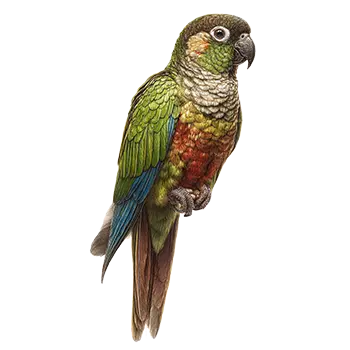

Growth & Physical Development

The juvenile phase for a green-cheeked conure generally spans from the completion of weaning at around eight to ten weeks through roughly the first year of life. During this period the bird reaches its full adult size and weight, typically settling between 60 and 80 grams. Feather development continues as the juvenile plumage fills in completely, and the bird's coloring may subtly shift as it approaches its first molt.

The first major molt usually occurs somewhere between four and eight months of age. During this time the conure will shed its juvenile feathers and grow in a fresh set of adult plumage. Molting can make a young conure irritable and itchy, and you may notice an increase in preening, scratching, and small feather sheaths scattered around the cage. This is entirely normal and not a cause for concern as long as there are no bald patches or signs of feather destructive behavior.

Physically, the juvenile conure's beak and feet continue to harden and strengthen. You may notice the bird becoming a more powerful chewer during this stage, which is a natural part of beak development and exploration. Providing a rotating selection of safe, chewable materials such as untreated wood, vegetable-tanned leather strips, and palm frond toys helps satisfy this urge and keeps the beak in good condition.

Coordination improves dramatically during the juvenile period. The clumsy fledgling transforms into a confident flier and agile climber. This increased mobility means you will need to reassess your home for safety hazards. Ceiling fans, open water, hot surfaces, toxic houseplants, and uncovered windows all pose serious risks to an adventurous young conure exploring its environment.

Nutrition & Diet Transition

Transitioning from hand-feeding formula to a complete solid diet is one of the most important milestones of the juvenile period. Weaning should be a gradual, chick-led process. Offer a variety of fresh foods, high-quality pellets, and a small amount of seed alongside the remaining formula feedings. As the bird begins eating more solids on its own, formula feedings can be slowly reduced and eventually eliminated.

A well-balanced diet for a juvenile green-cheeked conure should consist primarily of a high-quality, appropriately sized pelleted diet formulated for small parrots. Pellets provide consistent nutrition and help prevent the selective eating habits that develop when seed-heavy diets are offered. Aim for pellets to make up approximately 60 to 70 percent of the total diet.

Fresh vegetables and fruits should comprise roughly 20 to 30 percent of daily intake. Dark leafy greens, orange and yellow vegetables, berries, and small portions of tropical fruits all provide valuable vitamins, minerals, and enrichment. Introduce new foods regularly during this stage, as juvenile conures are generally more willing to try unfamiliar items than adult birds. Establishing broad dietary acceptance now will benefit the bird's nutrition for life.

Seeds and nuts should be offered sparingly, primarily as training treats or foraging rewards rather than a dietary staple. Sunflower seeds and peanuts are high in fat and can contribute to obesity and nutritional imbalance if fed in excess. Fresh, clean water should always be available, and food and water dishes should be washed daily to prevent bacterial contamination.

Behavioral Changes

The juvenile and adolescent period brings significant behavioral shifts in green-cheeked conures. As the bird matures and gains confidence, you may see an increase in testing behaviors such as nipping, screaming for attention, and refusing to step up on command. These behaviors are a normal part of avian adolescence and do not indicate that the bird is becoming aggressive or unmanageable.

Green-cheeked conures are known for their playful, sometimes mischievous personalities, and these traits often intensify during adolescence. The bird may develop a preference for one family member, become nippy with others, or display territorial behavior around its cage. Consistency in handling and positive reinforcement are the most effective tools for navigating this phase without reinforcing unwanted behaviors.

Fear periods can also occur during the juvenile stage. A bird that was previously confident and outgoing may suddenly become frightened of familiar objects, sounds, or people. These episodes are typically temporary and resolve on their own as long as the bird is not forced to confront the source of its fear. Patient, calm reassurance and continued positive exposure help the bird regain its confidence.

Vocalization patterns begin to develop more fully during this period. While green-cheeked conures are among the quieter conure species, juveniles often experiment with a range of sounds, contact calls, and occasional loud outbursts. Some birds may begin to mimic household sounds or simple words. Responding positively to desirable vocalizations and avoiding dramatic reactions to screaming helps shape a manageable vocal repertoire.

Training Priorities

The juvenile period is the ideal window for establishing foundational training with your green-cheeked conure. Young conures are naturally curious and eager to interact, making them highly receptive to positive reinforcement-based training. The most important behaviors to establish early are the step-up command, recall, and comfortable handling for veterinary and grooming procedures.

Step-up training should be practiced daily in short, positive sessions. Present your hand or a perch at the bird's lower chest and give a consistent verbal cue. Reward compliance immediately with a small treat and verbal praise. If the bird nips or refuses, calmly withdraw and try again after a brief pause. Never punish a conure for noncompliance, as negative reactions erode trust and can create lasting behavioral problems.

Target training, in which the bird learns to touch its beak to the tip of a small stick for a reward, is another valuable foundation skill. Once the bird understands targeting, it can be used to guide the bird onto a scale for weighing, into a carrier for transport, or through other cooperative behaviors that reduce stress during routine care.

Begin desensitizing the bird to handling that will be necessary throughout its life. Gently touching the feet, wings, beak, and around the eyes during calm moments helps the bird accept these interactions without fear. Practice towel training by gradually introducing a small towel, first near the bird, then draped lightly over its back, rewarding calm acceptance at each stage. A bird that tolerates toweling calmly is far safer and less stressed during veterinary examinations and emergencies.

Exercise & Activity

Juvenile green-cheeked conures are bundles of energy, and providing adequate physical and mental stimulation is essential to their development and wellbeing. A young conure should have several hours of supervised out-of-cage time each day in a bird-safe room where it can fly, climb, and explore. Flight in particular is tremendously beneficial for cardiovascular health, muscle development, and coordination.

The cage itself should be large enough for the bird to move freely, climb, and stretch its wings. Furnish it with a variety of perches of different diameters, textures, and materials to promote healthy foot development. Natural wood branches are excellent choices because they provide irregular surfaces that exercise the feet and satisfy the urge to chew. Rotate perch placement periodically to keep the environment interesting.

Foraging opportunities are just as important as physical exercise. In the wild, conures spend a significant portion of their day searching for food. Replicating this experience in captivity prevents boredom and associated behavioral problems. Simple foraging setups can include wrapping treats in paper, hiding food inside cardboard tubes, or using commercially available foraging toys that require the bird to manipulate a mechanism to access a reward.

Social interaction is itself a form of enrichment for this highly social species. Include your juvenile conure in daily household activities when possible. Supervised time on a play stand in a common living area allows the bird to observe, interact, and feel like part of the flock. Avoid isolating the bird for long periods, as chronic loneliness in a young conure can lead to feather destructive behavior, excessive screaming, and depression.

Veterinary Care & Disease Prevention

Regular veterinary checkups are important throughout the juvenile period to catch any emerging health issues early. An avian veterinarian should examine the bird at least once during the juvenile stage, ideally around three to four months of age, to assess development, review diet, and perform any recommended diagnostic tests. A complete blood panel and screening for common psittacine diseases can establish a valuable health baseline.

Hygiene practices play a large role in disease prevention. Clean food and water dishes daily, replace cage substrate frequently, and wash perches and toys on a regular rotation. Avoid exposing your juvenile conure to other birds of unknown health status, as young birds with developing immune systems are particularly vulnerable to infections like Avian Polyomavirus, Psittacine Beak and Feather Disease, and bacterial or fungal respiratory infections.

Watch for signs of illness, which birds often mask until they are quite sick. Subtle indicators include changes in droppings, fluffed feathers combined with lethargy, reduced appetite, sneezing or nasal discharge, and changes in vocalization. A bird that sits quietly on the bottom of its cage instead of perching is showing a serious warning sign. Any of these symptoms warrant a same-day call to your avian veterinarian.

Nail and beak maintenance may also require attention during the juvenile stage. While a varied perch selection and ample chewing opportunities usually keep the beak naturally conditioned, nails may need occasional trimming. If you are not comfortable trimming nails at home, your avian veterinarian or an experienced avian groomer can perform this safely and show you the technique for future sessions.

Socialization & Exposure

Continued socialization during the juvenile period is essential for raising a well-adjusted adult green-cheeked conure. The experiences and exposures a bird receives during its first year of life have a lasting influence on its comfort level with new people, environments, sounds, and situations. A broadly socialized juvenile conure is far less likely to develop phobias, aggression, or excessive fearfulness as an adult.

Introduce the bird to multiple family members and trusted visitors during this stage. Encourage gentle handling by different people so the conure does not become exclusively bonded to a single individual. While some degree of preference is natural for this species, a bird that can interact comfortably with several people is more adaptable and easier to care for long-term, especially in households where caregiving responsibilities may shift.

Expose the juvenile conure to a variety of everyday experiences in a controlled, positive manner. Short car rides in a secure carrier, visits to bird-safe outdoor areas, exposure to different rooms in the house, and the sounds of household appliances all contribute to a confident bird. Always pair novel experiences with treats and calm reassurance, and never force the bird into a situation that causes obvious panic.

Socialization with other birds should be approached with caution. If you have other healthy, vaccinated birds in the household, supervised visual introductions from a safe distance can begin during the juvenile period. Direct physical contact with other birds should only occur after all birds have been health-screened by an avian veterinarian. Introducing birds too quickly or without proper quarantine protocols can lead to disease transmission and aggressive encounters that may cause physical or psychological harm.

Always consult a qualified professional before making any health-related decisions. This content is provided for informational reference only and should not replace professional guidance specific to your animal.