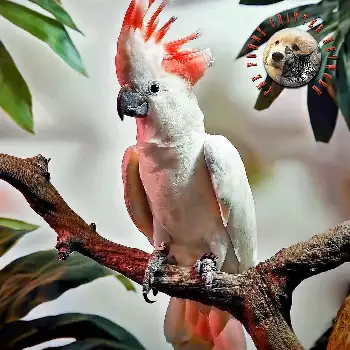

Moluccan Cockatoos reach sexual maturity between four and six years of age, though physical maturity alone does not constitute readiness for breeding. Successful and responsible breeding requires birds that are in excellent physical health, free from infectious diseases, genetically unrelated, and temperamentally suited to pair bonding and parenting. Pre-breeding health evaluations by an avian veterinarian should include complete blood work, screening for psittacine beak and feather disease, polyomavirus, and chlamydiosis, as well as radiographs to assess reproductive organ condition.
Sexual dimorphism in Moluccan Cockatoos is subtle, and surgical or DNA sexing is required to confirm the sex of breeding candidates. Iris color provides a general guideline, with mature hens typically displaying a reddish-brown iris and cocks retaining a darker brown to black iris, but this distinction is not always reliable and should never be the sole method of sex determination for breeding purposes.
Pair compatibility is one of the most significant and unpredictable factors in Moluccan Cockatoo breeding. This species is notorious for mate aggression, particularly from males toward females, which can result in severe injury or death. Introducing potential breeding pairs must be done with extreme caution, over extended periods, and with constant monitoring. Not all genetically suitable pairs will form a compatible bond, and forcing incompatible birds to cohabitate is both dangerous and unproductive.
The decision to breed Moluccan Cockatoos should also account for the current state of the captive population and the breeder's ability to provide lifelong placement for offspring. Moluccan Cockatoos are among the most frequently surrendered and rehomed parrot species due to their challenging temperament and extreme social needs. Responsible breeders carefully evaluate demand, their capacity to screen and educate potential owners, and their willingness to accept birds back if placements do not work out.