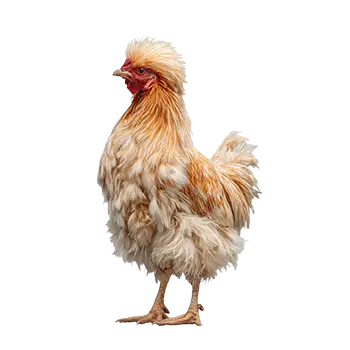

A Cochin Bantam reaches full physical maturity between eight and twelve months of age, entering a prime period that typically spans from the first year through approximately the fourth or fifth year of life. During these years the bird is at its most vigorous, displaying the full splendor of its profuse, soft plumage, the heavily feathered legs and feet that define the breed, and the broad, rounded body shape that makes the Cochin Bantam one of the most visually distinctive chickens in existence. This is the period when the breed's renowned temperament is most fully expressed, a calm, friendly disposition that endears these birds to families, exhibitors, and backyard keepers alike.
Adult Cochin Bantam hens will be in their most productive laying years, though it is important to set realistic expectations. This is an ornamental and heritage breed, not a production hybrid. Hens typically produce between 150 and 180 small, tinted eggs per year, with the strongest production in the first two years of lay. Egg size is noticeably smaller than that of standard breeds, which is consistent with the bird's bantam stature. Many keepers value Cochin Bantam eggs for their flavor and for hatching rather than volume production.
Cockerels that have matured into roosters display the breed's impressive plumage to its fullest advantage. The saddle feathers, hackle feathers, and tail plumage are abundant and flowing, and the foot feathering in a well-bred cockerel can be extraordinarily dense. A mature Cochin Bantam rooster in good condition is a striking bird, and many keepers maintain cockerels specifically for exhibition or as flock guardians. Despite their small size, Cochin Bantam roosters are attentive to their hens and will alert the flock to potential threats, though they lack the physical capacity to deter serious predators.
The adult years are a time of relative stability in care requirements compared to the rapid changes of the juvenile period. Establishing consistent routines for feeding, health monitoring, and coop maintenance during this phase supports the bird's wellbeing and helps caregivers detect problems early when they do arise.