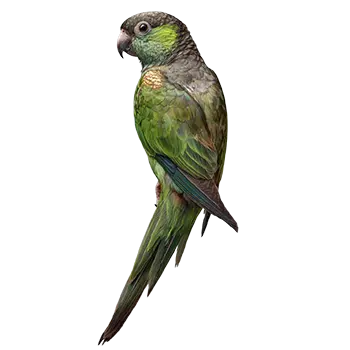

The juvenile stage of a Bronze Winged Parakeet's life begins around six to seven weeks of age when the chick fledges and starts to leave the nest or brooder, and it extends through the first year as the young bird develops the physical capabilities, behavioral repertoire, and social skills of an independent individual. This is a period of extraordinary transformation. The helpless, downy hatchling gives way to a fully feathered, increasingly confident young parakeet that is learning to fly, forage, interact with its environment, and communicate with the flock or family that surrounds it.
Fledging itself is a critical milestone that marks the beginning of the juvenile period. In the wild, Bronze Winged Parakeets fledge from tree cavity nests and must quickly develop the flight skills necessary to keep up with their flock across the forest canopy of their northern South American range. In captivity, the fledging process should be supported rather than rushed. Ensure the young bird has a safe, enclosed space in which to practice flying, free of ceiling fans, open windows, mirrors, and other hazards. Early flight attempts will be clumsy, involving short hops, crash landings, and awkward glides, but coordination improves rapidly with practice over the first week or two.
The psychological dimension of this transition is as important as the physical one. A juvenile Bronze Winged Parakeet is beginning to develop its individual personality and testing the boundaries of its world. It will explore objects, surfaces, and spaces with its beak, feet, and body, sometimes with startling boldness and other times with sudden caution. This is normal and healthy. Caregivers should provide a varied, stimulating environment that encourages exploration while keeping the bird safe, and they should approach the inevitable mishaps of learning, a knocked-over water dish, a chewed-up toy, a startled flight into a wall, with patience and calm reassurance.
For hand-raised birds, this stage also brings a shift in the caregiver relationship. The chick that once depended entirely on the syringe for survival is now beginning to eat independently, and the intense, round-the-clock feeding bond gradually gives way to a broader social connection based on interaction, play, and trust. This evolution can feel like a loss to some caregivers, but it is a sign that the bird is developing exactly as it should.