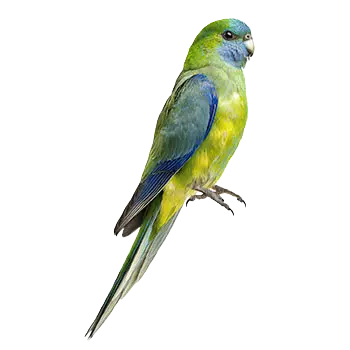

The Blue Winged Parakeet is widely regarded as one of the more challenging Psittacula species to breed in captivity, and success requires careful preparation, patience, and a thorough understanding of the species' reproductive biology. Before attempting to breed this species, prospective breeders should honestly assess whether they have the facilities, experience, and commitment necessary to support the demanding process from pair bonding through chick independence. Captive breeding of this species also carries conservation considerations, as the Blue Winged Parakeet is endemic to the Western Ghats of India and international trade is regulated.
Sexual maturity in Blue Winged Parakeets is typically reached between 18 and 24 months of age, though breeding attempts are generally more successful with birds that are at least two to three years old and in peak physical condition. Both members of the prospective pair should receive a thorough veterinary examination including blood work, disease screening for PBFD, polyomavirus, and chlamydiosis, and assessment of body condition before being introduced. Breeding from birds with known health issues not only reduces the likelihood of success but risks passing genetic vulnerabilities to offspring.
Pair compatibility is a significant challenge with this species. Males can be aggressive toward females, particularly during the initial introduction phase, and forced pairing often results in injury to the hen or persistent stress that suppresses reproductive behavior. The ideal approach is to house several birds of breeding age within visual and auditory range of one another, allowing natural pair bonds to form through mutual choice. When birds demonstrate consistent affiliative behavior toward a specific individual, including mutual preening, coordinated vocalizations, and proximity seeking, they can be moved to a dedicated breeding enclosure together.
The breeding enclosure should provide substantially more space than a standard maintenance cage. A minimum flight length of three meters is recommended to allow the birds to engage in the flight displays that form part of the courtship sequence. The enclosure should be positioned in a quiet area of the aviary complex where the pair will not be disturbed by foot traffic, loud noises, or the proximity of predator species. Visual barriers from neighboring aviaries help reduce territorial stress and allow the pair to focus on each other without the distraction of defending boundaries against adjacent birds.