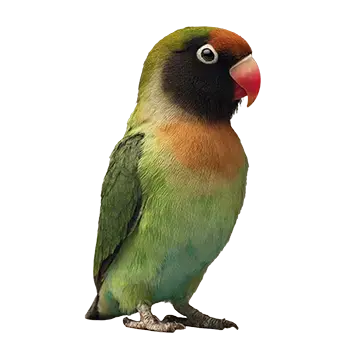

Adult Nutrition & Diet Management

A mature Black-Cheeked Lovebird requires a carefully balanced diet that supports sustained energy, feather health, immune function, and long-term organ integrity. Unlike the growth-oriented nutritional demands of the juvenile period, the adult diet focuses on maintenance and prevention, providing all necessary nutrients without the caloric excess that leads to obesity and its associated health complications. Getting the diet right during the prime years is one of the most impactful things a keeper can do for their bird's longevity.

High-quality formulated pellets should constitute approximately 60 to 70 percent of the adult diet. Pellets designed for small parrots provide a balanced blend of proteins, carbohydrates, fats, vitamins, and minerals in every bite, eliminating the nutritional gaps that arise when birds selectively eat from a mixed seed offering. Converting an adult lovebird to pellets can be challenging if the bird was not introduced to them during the juvenile stage, but persistence and creative presentation strategies, such as mixing pellets with favored seeds and gradually shifting the ratio, can achieve the transition over weeks or months.

Fresh vegetables should make up roughly 20 to 30 percent of the daily intake. Rotate offerings to provide nutritional variety and prevent the bird from fixating on a single vegetable to the exclusion of others. Excellent choices for Black-Cheeked Lovebirds include finely chopped broccoli, carrot, bell pepper, zucchini, snap peas, and dark leafy greens such as kale and collard greens. Vegetables should be washed thoroughly to remove pesticide residues and offered fresh each morning, with uneaten portions removed before they spoil. Cooked grains, legumes, and whole-grain pasta can be offered in small amounts as supplementary nutrition and foraging variety.

Seed should be limited to no more than 10 to 15 percent of the total diet for a non-breeding adult. While seeds provide essential fatty acids and serve as a motivating training reward and foraging activity, they are disproportionately high in fat and deficient in vitamins A, D, and calcium. An all-seed diet is the single most common nutritional error in companion lovebird care and is directly linked to fatty liver disease, obesity, feather abnormalities, and shortened lifespan. Treats such as spray millet, nutriberries, and small portions of fruit should be used deliberately rather than offered in unlimited quantities.

Clean, fresh water must be available at all times in a container positioned to minimize contamination from droppings and food debris. Water dishes or bottles should be cleaned and refilled at least twice daily. Some keepers add avian-safe vitamin supplements to the drinking water, though this practice is less necessary for birds on a balanced pellet-and-vegetable diet and can be counterproductive if it causes the bird to reduce its water intake due to taste changes. Discuss supplementation with your avian veterinarian before adding anything to the water supply.

Enrichment & Mental Stimulation

Black-Cheeked Lovebirds are active, curious, and highly social birds that require daily mental stimulation to maintain psychological health. In the wild, these birds spend their days foraging across their habitat in southwestern Zambia, navigating complex social dynamics within their flock, and responding to the constantly changing demands of their environment. In captivity, where food is provided and threats are absent, the bird's considerable mental energy must be directed toward constructive outlets to prevent the development of stereotypic and self-destructive behaviors.

Foraging enrichment is the most natural and effective form of mental stimulation for a lovebird. Rather than presenting food in an open dish where it can be consumed in minutes, use foraging toys, puzzle feeders, and creative food presentation to extend the foraging experience. Wrap treats in small pieces of plain paper, hide pellets inside wiffle balls, weave leafy greens through cage bars, and scatter seeds on a tray of clean pebbles or crumpled paper. These strategies require the bird to work for its food, engaging its problem-solving abilities and occupying time that might otherwise be spent in idle frustration.

Destructible toys are essential for lovebirds, which have a strong instinct to chew and shred. Provide a constant supply of wooden blocks, leather strips, palm frond bundles, seagrass mats, and plain cardboard items that the bird can demolish. The act of destruction is itself the enrichment: do not view rapid toy destruction as wasteful but as evidence that the bird is engaging in healthy, species-appropriate behavior. Rotate toys regularly to maintain novelty, and observe which types of materials and textures your particular bird prefers.

Social enrichment is equally important and cannot be replaced by toys alone. Black-Cheeked Lovebirds form intense social bonds and suffer in isolation. If you keep a single bird, you must provide substantial daily interaction, ideally two or more hours of direct engagement including handling, training sessions, and supervised out-of-cage time. If your schedule does not allow this level of interaction, strongly consider keeping a pair. Even birds that are bonded to their human companions benefit from avian social contact, and a compatible cage mate provides companionship during the many hours when the owner is unavailable.

Out-of-cage time in a bird-safe room is an important component of daily enrichment. Flight exercise, exploration of novel surfaces and objects, and interaction with the household environment all provide stimulation that cannot be replicated inside even the most well-equipped cage. Establish a designated play area with perches, toys, and foraging stations where the bird can spend time outside the cage under supervision. Ensure the room is fully bird-proofed before every session, checking for open windows and doors, exposed electrical cords, toxic houseplants, and standing water.

Behavioral Management in Adulthood

Adult Black-Cheeked Lovebirds are charismatic and engaging companions, but their strong personalities can present behavioral challenges if not managed with understanding and consistency. The most common behavioral issues in adult lovebirds, including biting, excessive vocalization, territorial aggression, and hormonal behaviors, are almost always rooted in unmet needs or inadvertent reinforcement rather than malice. Addressing the underlying cause produces far better results than attempting to suppress the behavior through punishment.

Biting in adult lovebirds typically stems from fear, territorial defense, hormonal agitation, or learned behavior that was accidentally reinforced during the juvenile period. Identifying the trigger is the first step. A bird that bites when hands enter the cage is likely displaying territorial behavior and may respond to training that rewards voluntary exit from the cage rather than being reached for. A bird that bites during handling may be overstimulated, tired, or responding to perceived threats in the environment. Systematic desensitization, where the trigger is introduced gradually at sub-threshold levels while the bird is rewarded for remaining calm, is an effective approach for fear-based biting.

Hormonal behaviors intensify during breeding season and can temporarily alter even a well-adjusted bird's temperament. Signs of hormonal stimulation include increased territoriality, regurgitation directed at toys or people, paper shredding and nest-seeking behavior, increased vocalization, and general irritability. Managing hormonal surges involves reducing the environmental triggers that stimulate breeding behavior. Limit daylight hours to 10 to 12 hours per day, remove nesting materials and enclosed spaces that suggest nest sites, avoid warm mushy foods that mimic breeding-season abundance, and refrain from petting the bird on the back or under the wings, which stimulates reproductive hormones.

Excessive screaming is often a communication attempt rather than a behavioral flaw. Lovebirds are naturally vocal and use contact calls to stay in touch with their flock, which in captivity includes their human household. Responding to every call teaches the bird that screaming brings attention, creating an escalating cycle. Instead, establish a predictable call-and-response routine where you acknowledge a reasonable contact call with a consistent verbal reply, and ignore screaming that exceeds normal communication levels. Reward quiet behavior and provide sufficient enrichment and social interaction to reduce attention-seeking vocalizations.

Consistency across all household members is the foundation of effective behavioral management. If one person allows a behavior that another person discourages, the bird receives contradictory signals that undermine training progress. Establish clear household rules about how the bird is handled, which behaviors are rewarded, and how undesirable behaviors are addressed. Document these guidelines and ensure everyone who interacts with the bird follows them. A consistent environment produces a more confident, less anxious bird with fewer behavioral issues.

Annual Health Maintenance

Proactive health care during the adult years is the most reliable way to ensure a Black-Cheeked Lovebird reaches its full lifespan potential of 10 to 15 years or more. Small parrots are adept at concealing signs of illness, a survival adaptation carried over from their wild ancestry where visible weakness attracted predators. By the time a lovebird shows obvious symptoms of disease, the condition has often progressed significantly. Annual veterinary examinations and daily home monitoring work together to catch problems at their earliest and most treatable stages.

Annual veterinary visits should include a thorough physical examination, a complete blood count and biochemistry panel, and fecal and crop cultures. The physical examination allows the veterinarian to assess body condition, evaluate feather quality, examine the eyes, nares, oral cavity, and vent, and palpate for masses or organ enlargement. Blood work reveals organ function, infection markers, and nutritional status that cannot be assessed externally. Establishing a file of annual blood work results is particularly valuable because it creates a baseline that makes it easy to spot changes that might fall within the normal species range but represent a significant departure for your individual bird.

Beak and nail maintenance are routine aspects of adult care. Lovebirds that have access to appropriate perching surfaces and chewing materials often keep their beaks and nails worn to functional lengths naturally. However, some individuals require periodic veterinary trimming, particularly birds with slightly misaligned beaks or those that prefer soft perching surfaces. Overgrown beaks can interfere with eating, while overgrown nails increase the risk of nail snagging and potential injuries. Your avian veterinarian can demonstrate proper trimming technique if you wish to learn to do this at home between veterinary visits.

The annual molt is a significant physiological event that occurs in adult lovebirds, typically once or twice per year. During the molt, the bird replaces old feathers with new growth, a process that requires substantial protein, amino acids, and energy. Ensure the bird's diet is nutritionally complete during molting periods, and consider offering additional protein sources such as cooked egg or sprouted seeds. The bird may be less active, slightly irritable, and more sensitive to handling during heavy molt periods. Pin feathers, which are new feathers encased in waxy sheaths, are supplied with blood during their growth phase and can bleed significantly if damaged, so handle a molting bird with extra care.

At-home health monitoring should be a daily habit, not an occasional thought. Observe the bird's energy level, appetite, vocalization patterns, and droppings each day. Droppings are one of the most informative diagnostic indicators available to the home caregiver. Normal droppings for a pellet-fed lovebird consist of a formed olive to dark green fecal component, a white urate portion, and a small clear liquid fraction. Changes in color, consistency, volume, or frequency often precede other visible symptoms of illness and should prompt a veterinary consultation rather than a period of watchful waiting.

Housing & Environment for Adult Birds

The adult Black-Cheeked Lovebird's cage is not merely a container but a carefully designed living environment that supports physical health, mental engagement, and a sense of security. The quality of the housing setup directly influences the bird's feather condition, foot health, muscular fitness, psychological state, and susceptibility to illness. Investing in a proper cage and maintaining it well is one of the most impactful decisions a lovebird owner makes.

Cage size should be as generous as your space and budget allow, well beyond the minimum dimensions suitable for a juvenile bird. For a single adult lovebird, a cage measuring at least 30 inches long by 18 inches wide by 24 inches tall provides adequate room for movement, wing stretching, and toy placement. For a pair, increase these dimensions proportionally. Length is more important than height for lovebirds, which are horizontal flyers that benefit more from long flight paths within their cage than from vertical climbing space. Bar spacing should remain at half an inch or less to prevent escape and injury.

Cage placement affects the bird's sense of security and its integration into household life. Position the cage in a room where the family spends regular time, ensuring the bird feels included in the social environment it craves. At least one side of the cage should be against a wall or in a corner, providing a solid backdrop that gives the bird a sense of protection. Avoid placement in the kitchen, where cooking fumes from nonstick cookware, aerosols, and temperature fluctuations pose serious health risks. Direct sunlight should be available for part of the day if possible, but the bird must always have access to shaded areas within the cage to prevent overheating.

Perching and substrate choices matter more than many keepers realize. Continue to provide a variety of natural wood perches in different diameters to exercise the feet and prevent pressure sores. Replace perches when they become soiled, chewed down, or slippery. The cage floor can be lined with plain newspaper, butcher paper, or paper towels, which facilitate daily dropping observation and easy cleaning. Avoid corncob, walnut shell, and scented beddings, which can harbor bacteria and fungi or release irritating compounds.

Environmental controls including temperature, humidity, air quality, and light cycles require ongoing attention. Black-Cheeked Lovebirds are comfortable in typical household temperatures between 65 and 80 degrees Fahrenheit but are sensitive to rapid temperature changes and drafts. Maintain moderate humidity levels to support respiratory and feather health. Air quality is especially important: never use nonstick cookware, scented candles, air fresheners, aerosol sprays, or tobacco products in or near rooms where the bird is housed. These seemingly benign household items release airborne compounds that can cause acute respiratory failure in birds. Establish a consistent light-dark cycle of 10 to 12 hours of light and 12 to 14 hours of uninterrupted darkness to support hormonal regulation and restful sleep.

Social Needs & Companionship

The Black-Cheeked Lovebird's name reflects the central feature of its social biology: these birds form deep, enduring pair bonds and derive a significant portion of their psychological well-being from close companionship. Understanding and meeting the social needs of an adult lovebird is not optional; it is as fundamental to the bird's health as proper nutrition and veterinary care. A socially deprived lovebird is a stressed lovebird, and chronic stress manifests as behavioral problems, immune suppression, and reduced quality of life.

For single-bird households, the owner effectively becomes the lovebird's flock mate and must be prepared to invest substantial daily time in direct interaction. This means not just being in the same room while working at a computer, but actively engaging with the bird through handling, conversation, training sessions, and play. A minimum of two hours of focused daily interaction is a reasonable baseline, though many well-bonded lovebirds want and benefit from considerably more. If your lifestyle does not reliably allow this level of engagement, keeping a pair is a more ethical and practical choice.

Keeping a bonded pair offers significant welfare advantages. Paired lovebirds engage in mutual preening, synchronized roosting, food sharing, and companionship that no human can fully replicate. A well-matched pair is generally calmer, less prone to behavioral problems, and better able to tolerate periods when the owner is away from home. However, pairing is not a substitute for human socialization. Even bonded pairs benefit from regular human interaction and handling to maintain their comfort with people.

Introducing a second lovebird to an established single bird requires careful management. Never place a new bird directly into the existing bird's cage, as this almost always triggers aggressive territorial defense. Begin with a quarantine period of 30 to 45 days in a separate room to ensure the new bird is healthy. After quarantine, place the cages side by side so the birds can see and hear each other without physical contact. Monitor their body language for signs of interest versus aggression. Neutral-territory introductions, where both birds are placed in an unfamiliar space for supervised interaction, reduce territorial dynamics and give the birds an opportunity to establish a relationship on equal footing.

Be aware that not all lovebirds will accept a companion. Some strongly human-bonded individuals reject other birds and may become aggressive or despondent when a cage mate is introduced. If introductions do not progress positively after several weeks of gradual, supervised attempts, it may be necessary to house the birds separately while still providing visual and auditory contact. Forcing a pairing on incompatible birds creates a stressful environment for both individuals and can result in serious injuries.

Common Adult Health Concerns

Adult Black-Cheeked Lovebirds are generally hardy birds when provided with proper care, but they are susceptible to several health conditions that owners should understand and watch for. Awareness of these common issues enables early detection and treatment, which significantly improves outcomes. Many of the conditions seen most frequently in adult lovebirds are directly related to husbandry factors such as diet, environment, and stress management, making them largely preventable.

Fatty liver disease, or hepatic lipidosis, is one of the most common health problems in captive lovebirds and is almost exclusively linked to high-fat, seed-heavy diets combined with insufficient exercise. The condition develops gradually as excess dietary fat accumulates in the liver, eventually compromising organ function. Early signs include obesity, overgrown or flaky beak, feather color changes, and lethargy. Advanced cases may present with difficulty breathing due to liver enlargement pressing on the air sacs. Prevention through a balanced diet with limited seed intake and regular flight exercise is far more effective than treating established disease.

Respiratory infections are a significant concern and can be caused by bacteria, fungi, viruses, or environmental irritants. Aspergillosis, a fungal infection caused by Aspergillus species that thrive in damp, poorly ventilated environments, is particularly dangerous for lovebirds. Symptoms include tail bobbing, open-mouth breathing, nasal discharge, voice changes, and reduced activity. Environmental management, including maintaining clean, dry cage conditions and ensuring good air quality, is the primary preventive measure. Any respiratory symptoms warrant prompt veterinary evaluation, as respiratory infections in small birds can become critical within days.

Psittacine Beak and Feather Disease is a viral condition caused by a circovirus that attacks the immune system and feather follicles. It can present as progressive feather loss, abnormal feather growth, beak deformities, and increased susceptibility to secondary infections. There is no cure for the virus, and management focuses on supportive care and prevention of complications. Birds diagnosed with this condition require careful management to maintain quality of life and must be isolated from uninfected birds to prevent transmission.

Egg binding, while more commonly discussed in the breeding context, can occur in any sexually mature female lovebird, including those without a mate. Hormonal stimulation from environmental cues can trigger egg production in single females, and if the egg cannot be passed normally, the resulting egg binding is a life-threatening emergency. Signs include straining, lethargy, fluffed posture, sitting on the cage floor, and visible swelling in the lower abdomen. Immediate veterinary intervention is essential, as prolonged egg binding can cause internal tissue damage, infection, and death. Environmental management to reduce hormonal stimulation is the best preventive strategy for single females.

Always consult a qualified professional before making any health-related decisions. This content is provided for informational reference only and should not replace professional guidance specific to your animal.