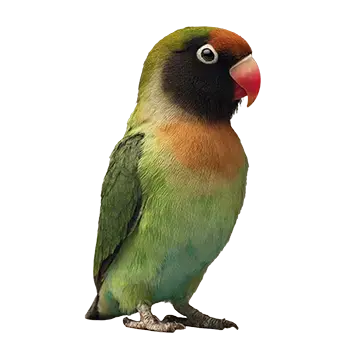

Breeding Black-Cheeked Lovebirds carries a responsibility that extends beyond the individual pair and their offspring. Agapornis nigrigenis is classified as vulnerable on the International Union for Conservation of Nature Red List, with wild populations confined to a small range in southwestern Zambia centered around the Zambezi River drainage. Captive breeding plays a meaningful role in maintaining a genetically viable population outside the wild range, but only when conducted thoughtfully with attention to lineage, health, and the welfare of every bird produced.
Before initiating a breeding program, honestly assess your capacity to provide for the offspring. Each clutch can produce three to six chicks, and every one of those chicks needs either a permanent home in your care or a pre-arranged placement with a qualified, committed owner. The market for Black-Cheeked Lovebirds is smaller than for more common lovebird species, which means finding appropriate homes may take time and effort. Breeding without a placement plan contributes to surplus birds that may end up in unsuitable situations or overwhelmed rescues.
Genetic diversity is a critical consideration when selecting breeding stock. Black-Cheeked Lovebirds have a relatively small captive gene pool, and inbreeding can lead to reduced fertility, weakened immune function, and increased susceptibility to disease. Seek unrelated breeding stock from reputable sources, and maintain thorough pedigree records. If you are already keeping a pair, verify that they are not closely related before allowing them to breed. Some breeders participate in informal registries or cooperative breeding networks that facilitate the exchange of unrelated birds to strengthen the captive population's genetic foundation.
Ethical breeding also means ensuring that both parent birds are in optimal health before breeding is attempted. Pre-breeding veterinary examinations, including blood work, disease screening, and body condition assessment, should be standard practice. A bird that is underweight, overweight, showing signs of illness, or recovering from a recent health event should not be bred until it has fully recovered. The physical demands of egg production, incubation, and chick rearing are substantial, and starting from a compromised baseline puts both the hen and the chicks at unnecessary risk.