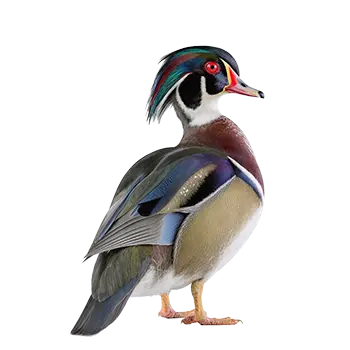

Selecting the right feeders for Wood Ducks requires understanding how this species differs from both domestic poultry and companion cage birds. Wood Ducks feed primarily by dabbling on and below the water surface and by foraging on the ground, so traditional hanging feeders or elevated trough feeders designed for chickens are poorly suited to their feeding posture. Ground-level feeders, shallow dishes, and water-compatible feeding systems produce the best intake results and the least feed waste for this species.
Gravity-fed ground feeders with rain covers are among the most practical options for delivering dry pellets and grain in an outdoor waterfowl enclosure. These feeders hold several pounds of feed in a hopper that dispenses into a shallow tray at ground level as the birds consume it. The rain cover prevents moisture from reaching the feed, which is critical because wet pellets spoil rapidly and can develop harmful mold within hours in warm weather. Models with adjustable flow gates allow the keeper to control the rate of dispensing and limit waste from overfilling the tray.
Floating feeders designed for fish ponds can be repurposed for delivering food on the water surface, which is the most natural feeding context for Wood Ducks. These ring-shaped or basket-style feeders hold pellets or grain at the waterline and allow the ducks to feed while swimming. The food stays contained within the feeder boundary, reducing scatter and preventing uneaten food from sinking to the pond bottom where it degrades water quality. Floating feeders should be tethered with a light cord to prevent them from drifting into inaccessible corners of the pond.
Feed storage containers are an essential accessory that directly affects the safety and nutritional value of the food they hold. Galvanized steel bins with tight-fitting lids are the standard for waterfowl operations because they resist gnawing by rodents, seal out moisture and insects, and withstand outdoor conditions. Plastic bins are lighter and less expensive but are vulnerable to chewing by rats and mice and can crack in freezing temperatures. Regardless of material, feed containers should be kept in a shaded location and the contents should be used within the manufacturer's recommended shelf life to ensure vitamin potency and freshness.