Budgerigar Species Guide - Furry Critter Network

Budgerigar

Quick Facts

🔬 Scientific Name
Melopsittacus undulatus
📊 Care Level
Beginner
😊 Temperament
Friendly, Playful, Social
📏 Adult Size
7-8 inches
⏱️ Lifespan
5-10 years (up to 15 with excellent care)
🔊 Noise Level
Moderate
🗣️ Talking Ability
Good to Excellent
🍽️ Diet Type
Seed-based with pellet supplementation
🌍 Origin
Australia
🏠 Min Cage Size
18x18x18 inches (larger preferred)
📐 Size
Small

Budgerigar - Names & Recognition

The Budgerigar (Melopsittacus undulatus) is known by numerous names across the globe, reflecting its worldwide popularity as a companion bird. In North America, these birds are commonly called parakeets or simply budgies, though this can cause confusion as 'parakeet' technically refers to any small parrot with a long tail. In their native Australia and throughout Europe, Budgerigar or the shortened budgie remains the preferred name. The term derives from an approximation of the Aboriginal word 'betcherrygah,' which roughly translates to 'good food,' referencing their historical role in Aboriginal diets.

The scientific name Melopsittacus undulatus was assigned by naturalist George Robert Gray in 1840. The genus name Melopsittacus combines the Greek words for 'melodious' and 'parrot,' acknowledging their pleasant vocalizations and chattering songs. The species name undulatus refers to the distinctive undulating wave-like patterns on their wings and back in wild-type coloration. Budgerigars are the sole species in the genus Melopsittacus, making them quite unique taxonomically.

While there are no officially recognized subspecies of budgerigars, the pet trade has produced over 100 color mutations through selective breeding. Wild-type budgies display the classic green and yellow coloration with black barring, but captive-bred varieties include blues, violets, yellows, whites, grays, and countless combinations. These mutations are categorized by color series (blue, green, gray), pattern varieties (normal, opaline, spangle, pied), and other factors like crest feathers or size variations. Exhibition or English budgies are selectively bred to be larger and more robust than standard American budgies, though both are the same species. Common alternate names also include shell parakeet, warbling grass parakeet, canary parrot, zebra parrot, and flight bird, though these terms are less commonly used today.

Budgerigar Physical Description

Budgerigars are small, slender parrots measuring approximately 7-8 inches (18-20 cm) from head to tail tip, with the tail accounting for roughly half their total length. Wild-type and standard pet budgies typically weigh between 1.1-1.4 ounces (30-40 grams), while larger exhibition budgies may reach 1.7-2.1 ounces (50-60 grams). Despite their small size, budgies are athletically built with streamlined bodies perfectly adapted for swift, agile flight.

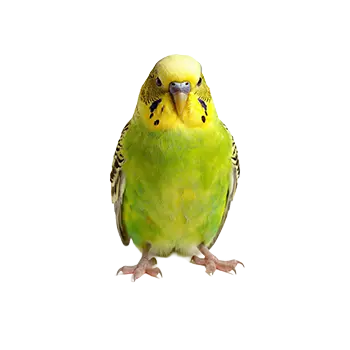
The natural wild-type coloration features a bright green body with a yellow face and forehead. The throat and forecheeks display distinctive black spots, typically six in total, with the central two often partially obscured by violet cheek patches. The back of the head, nape, and wings show black scalloped markings creating an undulating wave pattern against a yellow background. The tail feathers are predominantly dark blue-green with yellow central tail feathers. The cere (the fleshy area above the beak) provides the most reliable method of sex determination: adult males develop bright blue ceres, while females have tan, brown, or crusty beige ceres, especially when in breeding condition.

However, selective breeding has created an extraordinary rainbow of color mutations. Blue series budgies lack yellow pigment, resulting in white faces with blue bodies. Lutino budgies are bright yellow with red eyes, while albinos are pure white with red eyes. Gray, violet, and mauve variations exist, along with numerous pattern mutations. Opaline budgies show reduced barring on the head and back, spangle budgies have reversed markings creating a laced appearance, and pied budgies display irregular patches of color. Crested varieties feature tufted feathers on the crown.

Young budgies (under 3-4 months) display barring extending over the forehead to the cere, which gradually recedes with age. Juvenile birds also have darker eyes before developing the distinctive white iris ring seen in adults after 4-6 months. The beak is relatively small but strong, designed for cracking seeds and manipulating objects. Their zygodactyl feet (two toes forward, two backward) provide excellent gripping ability for perching and climbing. Males and females are similar in size, though females may be slightly stockier, especially when carrying eggs. The incredible variety of colors and patterns, combined with their charming personalities, contributes significantly to the budgerigar's enduring popularity as the world's most kept companion bird.

Affection Level
Budgies are affectionate companions that bond strongly with their owners. Hand-raised budgies often enjoy head scratches, cuddling, and perching on fingers or shoulders. They show affection through preening, gentle nibbling, and chirping when their favorite person enters the room.
Sociability
Extremely social birds that thrive on interaction with humans or other budgies. They are happiest when kept in pairs or small groups, though single budgies bond more closely with human companions. Budgies enjoy being part of household activities and can become depressed when isolated.
Vocalization
Budgies are moderately vocal with pleasant chirping and chattering throughout the day. Males are typically more vocal than females and often develop impressive vocabularies. Their vocalizations are generally not loud enough to disturb neighbors, making them suitable for apartments.
Intelligence
Highly intelligent birds with excellent learning capabilities. Budgies can learn extensive vocabularies, recognize family members, solve simple puzzles, and understand routines. They demonstrate curiosity, problem-solving skills, and the ability to learn complex tricks with patient training.
Exercise Needs
Active birds requiring daily out-of-cage flight time of at least 2-3 hours. Budgies are naturally athletic flyers that need space to exercise their wings and explore. They enjoy climbing, swinging on perches, and playing with toys to maintain physical fitness and mental stimulation.
Maintenance Level
Low-maintenance compared to larger parrots. Budgies are relatively clean birds requiring basic daily food and water changes, weekly cage cleaning, and occasional nail trims. Their small size makes cleanup easy, though they do produce some seed hulls and feather dust.
Trainability
Highly trainable birds that respond excellently to positive reinforcement. Budgies can learn to step up, recall, perform tricks, and mimic speech with consistent training. Males typically show more interest in talking, while females often excel at physical tricks and agility.
Independence
Moderately independent when provided with adequate enrichment and companionship. Single budgies require more human interaction, while pairs entertain each other but still enjoy owner involvement. They can occupy themselves with toys for periods but prefer social engagement throughout the day.

Natural Habitat & Range

Budgerigars are endemic to Australia, where they inhabit the vast interior regions of the continent. Their native range covers most of Australia's interior and western regions, avoiding only the extreme northern tropical zones, the eastern coastal belt, and the southwestern corner. These adaptable parrots thrive in Australia's semi-arid grasslands, scrublands, open woodlands, and mallee country, demonstrating remarkable resilience in harsh, variable environments.

The natural habitat of wild budgerigars consists of open country with scattered trees, particularly areas with water sources like seasonal creeks, waterholes, and rivers. They favor regions dominated by spinifex grass, Mitchell grass, and acacia scrubland, which provide both food sources and minimal tree cover for roosting. Unlike many parrot species, budgerigars are highly nomadic, following seasonal rainfall patterns and the subsequent seed production across Australia's unpredictable interior. Flocks can number from a few dozen to thousands of birds, creating spectacular aerial displays as they move between feeding and watering sites.

Wild budgerigars live in a climate characterized by extreme temperature variations and irregular rainfall. Daytime temperatures commonly exceed 100°F (38°C) during summer, while winter nights can drop near freezing. These tough little parrots have adapted to survive extended drought periods by following rain fronts across vast distances. When conditions are favorable following good rains, wild budgies breed opportunistically, sometimes producing multiple clutches in quick succession. During drought years, breeding may cease entirely as the birds focus on survival.

In their natural habitat, budgerigars are primarily ground-feeding granivores, spending much of their time foraging for grass seeds, particularly from spinifex and Mitchell grass. They feed primarily during cooler morning and late afternoon hours, resting in shaded tree branches during the intense midday heat. Wild flocks are incredibly wary and alert for predators, with sentinel birds keeping watch while others feed or drink. Their natural predators include birds of prey such as falcons and hawks, as well as ground predators like snakes and monitor lizards.

The conservation status of wild budgerigars is currently classified as Least Concern by the IUCN, with stable or possibly increasing populations. Australia's vast interior provides ample habitat, and budgerigars have actually benefited from some human activities, such as the creation of permanent water sources for livestock. However, they face threats from habitat modification, prolonged drought exacerbated by climate change, and trapping for the pet trade (though export from Australia has been illegal since 1960). The budgerigar's incredible adaptability, rapid reproduction rate, and nomadic lifestyle help maintain healthy wild populations across their expansive range, ensuring these charismatic parrots remain a common sight in the Australian outback.

Temperament

Budgerigars possess delightful, engaging personalities that have made them beloved companions for over 150 years. These small parrots are naturally curious, playful, and social creatures that form strong bonds with their human caretakers and fellow budgies. Well-socialized budgies are gentle, rarely aggressive, and enjoy interactive play, making them excellent pets for families, seniors, and first-time bird owners alike.

Individual budgie personalities vary considerably, ranging from bold and outgoing to shy and reserved. Males tend to be slightly more vocal and playful, often showing greater interest in mimicking speech and whistling tunes. They typically develop more extensive vocabularies and are more likely to sing and chatter throughout the day. Female budgies can be equally affectionate but often display more independent, assertive personalities. They may be slightly less vocal than males but can still learn to talk and are often excellent at learning physical tricks and agility tasks.

Bonding and affection levels in budgerigars depend significantly on their socialization history and living situation. Hand-raised budgies that receive consistent positive interaction from a young age develop the strongest bonds with humans. These birds often seek out their owners for head scratches, contentedly perch on shoulders or fingers, and may even enjoy gentle cuddling. Single budgies generally bond more intensely with their human companions than paired birds, though they require more daily interaction to prevent loneliness. Paired or group-housed budgies remain friendly and interactive with humans while also enjoying the companionship of their own kind.

Budgerigars are highly social birds that genuinely enjoy being part of household activities. They love having their cages positioned where they can observe family life and often chirp excitedly when their favorite people are nearby. These intelligent parrots quickly learn household routines, recognizing mealtimes, play sessions, and bedtime schedules. Many budgies develop preferences for particular family members, though most remain friendly with everyone who treats them kindly and respectfully.

Vocalization is a prominent aspect of budgie temperament. These chatty little parrots communicate through various chirps, whistles, warbles, and chatter. Their vocalizations are generally pleasant and musical rather than harsh or screaming. Budgies are most vocal during dawn and dusk, mirroring their natural behavior patterns, though they chirp intermittently throughout the day. Males particularly enjoy singing elaborate songs and may spend hours practicing new sounds and words. While not excessively loud, budgies do make their presence known through their constant cheerful commentary.

The talking ability of budgerigars is truly impressive for such small birds. Many budgies, especially males, develop extensive vocabularies containing dozens or even hundreds of words and phrases. Some exceptional individuals can string words together in contextually appropriate ways. Budgies learn best through repetition and tend to pick up words or sounds they hear frequently, including ringtones, microwave beeps, and other household sounds. Their high-pitched voices can sometimes be difficult to understand, but patient owners learn to decipher their budgie's speech.

Playfulness defines much of the budgie personality. These energetic birds love toys, especially bells, mirrors, swings, and objects they can manipulate with their feet and beak. They enjoy shredding paper, climbing ladders, and investigating new objects. Budgies often invent their own games, such as dropping toys to watch them fall or playing 'tug' with their owners. This playful nature persists throughout their lives, though younger budgies typically show higher energy levels.

Mood indicators in budgies are relatively easy to read. A happy, content budgie displays relaxed posture, smooth feathers, and active engagement with surroundings. Excited budgies may bob their heads, dilate their pupils rapidly, or perform courtship displays even toward human companions. Frightened or stressed budgies flatten their feathers, crouch low, or flee to the highest point available. Aggressive budgies (uncommon but possible) raise their body feathers, lunge with open beaks, or emit harsh alarm calls. Understanding these signals helps owners respond appropriately to their budgie's emotional state.

Common behavioral quirks include head bobbing (often a sign of excitement or courtship), regurgitating for loved ones (a sign of deep affection), grinding their beaks before sleep (a contentment behavior), and enthusiastically preening their favorite people's hair or eyebrows. Some budgies develop amusing habits like attacking specific colors, 'fighting' their reflection, or demanding attention through persistent chirping. These endearing quirks make each budgie a unique individual character. With proper socialization, consistent interaction, and respect for their needs, budgerigars develop into charming, affectionate companions that bring joy and entertainment to their families for many years.

Care Requirements

Proper housing and care are essential for maintaining healthy, happy budgerigars. While budgies are small birds, they require surprisingly spacious cages to accommodate their active, athletic nature and need for flight exercise. The minimum cage size for a single budgie is 18x18x18 inches (45x45x45 cm), though bigger is always better. For a pair of budgies, minimum dimensions should be 30x18x18 inches (75x45x45 cm), while flight cages measuring 36-48 inches long provide ideal space for exercise. Horizontal space matters more than height for these flying birds, though vertical space allows for climbing and playing.

Bar spacing is critical for budgie safety, with recommended spacing of 1/2 inch (1.25 cm) or less. Wider spacing allows budgies to squeeze through or trap their heads, creating serious injury risk. Rectangular or square cages work better than round cages, which can cause disorientation and provide less usable space. Avoid decorative cages with complex shapes that reduce flight room or create injury hazards.

Cage location significantly impacts budgie wellbeing. Position the cage in a room with regular family activity so budgies feel included in household life, but away from kitchens where toxic fumes from non-stick cookware can kill birds almost instantly. Place cages against a wall rather than in room centers, providing security. Ensure good natural light but avoid direct sunlight which can overheat birds. Keep cages away from drafty windows, air conditioning vents, and heating sources. The cage should be elevated so the perches sit approximately at human eye level, making budgies feel secure rather than vulnerable.

Perch variety promotes foot health and prevents pressure sores. Provide perches of different diameters (1/4 to 1/2 inch for budgies), materials (natural wood, rope, therapeutic), and textures. Natural wood branches from safe trees like manzanita, apple, or willow provide variable diameter and texture for natural foot exercise. Avoid sandpaper perches which can cause foot injuries. Include at least three perches at different heights, with one positioned high for sleeping and others positioned to allow short flights between them without hitting toys or cage walls.

Toy requirements for budgies are substantial due to their intelligent, playful nature. Rotate 4-6 toys regularly to maintain interest, including foraging toys, shredding toys, puzzle toys, bells, swings, and ladders. Budgies particularly enjoy mirrors (though avoid if bird becomes obsessively attached), bells they can ring, and toys they can manipulate with feet and beak. Safe materials include untreated wood, vegetable-tanned leather, natural fibers, and stainless steel. Avoid toys with loose strings that could entangle toes, toxic materials, or small parts that could be swallowed.

Out-of-cage time is non-negotiable for budgie health and happiness. These athletic birds need minimum 2-3 hours daily of supervised free flight in a bird-proofed room. Close all windows and doors, cover mirrors and windows to prevent collision injuries, remove toxic plants, secure other pets, and eliminate hazards like ceiling fans, open water containers, and hot surfaces. Many budgies enjoy playing on play gyms or bird trees during out-of-cage time. Some owners dedicate entire bird-safe rooms for extended flight time.

Safety hazards to avoid include open water containers where budgies can drown, toxic houseplants (philodendron, pothos, lilies), lead and zinc in toys or cage components, Teflon and non-stick cookware fumes which are instantly fatal, scented candles and air fresheners, cigarette smoke, and other pets. Budgies are curious and will investigate anything within reach, requiring vigilant hazard prevention.

Enrichment strategies keep budgies mentally stimulated. Rotate toys weekly, provide foraging opportunities by hiding food in toys or paper, offer fresh branches for chewing, play music or leave TV on for company when owners are away, and provide varied out-of-cage activities. Training sessions offer excellent mental enrichment while strengthening the human-bird bond.

Temperature and humidity needs for budgies are moderate. They tolerate temperatures from 65-80°F (18-27°C) comfortably, though prefer the lower end of this range. Avoid temperature fluctuations and drafts which stress immune systems. Humidity should be maintained at 40-60%, achieved through regular bathing opportunities, room humidifiers in dry climates, or placing water dishes near cages. Budgies enjoy bathing in shallow dishes, spray bottles, or even wet lettuce leaves.

Lighting requirements include 10-12 hours of light followed by 10-12 hours of uninterrupted dark sleep. Consistent schedules prevent hormonal issues and support healthy immune function. Full-spectrum UV lighting benefits vitamin D synthesis, positioned 12-18 inches from perches and replaced every 6-12 months as UV output diminishes. Cover cages at night if room lighting continues, ensuring budgies receive adequate dark rest period.

Cage maintenance involves daily food and water changes, daily removal of droppings from favorite perching areas, weekly complete cage cleaning with bird-safe cleaners, and monthly deep cleaning of all accessories. Clean food and water dishes thoroughly to prevent bacterial growth. Replace perches when excessively soiled. Regular cleaning prevents disease and maintains air quality. With appropriate housing meeting all these requirements, budgerigars thrive as active, healthy companions, displaying their full range of natural behaviors and living their longest, happiest lives.

Feeding & Nutrition

Proper nutrition forms the foundation of budgerigar health, longevity, and vitality. In the wild, budgerigars are primarily granivorous, feeding on various grass seeds from native Australian plants like spinifex and Mitchell grass. They consume seeds at different ripeness stages, from green and soft to fully dried, providing nutritional variety. However, captive budgies require carefully balanced diets that go beyond simple seed mixtures to prevent nutritional deficiencies and obesity.

The seeds versus pellets debate has raged in avian nutrition for decades. Traditional seed-only diets, while palatable to budgies, present serious nutritional problems. Most commercial seed mixes consist primarily of millet and canary seed, which are high in fat and carbohydrates but deficient in essential vitamins, minerals, and amino acids. Budgies allowed to free-choice from seed mixes selectively eat preferred seeds, further narrowing nutritional intake. Seed-only diets commonly lead to obesity, fatty liver disease, vitamin A deficiency, calcium deficiency, iodine deficiency (causing goiter), and shortened lifespans.

High-quality pellets formulated specifically for small parrots provide nutritionally complete, balanced diets. Reputable brands like Harrison's, TOP's, ZUPREEM Natural, or Roudybush offer excellent budgie-sized pellets. Pellets ensure budgies receive all essential nutrients in every bite, preventing selective eating. The ideal diet consists of 60-70% quality pellets, with the remainder from fresh foods and limited seeds as treats. Converting seed-addicted budgies to pellets requires patience but dramatically improves health outcomes.

Fresh vegetables should comprise 20-30% of the budgie diet, providing vitamins, minerals, fiber, and variety. Excellent choices include dark leafy greens (kale, dandelion greens, chard), carrots, broccoli, bell peppers, peas, green beans, squash, and sweet potato. Introduce vegetables early and offer them daily in various forms: chopped, grated, hung from cage clips, or hidden in foraging toys. Some budgies prefer certain colors or textures, requiring experimentation. Always wash produce thoroughly and remove uneaten fresh foods within 2-4 hours to prevent bacterial growth.

Fresh fruits provide vitamins and enrichment but should be limited to 5-10% of diet due to high sugar content. Appropriate fruits include apples (seeds removed), berries, melons, papaya, mango, and banana. Avoid avocado which is toxic to birds, along with fruit seeds and pits containing cyanide compounds. Fruits make excellent training rewards or occasional treats rather than dietary staples.

Foods to strictly avoid include chocolate, caffeine, alcohol, salt, sugar, avocado, onions, garlic, rhubarb leaves, apple seeds, cherry pits, and any moldy or spoiled foods. Never share human junk food, processed foods, or dairy products (birds are lactose intolerant). These toxic foods can cause serious illness or death even in small quantities.

Treats and supplements should be used judiciously. Millet sprays are beloved by budgies but should be limited to small amounts 2-3 times weekly due to high fat content. Nutrient-rich treats include whole grain toast, cooked whole grain pasta, sprouted seeds, and bee pollen. Cuttlebone and mineral blocks should always be available, providing essential calcium, minerals, and beak-trimming surfaces. Most budgies benefit from cuttlebone especially females who need calcium for egg production even if not breeding.

Calcium and mineral needs are critical, particularly for females. Cuttlebone provides natural calcium along with trace minerals. Some budgies ignore cuttlebone initially but learn to use it with encouragement. Mineral blocks offer alternative calcium sources. Crushed eggshells or calcium powder can be sprinkled on fresh foods, though cuttlebone remains the preferred method.

Vitamin supplementation becomes necessary for budgies refusing pellets or fresh foods. Water-soluble vitamin supplements can be added to drinking water, though this may encourage bacterial growth and should be used cautiously. Powdered vitamins sprinkled on moist foods work better. However, birds eating quality pellets and varied fresh foods typically don't require additional supplementation, and over-supplementation can cause health problems.

Water requirements are straightforward but critical. Provide fresh, clean water daily in clean dishes. Change water twice daily in hot weather or if soiled. Some budgies enjoy bathing in their water dishes, necessitating more frequent changes. Use ceramic or stainless steel dishes rather than plastic which harbors bacteria. Avoid water additives except temporary vitamin supplements, as they can discourage drinking and promote bacterial growth.

Foraging opportunities enrich budgie lives while encouraging natural behaviors. Hide food in puzzle toys, wrap vegetables in paper, stuff food into toilet paper tubes, or scatter pellets around the cage rather than only offering food in dishes. Foraging reduces boredom, increases activity levels, and makes meals more engaging. Budgies are intelligent problem-solvers that enjoy the challenge of finding hidden food.

Feeding schedules for budgies should provide constant access to pellets and fresh water, with fresh vegetables offered in the morning and removed within 2-4 hours. This schedule allows birds to eat throughout the day matching their natural grazing behavior while preventing food spoilage. Monitor food intake, especially in multi-bird households, to ensure all birds eat adequately.

Diet conversion from seeds to pellets requires patience and persistence. Start by mixing small amounts of pellets with familiar seeds, gradually increasing pellet proportion over weeks or months. Offer pellets during hungry morning hours. Try different pellet brands, sizes, and flavors as budgies can be particular. Moisten pellets, mix with favorite foods, or crush into powder to increase acceptance. Never starve birds into eating pellets; ensure they eat something even if not optimal foods during transition. Some budgies convert quickly while others take months of gentle persistence. With appropriate nutrition providing all essential nutrients through balanced pellets, fresh vegetables, limited fruits, and healthy treats, budgerigars display vibrant health, maintain ideal body condition, and enjoy maximum longevity and quality of life.

Budgerigar Health & Lifespan

Budgerigars are generally hardy birds when provided with proper care, nutrition, and living conditions. With excellent husbandry, budgies can live 10-15 years, though the average lifespan is typically 5-8 years due to suboptimal care or genetic factors. Understanding common health issues and implementing preventive care measures helps ensure budgies live long, healthy lives.

Respiratory infections represent one of the most common health concerns in budgerigars, often resulting from drafts, temperature fluctuations, or poor air quality. Psittacosis (also called chlamydiosis or parrot fever) is a serious bacterial infection that can affect budgies and potentially transmit to humans, causing flu-like symptoms. Aspergillosis, a fungal respiratory infection, develops in birds exposed to moldy food, bedding, or poor ventilation. Signs of respiratory illness include labored breathing, tail bobbing, nasal discharge, and lethargy requiring immediate veterinary attention.

Feather plucking and self-mutilation can occur in budgies experiencing stress, boredom, loneliness, or underlying medical conditions. While less common in budgies than larger parrots, it does occur, particularly in single birds lacking adequate mental stimulation or social interaction. French molt, a viral condition affecting young budgies, causes abnormal feather development and loss, particularly of flight and tail feathers. Polyomavirus can cause sudden death in young budgies or chronic feather abnormalities, though vaccines are available for breeding aviaries.

Psittacine Beak and Feather Disease (PBFD), though less common in budgerigars than in other parrot species, remains a concern. This viral disease causes progressive feather loss, beak abnormalities, and immune suppression. Affected birds require specialized care and should be isolated from healthy birds. Fatty liver disease (hepatic lipidosis) frequently develops in budgies fed seed-only diets high in fat, particularly if birds are sedentary. This condition can be prevented through proper pelleted diets supplemented with vegetables and regular exercise.

Egg binding poses a serious risk to female budgies, particularly those bred repeatedly, lacking proper nutrition, or too young. Females may become egg-bound when eggs become stuck in the reproductive tract, causing a life-threatening emergency requiring immediate veterinary intervention. Providing calcium supplementation through cuttlebone and ensuring proper nutrition helps prevent this condition. Ovarian tumors are unfortunately common in older female budgies and may present as abdominal swelling or egg-binding symptoms.

Beak and nail overgrowth occur when budgies lack appropriate surfaces for natural wear. Providing cuttlebone, mineral blocks, and varied perch textures helps maintain proper beak and nail length. Scaly face and leg mites caused by the Knemidokoptes mite create crusty growths around the beak, cere, and legs, requiring veterinary treatment with appropriate medications. Goiter (thyroid enlargement) can develop in budgies on all-seed diets deficient in iodine, presenting as swelling around the throat area.

Regular veterinary checkups with an avian veterinarian are essential for early disease detection and preventive care. Annual wellness exams should include physical examination, weight monitoring, and discussion of any behavioral changes. New budgies should be quarantined for 30-45 days and examined by a vet before introduction to existing birds. Fecal testing can identify parasites and bacterial infections before they become serious problems.

Proper diet and nutrition form the foundation of budgie health. Transitioning from seed-only diets to quality pellets supplemented with fresh vegetables dramatically reduces risk of nutritional deficiencies, obesity, and fatty liver disease. Calcium through cuttlebone supports bone health and prevents egg-binding in females. Vitamin supplementation may be necessary for birds on suboptimal diets, though over-supplementation can be harmful.

Environmental enrichment prevents boredom-related health issues including feather plucking, obesity, and behavioral problems. Providing varied toys, regular out-of-cage time, social interaction, and mental stimulation maintains both physical and psychological health. Cage cleanliness is paramount, with daily food and water changes, weekly cage cleaning, and monthly deep cleaning preventing bacterial and fungal growth.

UV lighting benefits budgerigars by enabling natural vitamin D3 synthesis necessary for calcium absorption. Full-spectrum bird-safe UV bulbs positioned at appropriate distances help prevent metabolic bone disease and support overall health. Natural sunlight (through screened windows, never through glass) provides similar benefits though care must be taken to prevent overheating.

Maintaining appropriate environmental conditions including temperatures between 65-75°F (18-24°C), humidity levels of 40-60%, and protection from drafts, fumes, and toxins supports immune function. Avoiding exposure to Teflon fumes, cigarette smoke, aerosol sprays, and other airborne toxins prevents serious respiratory damage.

With attentive care, proper nutrition, regular veterinary attention, and appropriate environmental conditions, budgerigars can thrive as healthy, active companions for a decade or more. Observant owners who notice subtle changes in behavior, appetite, or droppings can catch health issues early when treatment is most effective. The relatively low cost of budgies should never preclude providing quality veterinary care, as these intelligent, social birds deserve the same level of medical attention as any beloved companion animal. Prevention through excellent husbandry remains far easier and less costly than treating advanced disease, making proper care from day one the best investment in your budgie's long-term health and quality of life.

Budgerigars are generally hardy birds when provided with proper care, nutrition, and living conditions. With excellent husbandry, budgies can live 10-15 years, though the average lifespan is typically 5-8 years due to suboptimal care or genetic factors. Understanding common health issues and implementing preventive care measures helps ensure budgies live long, healthy lives.

Respiratory infections represent one of the most common health concerns in budgerigars, often resulting from drafts, temperature fluctuations, or poor air quality. Psittacosis (also called chlamydiosis or parrot fever) is a serious bacterial infection that can affect budgies and potentially transmit to humans, causing flu-like symptoms. Aspergillosis, a fungal respiratory infection, develops in birds exposed to moldy food, bedding, or poor ventilation. Signs of respiratory illness include labored breathing, tail bobbing, nasal discharge, and lethargy requiring immediate veterinary attention.

Feather plucking and self-mutilation can occur in budgies experiencing stress, boredom, loneliness, or underlying medical conditions. While less common in budgies than larger parrots, it does occur, particularly in single birds lacking adequate mental stimulation or social interaction. French molt, a viral condition affecting young budgies, causes abnormal feather development and loss, particularly of flight and tail feathers. Polyomavirus can cause sudden death in young budgies or chronic feather abnormalities, though vaccines are available for breeding aviaries.

Psittacine Beak and Feather Disease (PBFD), though less common in budgerigars than in other parrot species, remains a concern. This viral disease causes progressive feather loss, beak abnormalities, and immune suppression. Affected birds require specialized care and should be isolated from healthy birds. Fatty liver disease (hepatic lipidosis) frequently develops in budgies fed seed-only diets high in fat, particularly if birds are sedentary. This condition can be prevented through proper pelleted diets supplemented with vegetables and regular exercise.

Egg binding poses a serious risk to female budgies, particularly those bred repeatedly, lacking proper nutrition, or too young. Females may become egg-bound when eggs become stuck in the reproductive tract, causing a life-threatening emergency requiring immediate veterinary intervention. Providing calcium supplementation through cuttlebone and ensuring proper nutrition helps prevent this condition. Ovarian tumors are unfortunately common in older female budgies and may present as abdominal swelling or egg-binding symptoms.

Beak and nail overgrowth occur when budgies lack appropriate surfaces for natural wear. Providing cuttlebone, mineral blocks, and varied perch textures helps maintain proper beak and nail length. Scaly face and leg mites caused by the Knemidokoptes mite create crusty growths around the beak, cere, and legs, requiring veterinary treatment with appropriate medications. Goiter (thyroid enlargement) can develop in budgies on all-seed diets deficient in iodine, presenting as swelling around the throat area.

Regular veterinary checkups with an avian veterinarian are essential for early disease detection and preventive care. Annual wellness exams should include physical examination, weight monitoring, and discussion of any behavioral changes. New budgies should be quarantined for 30-45 days and examined by a vet before introduction to existing birds. Fecal testing can identify parasites and bacterial infections before they become serious problems.

Proper diet and nutrition form the foundation of budgie health. Transitioning from seed-only diets to quality pellets supplemented with fresh vegetables dramatically reduces risk of nutritional deficiencies, obesity, and fatty liver disease. Calcium through cuttlebone supports bone health and prevents egg-binding in females. Vitamin supplementation may be necessary for birds on suboptimal diets, though over-supplementation can be harmful.

Environmental enrichment prevents boredom-related health issues including feather plucking, obesity, and behavioral problems. Providing varied toys, regular out-of-cage time, social interaction, and mental stimulation maintains both physical and psychological health. Cage cleanliness is paramount, with daily food and water changes, weekly cage cleaning, and monthly deep cleaning preventing bacterial and fungal growth.

UV lighting benefits budgerigars by enabling natural vitamin D3 synthesis necessary for calcium absorption. Full-spectrum bird-safe UV bulbs positioned at appropriate distances help prevent metabolic bone disease and support overall health. Natural sunlight (through screened windows, never through glass) provides similar benefits though care must be taken to prevent overheating.

Maintaining appropriate environmental conditions including temperatures between 65-75°F (18-24°C), humidity levels of 40-60%, and protection from drafts, fumes, and toxins supports immune function. Avoiding exposure to Teflon fumes, cigarette smoke, aerosol sprays, and other airborne toxins prevents serious respiratory damage.

With attentive care, proper nutrition, regular veterinary attention, and appropriate environmental conditions, budgerigars can thrive as healthy, active companions for a decade or more. Observant owners who notice subtle changes in behavior, appetite, or droppings can catch health issues early when treatment is most effective. The relatively low cost of budgies should never preclude providing quality veterinary care, as these intelligent, social birds deserve the same level of medical attention as any beloved companion animal. Prevention through excellent husbandry remains far easier and less costly than treating advanced disease, making proper care from day one the best investment in your budgie's long-term health and quality of life.

Common Health Issues

  • Respiratory infections represent one of the most common health concerns in budgerigars - Often resulting from drafts, temperature fluctuations, or poor air quality.
  • Psittacosis - Also called chlamydiosis or parrot fever, is a serious bacterial infection that can affect budgies and potentially transmit to humans, causing flu-like symptoms.
  • Aspergillosis, a fungal respiratory infection - Develops in birds exposed to moldy food, bedding, or poor ventilation.
  • Signs of respiratory illness include labored breathing - Tail bobbing, nasal discharge, and lethargy requiring immediate veterinary attention.
  • Feather plucking and self-mutilation can occur in budgies experiencing stress - Boredom, loneliness, or underlying medical conditions.
  • French molt, a viral condition affecting young budgies - Causes abnormal feather development and loss, particularly of flight and tail feathers.
  • Polyomavirus can cause sudden death in young budgies or chronic feather abnormalities - Though vaccines are available for breeding aviaries.
  • Psittacine Beak and Feather Disease - PBFD, , though less common in budgerigars than in other parrot species, remains a concern.

Preventive Care & Health Monitoring

  • Budgerigars are generally hardy birds when provided with proper care - Nutrition, and living conditions.
  • Egg binding poses a serious risk to female budgies - Particularly those bred repeatedly, lacking proper nutrition, or too young.
  • Providing calcium supplementation through cuttlebone and ensuring proper nutrition helps prevent this condition. - Providing calcium supplementation through cuttlebone and ensuring proper nutrition helps prevent this condition.
  • Regular veterinary checkups with an avian veterinarian are essential for early disease detection and preventive care. - Regular veterinary checkups with an avian veterinarian are essential for early disease detection and preventive care.
  • Annual wellness exams should include physical examination - Weight monitoring, and discussion of any behavioral changes.
  • Proper diet and nutrition form the foundation of budgie health. - Proper diet and nutrition form the foundation of budgie health.

Training & Vocalization

Budgerigars possess remarkable intelligence and learning capabilities that make them highly trainable companions. These small parrots excel at both physical tricks and vocal mimicry, often surprising their owners with their impressive abilities. Training budgies provides essential mental stimulation, strengthens the human-bird bond, and helps establish well-behaved, confident birds.

Training potential in budgerigars is substantial despite their small size. Using positive reinforcement methods, budgies can learn dozens of behaviors including stepping up, recall (flying to you on command), targeting, playing dead, waving, turning in circles, retrieving objects, and navigating obstacle courses. The key to successful budgie training lies in patience, consistency, short training sessions (5-10 minutes), and high-value food rewards. Millet spray works excellently as training treats, though small pieces of favorite vegetables or fruits also motivate some budgies.

Trick training possibilities are limited only by imagination and bird interest. Start with simple behaviors like step-up (placing foot on finger on command), which forms the foundation for all future training. Progress to targeting, teaching budgies to touch a stick with their beak. Once targeting is mastered, you can guide budgies through complex behaviors by following the target. Popular tricks include playing basketball (pushing a ball into a hoop), pulling a wagon, ringing bells, climbing ladders, and recall training. Training sessions should remain fun and positive, ending on successful notes before the bird loses interest.

Talking ability and mimicry represent the budgerigar's most famous talent. Male budgies typically demonstrate superior talking abilities compared to females, though exceptions exist. Some male budgies develop extensive vocabularies containing 100+ words and phrases. The current world record holder, a budgie named Puck, knew over 1,700 words according to the Guinness Book of World Records. While not every budgie becomes a champion talker, many learn at least a few words or phrases with patient teaching.

Encouraging speech development requires consistent repetition of target words and phrases in context. Say "hello" when entering the room, "goodbye" when leaving, or label favorite foods during meals. Budgies often learn words associated with exciting events or strong emotions. Their high-pitched voices can be difficult for humans to understand initially, but patient listeners learn to decipher budgie speech patterns. Young budgies (under 6 months) learn more easily than older birds, though older budgies can still acquire new vocabulary.

Budgies don't just mimic words—they also replicate environmental sounds like telephone rings, microwave beeps, running water, doorbells, and other household noises. Some budgies develop entire songs or elaborate chattering sequences mixing learned words with natural budgie vocalizations. Males often sing to themselves extensively, practicing sounds and perfecting their performances. This constant vocal practice represents healthy, happy budgie behavior.

Noise levels throughout the day vary but generally remain moderate and manageable. Budgies are most vocal during dawn and dusk, mirroring their natural activity patterns. During these periods, they may chirp, chatter, and sing enthusiastically for extended sessions. Midday tends to be quieter, especially if budgies are napping. Individual birds vary significantly—some are naturally chatty while others are relatively quiet. Multiple budgies housed together increase overall noise levels as they interact vocally, though their sounds remain less disruptive than larger parrots.

Socialization importance cannot be overstated for developing well-adjusted, friendly budgies. Handle young budgies frequently and gently, introducing them to various family members, gentle handling, different rooms, and novel experiences. Well-socialized budgies remain confident and friendly throughout their lives, while poorly socialized birds may become fearful or aggressive. Socialization should continue throughout the bird's life through regular positive interactions.

Bonding techniques that strengthen the human-budgie relationship include regular training sessions, out-of-cage time spent together, gentle head scratches (if the bird enjoys them), talking to your budgie throughout the day, eating meals near your bird, and respecting boundaries when the bird needs space. Consistency matters more than duration—daily 15-minute interactions build stronger bonds than sporadic long sessions.

Behavioral challenges occasionally arise, though budgies generally present fewer problems than larger parrots. Fear and shyness in unsocialized or rescued budgies require patient rebuilding of trust through gradual desensitization, positive associations, and respect for the bird's comfort levels. Biting rarely occurs in budgies and typically results from fear rather than aggression. Territorial behavior during breeding condition can increase nippiness, especially in females. Excessive screaming sometimes develops if budgies learn it gains attention, requiring owners to ignore screaming while rewarding quiet behavior.

Positive reinforcement methods form the ethical foundation of effective bird training. Reward desired behaviors immediately with treats, praise, or favored activities. Never punish, yell at, or physically discipline budgies, which damages trust and creates fearful birds. If a budgie displays unwanted behavior, ignore it or distract with alternative activities rather than reinforcing through negative attention.

Screaming prevention and management starts with meeting all physical and social needs. Ensure adequate sleep (10-12 hours), proper nutrition, sufficient out-of-cage time, appropriate cage location, and enough social interaction. Many budgies scream during morning and evening, which represents normal behavior requiring tolerance rather than correction. Excessive screaming outside these times often indicates unmet needs—boredom, loneliness, fear, or discomfort. Identify and address root causes rather than attempting to suppress natural vocalizations.

Teaching quiet behavior involves rewarding silent moments with attention and treats while completely ignoring screaming. This requires immense patience and consistency from all family members. Some owners teach "inside voice" commands, rewarding soft vocalizations while ignoring loud ones. Remember that budgies are vocal creatures—some noise is natural and healthy. With dedicated training using positive reinforcement, patience, and consistency, budgerigars develop into well-behaved, entertaining companions that showcase their impressive cognitive abilities through learned tricks and extensive vocabularies, providing endless amusement and companionship to their devoted owners.

Children & Other Pets

Budgerigars can make wonderful family pets, though their suitability for homes with children or other animals requires careful consideration. These small, gentle birds offer excellent opportunities for teaching children responsibility and compassion toward animals, but their delicate nature demands appropriate supervision and handling to ensure both child and bird safety.

Suitability for families with children varies based on child age, maturity level, and ability to interact gently with small animals. Budgies can work well in families with children, particularly when adults maintain primary responsibility for care while involving children in age-appropriate ways. The small size of budgies makes them less intimidating for children than larger parrots, though this same small size also makes them more vulnerable to injury from rough handling.

Age recommendations for child interaction suggest that children under 5-6 years old should only interact with budgies under close adult supervision due to unpredictable movements and difficulty controlling strength. Children aged 6-10 can participate in feeding, cleaning, and gentle supervised interaction as they learn proper handling techniques. Children 10 and older may assume more independent responsibility for daily care with adult oversight, though primary caregiving should remain an adult responsibility until mid-teens.

Supervision requirements remain critical regardless of child age. Never leave young children alone with budgies, as even well-intentioned children can accidentally injure these delicate birds through overly tight gripping, startling movements, or inappropriate play. Adults should always supervise interaction times, ready to intervene if either child or bird becomes stressed or if handling becomes unsafe. Teaching children to recognize budgie stress signals (flattened feathers, rapid breathing, fleeing) helps them respect the bird's comfort levels.

Teaching children proper handling starts with demonstrating calm, gentle movements around the bird. Children should learn to approach slowly, speak softly, and avoid sudden movements that startle birds. Hand-washing before and after bird contact prevents disease transmission and teaches good hygiene. Show children how to offer a finger for step-up commands, supporting the bird's feet properly without squeezing the body. Explain that budgies are not toys to be grabbed or chased, but living companions deserving respect and gentle treatment.

Children should understand that budgies have preferences and boundaries. If a budgie doesn't want to interact, children must respect that decision. Teaching consent and respecting animal autonomy provides valuable life lessons extending beyond bird care. Children can participate meaningfully through preparing food, cleaning cages, creating enrichment toys, training sessions, and sitting quietly near the budgie's cage to build trust.

Compatibility with other birds depends on species, individual personalities, and introduction methods. Budgies are highly social birds that often thrive in pairs or small groups of their own kind. Housing two budgies together (ideally same-sex pairs to prevent breeding) provides valuable companionship, especially for working owners unable to provide extensive daily interaction. However, paired budgies may bond more closely with each other than with human caregivers, though most remain friendly and interactive.

Introducing budgies to other budgies requires quarantine periods (30-45 days) for new birds to prevent disease transmission, followed by gradual introductions in neutral territories. Watch for aggressive behavior, though budgies are generally peaceful with conspecifics. Provide adequate cage space for multiple birds—each budgie should have its own feeding station, perches, and toys to prevent competition.

Housing budgies with other small bird species like cockatiels, finches, or canaries is generally not recommended. Size differences, dietary requirements, and behavioral incompatibilities create potential problems. Larger birds may injure smaller ones, while some species are territorial or aggressive. If attempting mixed-species housing, provide extremely spacious enclosures, multiple feeding stations, and vigilant monitoring.

Compatibility with cats and dogs presents significant safety concerns. Cats are natural predators with strong hunting instincts triggered by small, moving birds. Even the gentlest, most trustworthy cat poses danger to budgies through bacteria in saliva (Pasteurella bacteria from cat bites/scratches can kill birds within hours) and natural predatory instincts that may emerge unexpectedly. Never allow cats unsupervised access to rooms containing budgies, even in cages. Many owners successfully keep both cats and budgies through strict separation, secured bird cages in cat-free rooms, and constant supervision during any interaction.

Dogs present somewhat less risk than cats, especially small or gentle breeds trained to ignore birds. However, even friendly dogs can accidentally injure budgies through rough play, excited movements, or simple size differences. Budgies flying freely may be snapped at by dogs responding to movement. Some dogs coexist peacefully with budgies, particularly if raised together and properly trained, but supervision remains essential. Never assume any dog-budgie relationship is safe enough for unsupervised interaction.

Safety considerations in multi-pet households require physical separation when owners cannot directly supervise. Keep budgie cages in rooms where cats/dogs don't have access, or use secure cage placement (sturdy stands, wall-mounted cages) preventing other pets from knocking over enclosures. During out-of-cage time, budgies need completely pet-free zones. Close doors, use baby gates, and double-check rooms before releasing budgies.

Multi-pet household tips include establishing strict boundaries where the bird room is off-limits to other pets, training dogs to ignore bird cages using positive reinforcement, providing budgies with safe high perches if dogs are nearby (though supervision still required), and creating detailed routines ensuring all pets receive appropriate attention without interaction. Many families successfully maintain budgies alongside other pets through careful management, dedicated supervision, and prioritizing bird safety above all else.

Budgerigars can thrive in thoughtfully managed family environments, providing children with wonderful lessons in empathy, responsibility, and animal care while offering entertainment and companionship to the entire household. Success requires adult commitment to proper care, realistic assessment of household dynamics, careful supervision of all interactions, and unwavering prioritization of bird safety and wellbeing above convenience or multi-species friendship ideals.