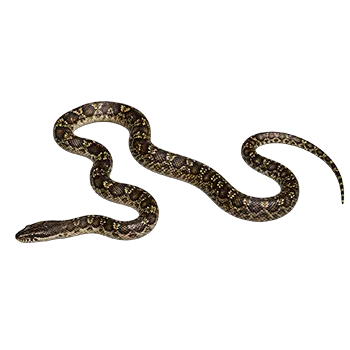

Early Appearances in Natural History Literature

The Egg-Eating Snake first entered the broader public consciousness through the pages of natural history literature, where its extraordinary feeding mechanism captured the imaginations of writers and illustrators long before film or television could bring the process to life. Nineteenth-century European naturalists who encountered Dasypeltis in the field or studied preserved specimens in museum collections produced detailed written accounts and engravings that conveyed the improbable spectacle of a slender snake distending its jaws around an egg several times the diameter of its own head. These early published descriptions circulated among educated European audiences and established the Egg-Eating Snake as one of the natural world's most compelling examples of anatomical specialization.

Among the most influential early treatments of the species were the descriptions included in comprehensive herpetological works such as Auguste Dumeril and Gabriel Bibron's Erpetologie Generale and Albert Gunther's Catalogue of Colubrine Snakes in the Collection of the British Museum. While these were primarily scientific reference works rather than popular publications, their detailed accounts and meticulous illustrations of the Dasypeltis skull, vertebral modifications, and feeding posture were reproduced and adapted in more accessible natural history compendia throughout the latter half of the nineteenth century. The snake's near-toothless jaws and the bony projections from its vertebrae that serve as internal egg-crackers were illustrated with a precision that conveyed genuine wonder at the elegance of the adaptation.

Popular natural history magazines of the late nineteenth and early twentieth centuries, including publications in Britain, Germany, and France, periodically featured articles on unusual animal feeding strategies in which the Egg-Eating Snake figured prominently. These articles typically framed the snake's abilities within the broader context of evolutionary adaptation, using it as an accessible case study to introduce general readers to concepts of specialization, anatomical modification, and the relationship between an organism's structure and its ecological niche. The Egg-Eating Snake proved particularly effective in this role because its feeding behavior is visually dramatic and conceptually easy to grasp, even for audiences with no prior knowledge of herpetology.

The tradition of featuring Egg-Eating Snakes in natural history writing continued through the twentieth century and into the present day, with the species appearing regularly in popular science books, field guides, and educational texts aimed at audiences ranging from schoolchildren to university students. Authors consistently highlight the same core elements that captivated nineteenth-century naturalists: the astonishing gape, the internal egg-cracking mechanism, the regurgitation of the compressed shell, and the snake's complete harmlessness to humans. This continuity of emphasis across nearly two centuries of published accounts testifies to the enduring fascination that the Egg-Eating Snake's biology exerts on human observers.

Documentary & Television Coverage

The advent of wildlife filmmaking in the mid-twentieth century provided a new and exceptionally effective medium for showcasing the Egg-Eating Snake's remarkable feeding behavior to mass audiences. The visual drama of an egg disappearing into the distended throat of a snake whose head appears far too small to accommodate it translates powerfully to screen, and documentary filmmakers have returned to this subject repeatedly across decades of natural history programming. The Egg-Eating Snake has appeared in productions by the BBC Natural History Unit, National Geographic, and numerous other broadcast and streaming documentary producers.

Television nature programs have consistently identified the Egg-Eating Snake as ideal material for segments focused on unusual animal adaptations and evolutionary marvels. The feeding sequence offers filmmakers a complete narrative arc within a compact timeframe: the snake locates and assesses the egg, begins the slow process of engulfing it, reaches the point of maximum distension where the viewer may doubt the feat is physically possible, and then completes the swallow before cracking the shell internally and regurgitating the flattened remains. This natural sequence provides built-in dramatic tension without requiring any editorial manipulation or sensationalization, making it a favorite among producers who favor authentic natural behavior over manufactured conflict.

The species has also featured in educational television programming directed at younger audiences, where its non-threatening appearance and genuinely astonishing abilities make it an effective vehicle for engaging children with the natural sciences. Programs designed for school-age viewers have used the Egg-Eating Snake to introduce concepts such as adaptation, food webs, predator-prey relationships, and the diversity of survival strategies found in the animal kingdom. The snake's gentle temperament and photogenic quality, combined with the inherent drama of its feeding behavior, make it one of the more reliable crowd-pleasers in the repertoire of children's natural history television.

In more recent years, streaming platforms and long-form nature documentary series have provided opportunities for more in-depth coverage of Egg-Eating Snake ecology and behavior than the brief segments typical of traditional magazine-format nature shows. Multi-episode series focused on African ecosystems have incorporated footage of Dasypeltis within broader explorations of savanna and woodland food webs, presenting the snake not merely as an isolated curiosity but as a functioning component of complex ecological communities. This contextual approach has helped audiences understand the Egg-Eating Snake's role in its environment and appreciate the interconnections between nesting bird populations, egg predation, and broader ecosystem dynamics.

Behind-the-scenes accounts from wildlife filmmakers have occasionally highlighted the practical challenges of filming Egg-Eating Snakes in the wild. The snakes are primarily nocturnal and crepuscular, making natural-light filming difficult, and their feeding events are relatively infrequent and unpredictable in field conditions. Many of the most widely seen sequences have been filmed using captive or semi-captive animals under controlled lighting conditions, a common practice in wildlife filmmaking that allows for the close-up, high-resolution footage that best conveys the mechanics of the feeding process.

Photography & Visual Media

The Egg-Eating Snake has long been a prized subject among wildlife and herpetological photographers, who find in its feeding behavior a visual spectacle that is both scientifically significant and aesthetically compelling. The moment of maximum egg engulfment, when the snake's head and anterior body are stretched to their physical limits around a seemingly impossible meal, produces images that are instantly recognizable and reliably generate strong viewer reactions. This combination of biological wonder and visual impact has made Egg-Eating Snake feeding photographs among the most frequently reproduced reptile images in print and digital media.

Professional wildlife photographers working in sub-Saharan Africa have contributed some of the most striking images of Dasypeltis in natural settings. These photographs, taken in the field under challenging conditions of low light and unpredictable animal behavior, capture the snake engaging with wild bird nests in its native habitat and convey a sense of ecological context that studio photography cannot replicate. The best of these images have been featured in international nature photography competitions, museum exhibitions, and coffee-table books dedicated to African wildlife, reaching audiences far beyond the herpetological community.

Macro photography has proven particularly effective for revealing the anatomical details that make the Egg-Eating Snake's feeding strategy possible. Close-up images of the snake's reduced dentition, its highly flexible jaw ligaments, and the remarkable elasticity of its skin during egg engulfment have been widely used in educational contexts to illustrate the concept of structural adaptation. Time-lapse and high-speed photography techniques have further enhanced the visual documentation of the feeding process, allowing viewers to observe stages of the behavior that occur too slowly or too quickly for the unaided eye to appreciate fully.

The rise of digital photography and online image-sharing platforms has dramatically expanded the volume and accessibility of Egg-Eating Snake imagery available to the public. Hobbyist photographers and reptile keepers now routinely produce and share high-quality images and short video clips of their captive Dasypeltis feeding, contributing to a growing visual archive that documents variation in feeding behavior across different species, age classes, and egg sizes. This democratization of wildlife photography has made the Egg-Eating Snake visible to audiences who might never encounter the species through traditional media channels.

Scientific illustration, though less prominent in an age of high-resolution photography, continues to play a role in depicting Egg-Eating Snake anatomy and behavior. Detailed cutaway drawings showing the internal mechanics of egg consumption, including the position of the vertebral hypapophyses as they contact and compress the eggshell, remain valuable educational tools that convey structural information more clearly than photographs of the external surface alone. Modern scientific illustrators working in both traditional and digital media have produced updated versions of these anatomical diagrams for use in textbooks, museum displays, and online educational resources.

Digital Media & Online Communities

The emergence of the internet as a primary channel for information sharing and community building transformed the Egg-Eating Snake's media presence in ways that traditional broadcast and print media could not have anticipated. Online forums dedicated to reptile keeping, which proliferated during the late 1990s and early 2000s, provided the first platforms for Dasypeltis enthusiasts to connect across geographic boundaries, share husbandry experiences, and collectively develop the knowledge base needed to maintain these specialized snakes successfully in captivity. These forums remain active and continue to serve as important resources for new keepers.

Social media platforms have amplified the Egg-Eating Snake's visibility to an extraordinary degree. Short video clips of Dasypeltis consuming eggs are among the most reliably viral reptile content on platforms built around visual media, routinely accumulating millions of views and generating extensive comment threads from viewers who express a mixture of fascination, disbelief, and admiration. The feeding behavior translates exceptionally well to the short-form video format favored by contemporary social media, as the entire sequence from first contact to shell regurgitation can be captured in clips of one to three minutes, fitting neatly within the attention spans encouraged by these platforms.

The viral success of Egg-Eating Snake content online has had measurable effects on public awareness of and attitudes toward the species. Social media analytics from reptile-focused accounts indicate that Dasypeltis feeding videos consistently outperform most other snake content in terms of engagement metrics, and the overwhelmingly positive tone of viewer comments suggests that the species' harmlessness and the ingenious nature of its feeding strategy resonate with audiences who might otherwise be indifferent or hostile toward snakes. Several prominent reptile educators and influencers have leveraged this appeal by using the Egg-Eating Snake as an entry point for broader conversations about snake conservation and the ecological roles of non-venomous species.

Dedicated online communities for Egg-Eating Snake keepers have also facilitated advances in captive husbandry that might not have occurred as rapidly through traditional channels. Keepers share real-time observations about feeding acceptance, seasonal behavioral changes, reproductive outcomes, and health issues, creating a dynamic and rapidly evolving knowledge base that complements published scientific literature. Collaborative identification efforts within these communities have contributed to the recognition of previously undescribed Dasypeltis species, with field photographs and locality data shared online sometimes providing the initial impetus for formal taxonomic investigation.

The digital media landscape has also created new challenges for Egg-Eating Snake welfare and conservation. The viral popularity of feeding videos has occasionally driven impulsive acquisitions by inexperienced keepers who are attracted by the spectacle but unprepared for the practical realities of sourcing appropriate eggs and maintaining a specialized feeder. Responsible members of the online community have responded by creating detailed care guides, frequently asked question resources, and mentorship networks designed to ensure that the species' media popularity translates into better captive welfare outcomes rather than increased animal suffering.

Educational Outreach & Museum Exhibits

The Egg-Eating Snake has established itself as one of the most effective ambassador species in reptile education, valued by zoos, museums, nature centers, and outreach programs for its combination of dramatic biology, complete harmlessness, and calm temperament during handling. Educational institutions that maintain live reptile collections frequently include Dasypeltis species in their rosters specifically because the snake's feeding demonstration provides an unparalleled teaching moment that captures audience attention and opens the door to broader discussions about adaptation, ecology, and the value of snake conservation.

Live feeding demonstrations featuring Egg-Eating Snakes have become signature events at many zoological facilities and herpetological society gatherings. These demonstrations draw audiences that include families, school groups, and members of the general public who may have limited prior exposure to reptiles. The visible process of a small, gentle snake consuming a whole egg and then regurgitating the compressed shell provides a concrete, memorable illustration of evolutionary adaptation that resonates with viewers in ways that verbal description or static displays cannot match. Educators report that these demonstrations frequently prompt questions and conversations that extend well beyond the specific topic of Dasypeltis biology.

Museum exhibits focused on animal diversity, evolutionary biology, or African ecosystems regularly feature the Egg-Eating Snake as a case study in extreme specialization. Permanent and traveling exhibits have employed a range of interpretive approaches, from preserved specimens and skeletal preparations that reveal the modified vertebral apparatus to interactive displays that invite visitors to compare the gape capacity of different snake species. The Egg-Eating Snake's anatomy lends itself particularly well to comparative exhibits that contrast generalist and specialist feeding strategies, helping visitors understand the trade-offs involved in evolutionary specialization.

School outreach programs operated by zoos, nature centers, and independent reptile educators have found the Egg-Eating Snake to be an especially effective tool for engaging young learners and for addressing the widespread fear and misunderstanding that many children, and adults, harbor toward snakes. The snake's gentle behavior during handling, combined with the dramatic payoff of a feeding demonstration, creates an experience that can fundamentally reshape a young person's attitude toward reptiles. Educators working in this space emphasize that the Egg-Eating Snake's effectiveness as an educational tool stems not from sensationalism but from the genuine wonder that its biology inspires when presented accurately and respectfully.

The educational value of the Egg-Eating Snake extends to university-level instruction in biology, zoology, and evolutionary science. The species appears in course materials and laboratory exercises as an exemplar of key evolutionary concepts, including convergent evolution, niche partitioning, and the relationship between anatomical structure and ecological function. Graduate research programs in herpetology have produced theses and dissertations focused on Dasypeltis feeding mechanics, phylogenetics, and behavioral ecology, ensuring that the species continues to generate new scientific knowledge while also serving as an accessible entry point for students encountering these topics for the first time.

Influence on Public Perception

The Egg-Eating Snake's cumulative presence across natural history literature, wildlife documentaries, social media, and educational outreach has had a meaningful, if difficult to quantify, impact on public perception of snakes more broadly. In a cultural landscape where serpents are frequently portrayed as dangerous, aggressive, or sinister, the Egg-Eating Snake offers a powerful counter-narrative: here is a snake that is entirely harmless, feeds on nothing more threatening than eggs, and engages in a behavior so ingenious that it elicits admiration rather than revulsion from most viewers. This combination of qualities positions the Egg-Eating Snake as one of the herpetological world's most effective public relations assets.

Surveys and anecdotal evidence from educational programs consistently indicate that encounters with Egg-Eating Snakes, whether live or through media, produce measurably more positive attitudes toward snakes among participants. The species' small size, smooth handling response, and the absence of any association with danger or aggression allow even ophidiophobic individuals to engage with the animal in a non-threatening context. Educators who specialize in reptile outreach report that the Egg-Eating Snake is among the species most likely to prompt a participant to voluntarily touch or hold a snake for the first time, an experience that research in environmental psychology has linked to lasting reductions in snake-related fear and anxiety.

The Egg-Eating Snake's media profile has also contributed to broader public understanding of the concept of dietary specialization and its role in shaping biodiversity. When viewers watch a Dasypeltis consume an egg, they are witnessing an accessible demonstration of how natural selection can produce organisms exquisitely adapted to exploit specific resources. This intuitive grasp of adaptive specialization can serve as a gateway to understanding more complex ecological and evolutionary concepts, making the Egg-Eating Snake a particularly valuable species for science communication efforts aimed at non-specialist audiences.

Within the reptile-keeping community, the Egg-Eating Snake's growing visibility has helped shift perceptions about what constitutes an interesting or desirable captive species. The traditional emphasis on large, visually imposing constrictors or rare color morphs has been complemented by an increasing appreciation for species valued primarily for their unique biology and behavioral repertoire. Dasypeltis keepers often describe themselves as drawn to the species by its biological distinctiveness rather than its visual spectacle, reflecting a maturation within the hobby toward a more ecologically informed approach to reptile appreciation.

Despite these positive influences, the Egg-Eating Snake's media presence also carries risks related to oversimplification and decontextualization. Viral video content, by its nature, tends to present the feeding behavior as an isolated spectacle rather than as one component of a complex ecological relationship between snakes, nesting birds, and the habitats they share. Conservation communicators have noted the importance of ensuring that popular media depictions of Dasypeltis include ecological context and conservation messaging, so that audience fascination with the feeding behavior translates into broader support for the protection of African ecosystems and the species they contain.

Always consult a qualified professional before making any health-related decisions. This content is provided for informational reference only and should not replace professional guidance specific to your animal.