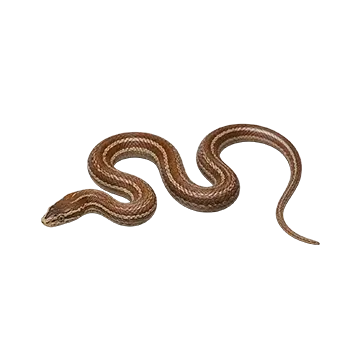

The Cape House Snake (Boaedon capensis) is a small, non-venomous constrictor native to southern Africa, where it has occupied human-adjacent habitats for far longer than written records can document. Its natural range extends across much of South Africa, Lesotho, and Eswatini, reaching into parts of southern Namibia and southwestern Mozambique. The species favors rocky outcrops, scrubland, fynbos margins, and the edges of agricultural land, though it is perhaps best known for its willingness to enter human dwellings and outbuildings in search of the rodents and lizards that constitute the bulk of its diet. This close association with human habitation is reflected in the common name shared by the broader Boaedon genus, the house snakes, and the Cape House Snake exemplifies the trait more consistently than almost any of its congeners.
Western science first encountered the Cape House Snake through specimens collected during the expansion of European natural history surveys across southern Africa in the eighteenth and nineteenth centuries. The broader genus Boaedon was described by the French zoologist Auguste Dumeril and his colleague Gabriel Bibron in 1854, though the taxonomy of African house snakes remained tangled for well over a century afterward. For much of the twentieth century, the Cape House Snake was not recognized as a distinct species at all but was instead lumped under the catch-all designation Lamprophis fuliginosus, a name that was applied to a wide range of superficially similar house snakes across much of sub-Saharan Africa.
The disentangling of house snake taxonomy is one of the more instructive episodes in modern African herpetology. Molecular phylogenetic studies conducted in the early twenty-first century revealed that the animals grouped under Lamprophis fuliginosus actually represented multiple distinct species distributed across different ecological zones and geographic regions. The Cape House Snake was formally separated and assigned to the genus Boaedon as Boaedon capensis, a recognition that its populations in the Western Cape and surrounding regions constituted a genetically and morphologically distinct lineage. This reclassification underscored how much cryptic diversity had been hidden within what appeared to be a single widespread species.
The taxonomic revision of the house snakes also highlighted the limitations of relying solely on external morphology when classifying African colubrids. Cape House Snakes are relatively uniform in appearance, typically displaying a smooth, glossy dorsum in shades of brown, olive-brown, or dark chocolate, with a paler ventral surface and occasionally faint lateral striping. These subdued and variable color patterns had contributed to the historical confusion, as collectors and museum taxonomists had difficulty distinguishing preserved Cape House Snake specimens from those of closely related species such as Boaedon fuliginosus or Boaedon mentalis without geographic provenance data.