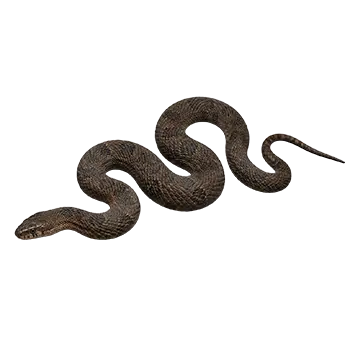

The Brown Water Snake has appeared in numerous nature documentaries and television programs focused on the wildlife of the southeastern United States, though it has rarely been the primary subject of a production. Instead, the species most commonly features as part of broader surveys of southeastern aquatic ecosystems, river biodiversity, or the diverse snake fauna of states like Georgia, Florida, and the Carolinas. In these contexts, the Brown Water Snake typically receives screen time as an example of the rich and often underappreciated reptile community found in southern river systems.
Documentary treatments of the Brown Water Snake have frequently emphasized the species' dramatic basking behavior, in which large numbers of individuals drape themselves over tree branches, logs, and other structures overhanging rivers and streams. This visually striking behavior provides compelling footage and serves as a natural hook for storytelling about the ecology of southeastern waterways. Camera crews working along rivers like the Altamaha in Georgia or the Edisto in South Carolina have captured remarkable scenes of dozens of Brown Water Snakes sharing basking sites, offering viewers a glimpse of a species that can achieve extraordinary local abundance in optimal habitats.
The species has also appeared in segments of popular wildlife and adventure television programs, where its defensive behavior and superficial resemblance to the Cottonmouth have sometimes been used to create dramatic tension. These portrayals have been a double-edged sword for the species' public image. While they bring attention to a snake that most viewers would otherwise never encounter, the editorial emphasis on the snake's aggressive defensive displays and its visual similarity to a venomous species can reinforce the very fear and misidentification patterns that wildlife educators work to dispel.
More responsibly produced documentaries have used the Brown Water Snake as a teaching moment, carefully walking viewers through the visual differences between harmless water snakes and the Cottonmouth while explaining the ecological consequences of indiscriminate snake killing. These educational segments, when well executed, represent some of the most valuable media contributions to Brown Water Snake conservation, reaching audiences that would never attend a herpetological society lecture or read an academic paper on snake identification.