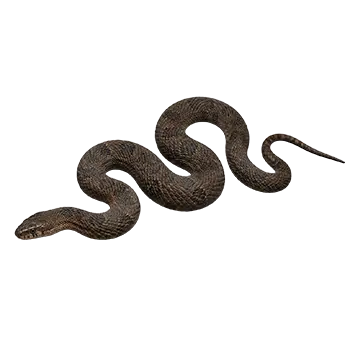

Federal Protections & Conservation Status

The Brown Water Snake (Nerodia taxispilota) does not currently carry any federal listing under the United States Endangered Species Act. The species is not classified as threatened or endangered at the national level, reflecting its relatively stable population status across much of its southeastern range. This absence of federal listing means that the Brown Water Snake is not subject to the comprehensive protections that apply to species on the federal endangered species list, including prohibitions on take, habitat destruction, and interstate commerce.

Despite the lack of an Endangered Species Act listing, the Brown Water Snake does fall under the jurisdiction of several broader federal statutes that regulate wildlife handling and commerce. The Lacey Act, originally enacted in 1900 and subsequently amended, prohibits the interstate transport of wildlife taken in violation of state law, meaning that a Brown Water Snake collected illegally under a particular state's regulations cannot be legally transported across state lines regardless of the destination state's own rules. This federal backstop ensures that state-level protections for the species cannot be circumvented simply by moving animals to jurisdictions with more permissive regulations.

The Brown Water Snake is also not listed under the Convention on International Trade in Endangered Species of Wild Fauna and Flora, the international treaty that regulates cross-border trade in wildlife species of conservation concern. This is consistent with the species' limited geographic range within the southeastern United States and its absence from international commercial trade in any significant volume. However, any international shipment of the species would still be subject to the general wildlife import and export regulations administered by the United States Fish and Wildlife Service.

It is important to note that the absence of federal threatened or endangered status does not mean the Brown Water Snake is without legal protections. The species benefits from a complex web of state-level wildlife regulations that vary considerably across its range, and these state laws often provide the most practically relevant legal framework governing how people may interact with the species. Prospective keepers, collectors, and researchers should never assume that the lack of a federal listing translates to unregulated access to the species.

State-Level Wildlife Regulations

The legal framework governing the Brown Water Snake varies significantly from state to state across its southeastern range, creating a patchwork of regulations that can be challenging for hobbyists, collectors, and relocators to navigate. Each state within the species' range maintains its own wildlife code administered by its respective fish and wildlife agency, and these codes differ in their treatment of native non-venomous snakes with respect to collection, possession, sale, and transport.

In Georgia, which encompasses a substantial portion of the Brown Water Snake's core range, native reptiles including water snakes are regulated under the state's wildlife code. The Georgia Department of Natural Resources establishes annual regulations governing the collection of native reptiles and amphibians, including bag limits, season dates, and permissible collection methods. These regulations have generally allowed limited personal collection of non-venomous native snakes, but the specific terms and limits are subject to change with each regulatory cycle, and collectors are responsible for staying current with the most recent rules.

Florida presents a somewhat different regulatory environment. The Florida Fish and Wildlife Conservation Commission administers a comprehensive system of permits and regulations for the possession and collection of native wildlife, including non-venomous snakes. Florida's regulatory framework has undergone significant evolution in recent years, driven in part by the state's high-profile struggles with invasive reptile species and a broader effort to modernize wildlife management. Prospective Brown Water Snake keepers in Florida must familiarize themselves with the current permitting requirements, which may include specific provisions for native reptile species.

The Carolinas, Alabama, Mississippi, and Virginia each maintain their own distinct regulatory approaches to native non-venomous snakes. Some states prohibit or strictly limit the collection of native reptiles from the wild without a scientific or educational permit, while others allow limited personal collection under specified conditions. The variation among states means that a practice legal in one jurisdiction may constitute a wildlife violation in the neighboring state, making it essential for anyone who collects, keeps, or transports Brown Water Snakes to research the specific laws of every jurisdiction involved.

Across all states within the Brown Water Snake's range, one consistent regulatory principle applies: wildlife regulations are the responsibility of the individual to know and follow. Ignorance of a state's wildlife laws is not a legal defense, and violations can result in fines, confiscation of animals, and in serious cases, criminal charges. State wildlife agencies typically publish their current regulations online and provide contact information for questions about specific species and activities.

Captive Keeping & Possession Laws

For individuals interested in keeping Brown Water Snakes in captivity, the legal requirements depend primarily on the state of residence and, in some cases, on the municipality. While the Brown Water Snake is not subject to the kind of blanket bans that apply to certain large constrictors or venomous species in many jurisdictions, prospective keepers must still navigate a regulatory landscape that varies considerably across the species' range.

Several states within the Brown Water Snake's native range allow the keeping of native non-venomous snakes as personal pets without a specific permit, provided the animals were obtained legally and in compliance with applicable collection regulations. In these jurisdictions, the legal burden falls primarily on documenting the lawful acquisition of the animal, whether through permitted wild collection, purchase from a licensed breeder or dealer, or receipt from another legal source. Maintaining records of acquisition, including receipts, permits, or other documentation, is advisable even where not explicitly required by law, as it provides evidence of legal possession in the event of a question or inspection.

Other states require a specific wildlife possession permit for keeping any native reptile species in captivity, regardless of the species' conservation status. These permits may involve an application process, a fee, annual renewal requirements, and conditions regarding housing standards, veterinary care, and escape prevention. The permitting process is designed to ensure that captive wildlife is maintained in conditions that protect both the animals' welfare and public safety, and permit holders are typically subject to inspection by state wildlife officers.

Local ordinances add another layer of regulatory complexity. Many municipalities, counties, and homeowners associations maintain their own rules governing the keeping of reptiles, which may be more restrictive than state law. Some localities prohibit the keeping of any snakes, venomous or not, as household pets, while others impose requirements related to enclosure security, notification of neighbors, or registration with local animal control agencies. These local regulations exist independently of state wildlife law, and compliance with one does not guarantee compliance with the other.

Anyone considering acquiring a Brown Water Snake as a captive animal should begin by contacting their state wildlife agency and local animal control office to determine the full range of applicable regulations before obtaining an animal. The legal landscape for reptile keeping is not static, and regulations can change with legislative sessions, regulatory rulemaking, or local ordinance revisions.

Collection Regulations & Wild Take

The collection of Brown Water Snakes from the wild is regulated at the state level, and the specific rules governing wild take vary substantially across the species' range. These regulations exist to ensure that collection activities do not adversely impact wild populations and to maintain the ecological health of the aquatic ecosystems where the species occurs. Understanding and complying with these rules is essential for anyone who encounters Brown Water Snakes in the field, whether as a hobbyist collector, a researcher, or a wildlife educator.

Most states within the Brown Water Snake's range distinguish between collection for personal use and collection for commercial purposes, with commercial collection typically subject to more stringent permitting requirements and in some cases prohibited entirely for native reptile species. Personal collection, where allowed, is generally subject to daily and seasonal bag limits that restrict the number of animals an individual may take from the wild within a specified time period. These limits are set by state wildlife agencies based on the best available population data and management objectives.

Collection methods are also regulated in most jurisdictions. States that allow the collection of native reptiles typically specify permissible methods, which may include hand capture and the use of certain types of traps, while prohibiting methods deemed destructive to habitat or excessively efficient. The destruction of habitat features such as logs, rock outcrops, and riparian vegetation during collection activities is generally prohibited and may constitute a separate violation of habitat protection statutes.

Researchers and educators seeking to collect Brown Water Snakes for scientific study or educational programs typically require special permits from state wildlife agencies, regardless of whether personal collection is otherwise allowed. Scientific collection permits usually specify the number and life stage of animals to be collected, the geographic area and time period of collection, the methods to be used, and the ultimate disposition of collected specimens. These permits ensure that research and education activities are conducted in a manner consistent with population conservation objectives.

The regulatory framework surrounding wild collection of Brown Water Snakes reflects a broader evolution in state wildlife management philosophy. Historically, non-venomous snakes received little regulatory attention, as management efforts focused on game species and commercially valuable wildlife. Over the past several decades, state wildlife agencies have increasingly recognized the ecological importance of non-game species including reptiles, and have expanded their regulatory frameworks accordingly to provide more comprehensive oversight of collection and trade activities.

Liability, Nuisance Laws & Human-Wildlife Conflict

The Brown Water Snake's frequent occurrence in proximity to human habitation and recreational areas raises legal questions about liability, nuisance animal management, and the rights and responsibilities of property owners who encounter the species on their land. These questions are governed by a combination of state wildlife statutes, common law principles, and local ordinances that together define the legal framework for human-Brown Water Snake interactions.

In most southeastern states, native wildlife including non-venomous snakes is considered the property of the state, held in trust for the public under the public trust doctrine. This means that a Brown Water Snake found on private property is not the property of the landowner, and its treatment is subject to state wildlife regulations. Landowners who wish to remove a Brown Water Snake from their property must do so in compliance with applicable state laws, which may require the use of a licensed wildlife removal service or may allow the landowner to relocate the animal under specified conditions.

The distinction between the Brown Water Snake and the venomous Cottonmouth has significant legal implications in the context of nuisance wildlife management. Many states allow the killing of venomous snakes that pose an immediate threat to human safety, even where the killing of non-venomous native species is prohibited. Because the Brown Water Snake is so frequently misidentified as a Cottonmouth, individuals who kill a Brown Water Snake believing it to be venomous may find themselves in a legally ambiguous position. While prosecutors rarely pursue cases involving the inadvertent killing of a single non-venomous snake, repeated or wholesale killing of water snakes could potentially constitute a violation of wildlife protection statutes.

Property owners and managers of recreational areas along southeastern rivers and lakes face particular challenges in managing Brown Water Snake encounters. The species' habit of basking in large numbers on structures near water, including docks, boat lifts, and waterfront stairs, brings it into frequent contact with people who may be alarmed by the snakes' presence. The legal options for addressing these situations vary by jurisdiction but generally include exclusion measures, habitat modification, and professional wildlife removal, while killing or injuring the snakes may violate state wildlife regulations.

Liability questions can also arise when Brown Water Snakes are encountered on commercial properties or in public parks and recreation areas. Property managers and government agencies may face questions about their duty to warn visitors about the presence of water snakes and their potential liability if a visitor is bitten by a snake, whether or not the snake is correctly identified. These questions are generally resolved under state tort law principles, and the answers can vary significantly depending on the specific facts of the case and the jurisdiction in which it arises.

Future Regulatory Trends & Advocacy

The regulatory environment affecting the Brown Water Snake continues to evolve as state legislatures, wildlife agencies, and conservation organizations reassess approaches to native reptile management. Several trends in wildlife law and policy have the potential to significantly affect the species' legal status and the rules governing human interactions with it in the coming years.

One notable trend is the growing interest among state wildlife agencies in developing more comprehensive regulatory frameworks for non-game species, including native reptiles. Historically, wildlife management in the southeastern United States focused heavily on game species such as deer, turkey, and waterfowl, with non-game animals receiving comparatively little regulatory attention or management investment. The expansion of state wildlife action plans and the development of non-game wildlife programs have created new institutional capacity for addressing the conservation needs of species like the Brown Water Snake, and this increased attention may lead to updated or expanded regulations in some jurisdictions.

Conversely, the broader political debate over government regulation and property rights in the southeastern United States creates countervailing pressures that may limit or roll back wildlife protections in some states. Legislative proposals to weaken wildlife agency authority, reduce permitting requirements, or expand property owners' rights to kill wildlife encountered on their land have been introduced in several state legislatures, and the outcomes of these debates will shape the regulatory environment for the Brown Water Snake and other native wildlife species.

The herpetological community and conservation organizations have been active advocates for maintaining and strengthening legal protections for native reptiles including the Brown Water Snake. Organizations such as the Southeastern Partners in Amphibian and Reptile Conservation have worked to coordinate conservation efforts across state lines, develop best management practices for reptile habitat, and provide scientific input to regulatory decision-making processes. These advocacy efforts are supported by a growing body of research on the ecological importance of native snake populations and the potential consequences of their decline.

Public education remains a critical complement to legal protection for the Brown Water Snake. Even the most well-crafted regulations are only effective to the extent that they are known and followed by the public, and the widespread misidentification of Brown Water Snakes as Cottonmouths means that many people who kill the species are not aware that they may be violating wildlife protection laws. Continued investment in public education about snake identification, the legal status of native wildlife, and the ecological value of non-venomous snakes is essential for translating legal protections on paper into meaningful conservation outcomes in the field.

As regulations evolve, the most important practical step for anyone who interacts with Brown Water Snakes, whether as a hobbyist keeper, a property owner, a wildlife professional, or a recreational user of southeastern waterways, is to maintain current knowledge of the applicable laws in their jurisdiction. State wildlife agency websites, herpetological society resources, and legal guides published by reptile advocacy organizations provide accessible and regularly updated information that can help individuals navigate the complex and changing regulatory landscape governing this often-misunderstood native species.

Always consult a qualified professional before making any health-related decisions. This content is provided for informational reference only and should not replace professional guidance specific to your animal.