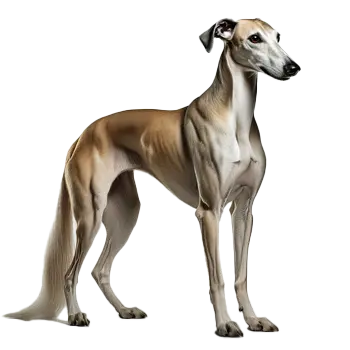

The Sloughi is one of the oldest and most revered sighthound breeds in the world, with roots stretching back thousands of years across North Africa. Archaeological evidence, including rock carvings and skeletal remains found in modern-day Morocco, Algeria, Tunisia, and Libya, suggests that smooth-coated, lop-eared sighthounds closely resembling the Sloughi have inhabited the Maghreb region for millennia. While the precise timeline of their domestication remains debated among historians and cynologists, it is widely accepted that the Sloughi evolved alongside the Berber and Bedouin peoples of the region, shaped by the harsh desert environment and the demands of nomadic life.
Unlike many European breeds that were refined through formal breeding programs in the 18th and 19th centuries, the Sloughi's development was guided by function and tradition. North African tribes selectively bred these dogs for speed, endurance, keen eyesight, and an instinctive ability to hunt game across open terrain. Gazelle, hare, jackal, and wild boar were among the quarry that the Sloughi pursued, and the breed's lean, aerodynamic build reflects centuries of adaptation to coursing across vast stretches of arid landscape.
The Sloughi is sometimes confused with the Azawakh or the smooth-coated Saluki, but it is a distinct breed with its own genetic lineage. Modern DNA studies have confirmed that the Sloughi occupies a unique branch among sighthound breeds, more closely related to other North African dog populations than to Middle Eastern or Central Asian sighthounds. This genetic distinction reinforces the breed's deep ties to the specific geography and cultures of the Maghreb.
French colonial officers and travelers in the 19th century were among the first Europeans to document the Sloughi in writing, often describing the breed with admiration for its grace and loyalty. These early accounts helped introduce the Sloughi to European audiences, though it would take decades before the breed gained formal recognition outside North Africa.