
Film & Television

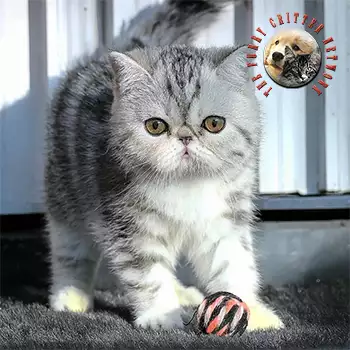
The Exotic Shorthair's round, expressive face has made it a natural fit for screen appearances where directors and producers want a cat that reads as both adorable and slightly comedic. The breed's flat features and wide-set eyes give it a perpetually curious or mildly displeased expression that translates well on camera, and its calm temperament makes it easier to work with on set than many other cat breeds. Animal trainers have noted that Exotic Shorthairs tend to tolerate the lights, noise, and repetition of filming better than more high-strung breeds.

While the breed has not been the subject of a major feature film in the way some dog breeds have, Exotic Shorthairs have appeared in numerous television shows, commercials, and short films. Their distinctive look makes them immediately identifiable even in brief on-screen moments, and casting directors often select them when the script calls for a cat that looks luxurious or pampered. The breed's visual similarity to Persians means it is sometimes cast interchangeably with its longhaired cousin, though knowledgeable viewers can spot the difference.

The fictional character Garfield, created by cartoonist Jim Davis, is frequently associated with the Exotic Shorthair due to visual similarities, though Davis has described the character as a generic red tabby. Nonetheless, the connection has persisted in public perception, and many people encountering an Exotic Shorthair for the first time remark on the resemblance. This informal association has contributed to the breed's name recognition even among people who are not involved in the cat fancy.

In animated productions and children's programming, flat-faced cats modeled after breeds like the Exotic Shorthair appear regularly as character designs. The breed's proportions lend themselves well to animation because the round head, large eyes, and compact body create a silhouette that is immediately readable as a cat while also being distinctly cute and engaging for young audiences.

Literature & Art

The Exotic Shorthair has not yet accumulated the deep literary history enjoyed by breeds like the Siamese or the common domestic cat, in part because it is a relatively young breed that only gained recognition in the late 1960s. However, it appears with increasing frequency in breed-specific books, cat care guides, and coffee table photography collections that showcase pedigreed cats. These publications have helped establish a visual canon for the breed, with professional photographers capturing the texture of its plush coat and the roundness of its features in ways that highlight its unique appeal.

In fine art, cats with flat faces and round bodies have appeared in paintings and illustrations for centuries, though these earlier works predate the formal development of the Exotic Shorthair. Contemporary artists working in both traditional and digital media have embraced the breed as a subject, drawn to its distinctive proportions and the challenge of capturing its simultaneously sweet and grumpy expression. The breed has become a popular subject for pet portrait commissions, with owners seeking custom artwork that memorializes their cat's individual character.

Children's book illustrators have found the Exotic Shorthair's proportions particularly useful for creating cat characters that are immediately lovable. The large head relative to the body, the big round eyes, and the small nose trigger the same visual cues that psychologists associate with the perception of cuteness in human infants, making characters based on this body type appealing to young readers and their parents alike.

The breed also appears frequently in the world of cat-themed merchandise, from greeting cards and calendars to enamel pins and stickers. Its face is one of the most commonly reproduced cat images in commercial illustration, second perhaps only to the generic tuxedo cat and the Siamese. This commercial visibility reinforces the breed's presence in popular consciousness even among people who may not know its official name.

Internet & Social Media

The Exotic Shorthair is arguably one of the breeds that has benefited most from the rise of social media. Its photogenic qualities are almost tailor-made for platforms that prioritize visual content. The flat face produces a range of seemingly human expressions, from bemused indifference to startled surprise, and owners have proven highly skilled at capturing these moments in photos and short videos that attract large audiences. Several individual Exotic Shorthairs have amassed follower counts in the hundreds of thousands or even millions across platforms.

The breed's internet fame accelerated in the early to mid-2010s as cat content became a dominant genre of online entertainment. Exotic Shorthairs featured prominently in the wave of celebrity cat accounts that emerged during this period, with owners curating carefully styled feeds that showcased their cats in costumes, poses, and scenarios designed to maximize shareability. The breed's tolerance for handling and dressing up, a consequence of its calm temperament, made it unusually cooperative in these contexts.

Meme culture has also embraced the Exotic Shorthair. The breed's resting facial expression, which can appear judgmental, confused, or melancholy depending on the angle and lighting, lends itself to captioning and reaction image formats. Several widely circulated memes have featured Exotic Shorthairs, introducing the breed to audiences who might never encounter one at a cat show or breeder's cattery.

The social media visibility of the breed has had measurable effects on demand. Breeders report that inquiries often spike following viral posts featuring Exotic Shorthairs, and prospective owners frequently reference specific social media cats when describing what they are looking for. This phenomenon has prompted breed clubs and responsible breeders to use their own social media presence as an educational tool, sharing information about health testing, responsible ownership, and the realities of living with the breed alongside the appealing photos.

Advertising & Branding

The Exotic Shorthair's visual appeal has made it a recurring presence in commercial advertising, particularly for products and brands that want to convey a sense of premium quality, comfort, or playful sophistication. The breed's plush appearance and round features photograph exceptionally well in studio settings, and art directors appreciate that its calm disposition allows for controlled, repeatable shots that are difficult to achieve with more active or unpredictable cat breeds.

Pet industry brands have featured Exotic Shorthairs prominently in campaigns for premium cat food, litter products, and grooming supplies. The breed's association with the Persian gives it an air of pedigree and refinement that resonates with consumers who view their pets as family members deserving of high-quality products. In these contexts, the Exotic Shorthair serves as a visual shorthand for the pampered, well-cared-for indoor cat.

Beyond the pet industry, Exotic Shorthairs have appeared in advertising for fashion, home furnishing, and lifestyle brands. Their compact, aesthetically pleasing form complements luxury interiors and designer products, and their calm presence on set makes them practical choices for shoots that might last several hours. The breed's round, symmetrical face also works well in graphic design contexts where a cat image needs to be stylized or simplified into a logo or icon.

The commercial use of Exotic Shorthairs has raised some concerns within the breeding community about the commodification of the breed's image. When advertising drives demand without providing education about the breed's health needs and temperament, it can lead to impulse purchases by owners who are unprepared for the realities of caring for a brachycephalic cat. Responsible breeders and breed organizations have responded by advocating for advertising that includes health and care information alongside the appealing imagery.

The Popularity Effect

The Exotic Shorthair's rise in media visibility has had profound effects on the breed's population, pricing, and the practices of those who breed them. As demand has increased, so have prices for well-bred kittens, with pet-quality Exotic Shorthairs from reputable breeders commanding significant sums and show-quality kittens costing even more. This price pressure has created economic incentives that attract both dedicated breeders committed to health and type, and less scrupulous producers motivated primarily by profit.

The surge in popularity has also increased the number of Exotic Shorthairs and Exotic Shorthair mixes appearing in shelters and rescues. Some owners attracted by the breed's media image discover that the reality of living with a flat-faced cat involves health management considerations they did not anticipate, including eye care, respiratory monitoring, and dental maintenance. Breed-specific rescue organizations have expanded their operations to accommodate the growing number of Exotic Shorthairs in need of rehoming.

Media-driven popularity has also influenced the direction of breeding programs in ways that concern some fanciers. The most photogenic Exotic Shorthairs tend to have extremely flat faces and very large, round eyes, features that can be associated with health complications when taken to extremes. The pressure to produce cats that match the viral ideal can push breeding decisions toward more extreme type at the expense of functionality, a tension that breed clubs and veterinary organizations have worked to address through education and revised breed standards.

On the positive side, the breed's popularity has generated increased funding and attention for feline health research. Organizations dedicated to studying polycystic kidney disease, brachycephalic airway syndrome, and other conditions common in flat-faced breeds have benefited from the larger community of owners and breeders who are invested in the health of their cats. The Exotic Shorthair's visibility has also helped normalize conversations about responsible breeding practices and the importance of health testing, raising standards across the cat fancy as a whole.

Always consult a qualified professional before making any health-related decisions. This content is provided for informational reference only and should not replace professional guidance specific to your animal.