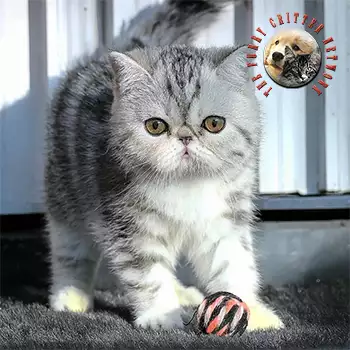

The Exotic Shorthair owes its existence to a series of crossbreeding experiments that began in the late 1950s and early 1960s among American Shorthair breeders. Several breeders introduced Persian bloodlines into their American Shorthair programs with the goal of improving bone structure and incorporating the silver coat color that was popular in Persian lines. The resulting kittens did not resemble traditional American Shorthairs but instead carried the flat face, round eyes, and compact body of their Persian ancestors paired with a short, manageable coat.
Breeder Carolyn Bussey is widely credited as one of the earliest champions of the new look, recognizing the appeal of a cat that offered the Persian's endearing appearance without the demanding grooming requirements. Her early crosses of Persians with Burmese, and later with American Shorthairs, helped establish the foundational stock for the breed. Other breeders working independently arrived at similar results, and by the early 1960s a small but enthusiastic community had formed around these plush, short-coated kittens.
The breed initially faced resistance from Persian purists who were concerned about the introduction of shorthair genes into pedigreed Persian lines. American Shorthair breeders likewise objected to the hybridization altering their breed standard. These tensions led to the decision to classify the new cats as their own distinct breed rather than a variant of either parent breed, a move that ultimately gave the Exotic Shorthair its own identity and trajectory.
The Cat Fanciers' Association granted the Exotic Shorthair official breed status in 1967, making it one of the newer recognized breeds in the pedigreed cat world. Early standards allowed outcrossing to both Persians and American Shorthairs, though over time the permissible outcross list was narrowed primarily to Persians. This decision reinforced the breed's close genetic relationship with the Persian while maintaining its defining short coat as the key distinguishing trait.