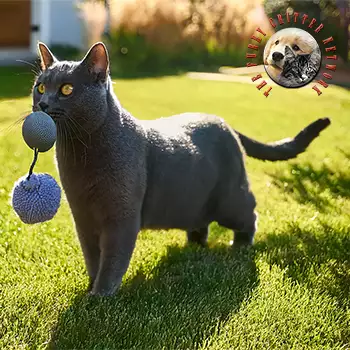

Film & Television

The Chartreux has made occasional but memorable appearances in film and television, though it has never achieved the screen ubiquity of breeds like the Siamese or Persian. Its striking blue-gray coat and luminous gold eyes make it a visually distinctive presence on camera, and filmmakers who have featured the breed have often used its calm, photogenic demeanor to great effect. The cat's natural composure under unfamiliar conditions makes it more manageable on set than many other breeds.

In French cinema the Chartreux has appeared as a background presence in period dramas and literary adaptations, fitting naturally into depictions of traditional French domestic life. The breed's deep association with French culture makes it a natural casting choice when directors seek an authentically French atmosphere. While these appearances are rarely central to the plot, they contribute to the visual storytelling and cultural texture of the films.

On television the breed has been featured in documentary programming about cat breeds, particularly in European productions that explore the history and diversity of pedigreed cats. These documentaries typically highlight the Chartreux's ancient origins, its near-extinction during the twentieth century, and the dedicated breeding efforts that preserved it. Such programs have played an important role in introducing the breed to audiences who might otherwise never encounter one, given its relative rarity.

The Chartreux's quiet nature and tendency to sit still with an alert, engaged expression have also made it a favored breed for television commercials in France and other European markets. Its elegant appearance and cooperative temperament on set allow production teams to capture polished footage efficiently, and the breed's association with refinement and tradition aligns well with luxury and lifestyle branding.

Literature & Art

The Chartreux occupies a uniquely prominent position in French literary history, owing largely to the devotion of the novelist and essayist Colette. Her Chartreux cats, most famously Brillat-Savarin and Saha, appeared throughout her later writings, depicted with warmth, humor, and extraordinary observational precision. Colette's portrayal of the breed's intelligence, quiet loyalty, and subtle expressiveness helped establish the Chartreux as a literary archetype of the ideal feline companion.

Colette's 1933 novel "La Chatte" features a Chartreux named Saha as a central character whose presence precipitates a crisis in a young marriage. The novel explores themes of jealousy, loyalty, and the sometimes competing claims of human and animal love, with Saha embodying a kind of feline perfection that the human characters struggle to match. The book remains one of the most significant works of fiction to feature a specific cat breed as a pivotal character.

Beyond Colette, the Chartreux appears in the broader tradition of French writing about cats. The breed's association with monastic life has inspired references in works exploring themes of solitude, contemplation, and spiritual devotion. French poets and essayists have drawn on the cat's quiet watchfulness and self-contained dignity as metaphors for the contemplative life, reinforcing the cultural connection between the Chartreux and intellectual or artistic temperaments.

In the visual arts the Chartreux has been depicted by various French painters and illustrators, particularly in the eighteenth and nineteenth centuries when blue cats were common in Parisian life. Natural history illustrations by artists working with Buffon and other naturalists provide some of the earliest detailed visual records of the breed. More recently, contemporary cat artists and illustrators have featured the Chartreux in prints, greeting cards, and other decorative works that celebrate its distinctive appearance.

Internet & Social Media

The Chartreux has developed a dedicated following on social media platforms, where its photogenic qualities and endearing personality translate effectively to digital content. The breed's round face, plush blue coat, and perpetual "smile" make for highly shareable images, and Chartreux owners tend to be enthusiastic advocates for the breed. Instagram accounts dedicated to individual Chartreux cats have cultivated followings that, while modest compared to the viral fame of some internet cats, are notable for their engaged and knowledgeable communities.

On platforms like YouTube and TikTok, Chartreux cats appear in videos that typically emphasize the breed's playful yet dignified character. Popular content includes clips of Chartreux cats playing fetch — a behavior the breed is particularly known for — sitting in characteristic poses, or demonstrating their quiet, dog-like devotion to their owners. The contrast between the cat's robust, powerful build and its gentle, almost meditative temperament provides a natural source of appealing content.

Breed-specific online communities have also played an important role in connecting Chartreux enthusiasts worldwide. Forums, Facebook groups, and Reddit communities dedicated to the breed serve as gathering places where owners share advice, celebrate their cats, and discuss breed preservation. These communities are often closely linked to breed clubs and registries, creating a digital ecosystem that supports both the social and practical aspects of Chartreux ownership.

The breed's rarity has itself become a point of interest on social media, with many Chartreux owners reporting that their cats consistently attract curiosity and questions from people unfamiliar with the breed. Posts explaining the difference between the Chartreux, the Russian Blue, and the British Shorthair are a recurring genre within the online Chartreux community, reflecting both the breed's relative obscurity and the passion of its advocates.

Advertising & Branding

The Chartreux's elegant appearance and deep roots in French culture have made it an appealing choice for advertising and branding, particularly in European markets. The breed's association with tradition, refinement, and quiet sophistication aligns naturally with luxury brands and artisanal products. French companies in particular have used the Chartreux as a visual symbol of heritage and quality, drawing on the breed's centuries-long presence in French life.

In the pet industry the Chartreux has appeared in marketing materials for premium cat food brands, grooming products, and veterinary services. Its striking coat and distinctive appearance make it an immediately recognizable representative of feline health and beauty. The breed's calm demeanor during photo shoots and filming sessions makes it a practical choice for commercial work, as it typically adapts to studio environments with minimal stress.

The breed's monastic associations have also been leveraged in branding contexts. Products and businesses that wish to evoke qualities of tradition, craftsmanship, and contemplative care have found the Chartreux a useful symbolic reference. This is particularly true in France, where the breed's connection to the Grande Chartreuse monastery — however historically uncertain — carries strong connotations of artisanal excellence and centuries-old tradition.

Despite these commercial appearances, the Chartreux remains far less commercially exploited than many other cat breeds. Its relative rarity means that most consumers do not immediately recognize it, which limits its effectiveness as a mass-market advertising symbol. This lower commercial profile is generally welcomed by breed enthusiasts, who tend to value the Chartreux's understated reputation and resist efforts to reduce it to a marketing commodity.

The Popularity Effect

Unlike some cat breeds that have experienced dramatic surges in popularity following media exposure, the Chartreux has maintained a relatively stable and modest profile over the decades. Its appearances in literature, film, and social media have generated interest without triggering the kind of demand spikes that can overwhelm responsible breeders and lead to welfare problems. This steady trajectory reflects both the breed's inherent rarity and the cautious approach of the Chartreux breeding community.

The breed's literary associations, particularly with Colette, have contributed to a perception of the Chartreux as a connoisseur's cat — a breed chosen by people who have done their research and are drawn to its specific qualities rather than its trendiness. This reputation acts as a natural filter, attracting prospective owners who are more likely to understand and appreciate the breed's characteristics and more willing to wait for a kitten from a responsible breeder.

In France the Chartreux enjoys a higher level of public recognition than in most other countries, and it consistently ranks among the more popular pedigreed breeds registered with French cat associations. Outside of France, however, the breed remains relatively unknown to the general public. Media coverage and social media exposure have gradually expanded awareness, but the Chartreux is still far from a household name in markets like the United States, the United Kingdom, or Asia.

Breed advocates generally view this measured pace of growing popularity as a positive development. Rapid popularity surges driven by media exposure have been associated with overbreeding, health problems, and an influx of uninformed owners in other breeds. The Chartreux community's emphasis on education, careful breeding, and preserving the breed's authentic characteristics has helped ensure that increased interest translates into better outcomes for the cats themselves rather than simply higher production numbers.

Always consult a qualified professional before making any health-related decisions. This content is provided for informational reference only and should not replace professional guidance specific to your animal.