
Origins & Early History

The Chartreux is one of the oldest natural cat breeds in Europe, with a lineage that stretches back several centuries in France. Although the precise origin of the breed remains a matter of scholarly debate, early references to blue-gray cats in French literature date to at least the sixteenth century. Some historians believe the cats may have been brought to France from the eastern Mediterranean by returning Crusaders or by merchants traveling established trade routes, though concrete evidence for this romantic theory remains elusive.

One of the most enduring legends links the Chartreux to Carthusian monks, suggesting the cats were kept as companions and mousers in the monasteries of the Grande Chartreuse near Grenoble. While the association makes for a compelling narrative and may explain the breed's name, the Carthusian order itself has no documented records of keeping a distinct breed of blue cats. Some etymologists instead trace the name to a type of dense Spanish wool called "pile de Chartreux" that resembled the cat's plush coat.

Regardless of its exact origins, the Chartreux was well established as a recognizable type of French cat by the eighteenth century. The naturalist Georges-Louis Leclerc, Comte de Buffon, described these blue cats in his monumental work on natural history, and they were known to thrive as free-roaming colonies in various parts of France, particularly in Paris and in Brittany. Their robust constitution and exceptional hunting ability made them valued members of households, farms, and commercial establishments alike.

By the early twentieth century, feral colonies of Chartreux could still be found in France, most notably on the island of Belle-Île-en-Mer off the coast of Brittany. It was from one such colony that the Léger sisters, Christine and Suzanne, began their influential breeding program in the late 1920s, selecting cats that exemplified the breed's traditional characteristics and establishing a foundation that would shape the modern Chartreux.

Historical Roles

Throughout much of its history the Chartreux served primarily as a working cat, prized above all for its formidable hunting skills. French farmers, shopkeepers, and innkeepers valued the breed for its ability to keep grain stores and pantries free of rodents. The cat's patient, deliberate hunting style and powerful build made it exceptionally effective at controlling vermin, and its quiet disposition meant it could work without disturbing the household.

In addition to its practical role as a mouser, the Chartreux occupied a respected place in French domestic life as a companion animal. Its calm temperament, loyalty to its human family, and tendency to bond closely with a single person made it a favorite of writers, artists, and intellectuals. The breed's characteristic silence — Chartreux are notably quiet cats that rarely vocalize loudly — only enhanced its reputation as an ideal companion for those who valued tranquility.

The breed also had a less celebrated historical role in the fur trade. During earlier centuries the dense, woolly blue-gray pelts of Chartreux cats were commercially traded, and references to "blue cat skins" appear in French mercantile records. This trade contributed to the cat's economic value beyond its role as a ratter and companion, though the practice declined as attitudes toward cats as domestic companions evolved.

During and after the Second World War, the Chartreux population in France suffered significant declines. The devastation of the war years, combined with the general disruption of breeding programs, brought the breed perilously close to disappearance. Dedicated French breeders worked through the postwar decades to rebuild the Chartreux population, carefully guarding the breed's distinctive characteristics even as they occasionally introduced outcrosses to maintain genetic health.

Cultural Symbolism

The Chartreux holds a distinctive place in French cultural identity, often regarded as the quintessential cat of France. Its association with monastic life, however tenuous historically, has given the breed an air of contemplative dignity that resonates deeply in French culture. The cat's calm, watchful demeanor and striking blue-gray coat have made it a symbol of quiet elegance and understated refinement.

In French literary tradition the Chartreux appears as a creature of intelligence and mystery. The poet Charles Baudelaire, a devoted cat lover whose work frequently explored feline symbolism, is often associated with the Chartreux, and the breed's silent, observant nature aligns closely with the qualities Baudelaire attributed to cats in his verse. Whether or not the specific cats in his life were purebred Chartreux, the cultural connection between the poet and the breed has become firmly established in popular imagination.

The novelist Colette was perhaps the most famous Chartreux devotee in French letters. She kept Chartreux cats throughout her life and wrote about them with great affection and perceptiveness. Her descriptions of their character — loyal, independent, subtly affectionate — helped define the public perception of the breed and elevated it from a common working cat to a creature of literary distinction.

More broadly the Chartreux has come to represent a certain French ideal of companionship: present but not demanding, affectionate but not clingy, beautiful but not ostentatious. In a culture that values subtlety and restraint, the breed's quiet confidence and unshowy elegance have made it an enduring cultural touchstone.

Breed Clubs & Standards

The formal recognition and standardization of the Chartreux began in earnest in the 1930s, when the Léger sisters exhibited cats from their Belle-Île breeding program at French cat shows. Their foundation queen, a cat named Mignonne, and her descendants helped establish the type that would become the basis for the breed standard. The breed was formally recognized by the Fédération Internationale Féline in 1939, granting it official status among European pedigreed cats.

The postwar period brought both challenges and consolidation for the breed standard. As the Chartreux population dwindled, some French breeders crossed Chartreux with British Blue Shorthairs and blue Persians to maintain numbers. By the 1970s the FIFe had merged the Chartreux and British Blue into a single breed classification, a decision that alarmed Chartreux purists who recognized the two breeds as fundamentally different in structure and temperament. A vigorous campaign by dedicated breeders, most notably Jean Simonnet, succeeded in restoring the Chartreux to separate breed status in 1977.

The Chartreux arrived in North America in the 1970s, brought by breeders who recognized the breed's unique qualities and wished to establish it in the New World. The Cat Fanciers' Association granted the Chartreux championship status in 1987, and The International Cat Association followed with its own recognition. American breed standards emphasize the same core characteristics as European standards: a robust, muscular body; a broad, rounded head with full cheeks; vivid copper or gold eyes; and the distinctive dense, slightly woolly blue-gray coat.

Today breed clubs and associations on both sides of the Atlantic work to preserve the Chartreux's authentic characteristics. The Chartreux Breed Club and similar organizations maintain careful breeding guidelines, promote genetic diversity within the breed, and educate the public about the differences between the Chartreux and other blue cat breeds such as the Russian Blue and the Korat.

The Breed Today

The modern Chartreux remains a relatively rare breed, even in its native France. Breeders worldwide tend to be dedicated specialists who prioritize the preservation of the breed's historic type over commercial considerations. Litters are typically small, and responsible breeders maintain waiting lists rather than overproducing kittens to meet demand. This careful stewardship has helped the breed maintain its distinctive characteristics and overall health.

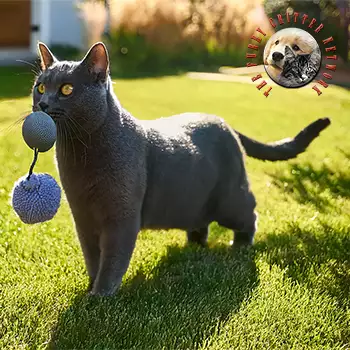
In the show ring the Chartreux is admired for its powerful, well-proportioned body and its luxurious coat, which should have a slightly woolly texture that distinguishes it from the sleeker coats of other blue breeds. Judges look for the breed's characteristic "smile," created by the structure of the head and the tapering muzzle, which gives the cat a perpetually pleasant expression. The eyes should be a deep, vivid gold or copper, providing a striking contrast to the blue-gray fur.

As a companion animal the Chartreux has earned a devoted following among cat enthusiasts who appreciate a breed that is affectionate without being needy. Chartreux owners frequently describe their cats as dog-like in their loyalty, noting that the breed tends to follow its preferred person from room to room and often enjoys playing fetch. At the same time, the Chartreux retains an independent streak and is content to observe household activity from a comfortable perch.

The breed's gentle, adaptable temperament has made it increasingly popular in homes with children and other pets. Chartreux cats are known for their tolerance and patience, and they tend to integrate smoothly into multi-pet households. Their relatively quiet nature and moderate activity level also make them well suited to apartment living, contributing to growing interest in the breed among urban cat fanciers.

Notable Individuals

Perhaps the most famous Chartreux in history was Brillat-Savarin, a cat belonging to the novelist Colette. Named after the celebrated French gastronome Jean Anthelme Brillat-Savarin, this Chartreux was a constant companion to the author in her later years and featured in her writings. Colette's tender and perceptive descriptions of life with her Chartreux helped immortalize the breed in French literature and brought it to the attention of a wider audience.

General Charles de Gaulle, another towering figure in French culture, was also known to have kept a Chartreux cat. His cat, reportedly named Gris-Gris, is said to have been a beloved companion during the quieter moments of the general's life at his country estate in Colombey-les-Deux-Églises. The association between the Chartreux and such a prominent symbol of French national identity only deepened the breed's connection to French cultural heritage.

In the world of competitive cat breeding, several individual Chartreux have left lasting marks on the breed's development. The cats bred by the Léger sisters in the 1930s, descended from the Belle-Île colony, established the foundational bloodlines that continue to influence the breed today. In the United States, the early imports of the 1970s similarly shaped the American Chartreux population, and their descendants can be traced in the pedigrees of many contemporary show and breeding cats.

While the Chartreux has not produced the kind of individual celebrity pets seen in some other breeds, its association with notable figures in French arts and letters has given it a collective cultural prominence that few cat breeds can match. The breed's quiet distinction mirrors the character of the cats themselves — notable not for flashiness but for enduring substance and quality.

Always consult a qualified professional before making any health-related decisions. This content is provided for informational reference only and should not replace professional guidance specific to your animal.