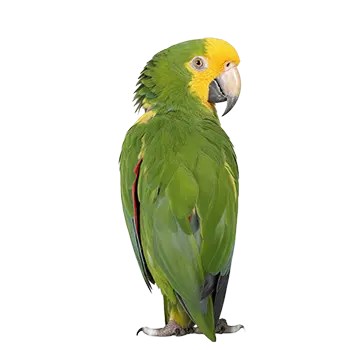

Parrots have been fixtures of film and television for as long as the medium has existed, and the Amazon parrot group, with its vivid green plumage, expressive faces, and vocal prowess, has contributed heavily to the archetypal screen parrot. While individual Amazon species are rarely identified by name in mainstream productions, the Yellow-Crowned Amazon's combination of striking appearance and reliable vocal performance has made it a frequent choice for trainers and animal coordinators working in Hollywood and international film industries. The bright green body accented by a yellow crown reads well on camera, and the species' willingness to vocalize on cue has made it a practical option for productions requiring a talking bird.
In adventure and period films, parrots often serve as visual shorthand for tropical settings, piracy, and exotic travel. The cultural image of the parrot perched on a pirate's shoulder, while most closely associated with Robert Louis Stevenson's Treasure Island and its many adaptations, has been reinforced by countless productions that use live Amazon parrots or their digital likenesses to evoke a sense of swashbuckling romance. Yellow-Crowned Amazons, along with their close relatives the Yellow-Naped and Double Yellow-Headed Amazons, have filled this role repeatedly, their bold coloring and confident demeanor making them naturals for the part.
Television has also made extensive use of Amazon parrots as recurring characters or comic relief. Sitcoms, variety shows, and talk shows have featured trained Amazons performing tricks, repeating catchphrases, and interacting with hosts and audiences. These appearances, while often brief, have played a significant role in shaping public expectations of what a pet parrot can do. The Yellow-Crowned Amazon's vocal clarity and social confidence make it particularly well suited to the controlled chaos of a live television set, where a nervous or withdrawn bird would be of little use.
Documentary filmmaking has provided a more nuanced portrayal of the species. Nature programs produced by major broadcasters have featured Yellow-Crowned Amazons in segments on Neotropical biodiversity, parrot intelligence, and the conservation challenges facing wild parrot populations. These documentaries offer viewers a chance to see the species in its natural habitat, foraging in the canopy, socializing at communal roosts, and navigating the pressures of a changing landscape, providing a counterpoint to the domesticated image that dominates entertainment media.