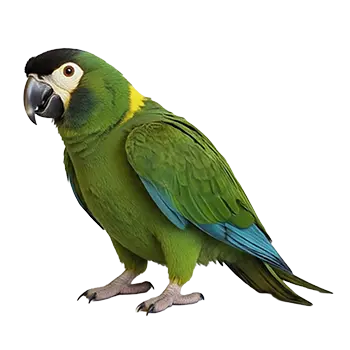

Representation in Wildlife Documentaries

The Yellow-Collared Macaw has appeared in a number of wildlife documentaries focused on the avian diversity of South America, though it rarely occupies the spotlight in the way that its larger relatives do. Productions centered on the Pantanal wetlands, the Bolivian lowlands, or the cerrado biome frequently capture footage of Yellow-Collared Macaw flocks in flight or feeding in the canopy, using the species as one element in a broader portrait of Neotropical biodiversity. These appearances, while often brief, serve an important function by introducing global audiences to the mini macaw group and demonstrating that the macaw family encompasses far more than the large, iconic species most viewers already recognize.

Nature programming produced by major broadcasters has occasionally featured the Yellow-Collared Macaw in segments devoted to the ecology of dry forests and transitional woodland habitats. These segments tend to emphasize the species' social behavior, its dependence on tree cavities for nesting, and the challenges posed by habitat fragmentation. The visual appeal of a fast-moving flock of bright green macaws against a backdrop of sunlit woodland canopy translates well to high-definition filmmaking, and the species' vocalizations provide a distinctive auditory element that sound designers and producers value.

Documentary coverage of the parrot trade has also brought the Yellow-Collared Macaw into public view. Investigative productions examining the history and ongoing impacts of wild bird trapping in South America have included the species among the many parrot taxa affected by decades of commercial exploitation. These segments often pair field footage with interviews with conservationists and former trappers, contextualizing the Yellow-Collared Macaw's story within the larger narrative of wildlife trade regulation and enforcement.

More recently, streaming platforms and independent wildlife filmmakers have expanded the range of species receiving dedicated screen time. Short-form documentary content focused specifically on mini macaws, including the Yellow-Collared Macaw, has begun to appear on platforms that cater to niche audiences interested in aviculture, ornithology, and tropical ecology. These productions tend to be more detailed and species-specific than traditional broadcast documentaries, offering viewers a deeper look at the Yellow-Collared Macaw's behavior, ecology, and conservation status.

Social Media & Online Communities

The rise of social media has been transformative for the Yellow-Collared Macaw's public profile. On platforms built around short-form video content, individual Yellow-Collared Macaws have amassed dedicated followings by showcasing the species' playful antics, acrobatic movements, and vocal abilities. Videos of these macaws hanging upside down from perches, wrestling with toys, chattering at their owners, or performing trained behaviors routinely attract tens of thousands of views. The species' compact size and expressive body language translate particularly well to the vertical video format that dominates mobile-first social platforms.

Online avicultural communities have also played a significant role in elevating the Yellow-Collared Macaw's visibility. Dedicated forums and social media groups for mini macaw enthusiasts serve as hubs for sharing husbandry advice, breeding reports, veterinary information, and personal stories. These communities often function as informal support networks for new and experienced keepers alike, with members pooling collective knowledge about the species' dietary needs, behavioral quirks, and health concerns. The result is a body of practical, crowd-sourced expertise that supplements formal avicultural literature.

The species' presence on image-sharing platforms has contributed to a growing visual archive of Yellow-Collared Macaws in a wide range of settings, from professional aviary photographs to casual snapshots of companion birds perched on shoulders during daily errands. This visual abundance has helped normalize the idea of the mini macaw as a legitimate and appealing companion animal, countering the perception that only the large macaw species are worth keeping. Hashtags associated with the species and with mini macaws in general aggregate this content and make it easily discoverable for prospective owners and enthusiasts.

The educational value of social media content about Yellow-Collared Macaws should not be underestimated. Experienced keepers who document their birds' daily lives often include detailed commentary on diet preparation, cage setup, training techniques, and veterinary visits. This transparency gives potential owners a realistic preview of the commitment involved in keeping a Yellow-Collared Macaw, serving as both inspiration and caution. It also creates a feedback loop in which keepers can receive real-time advice from peers, improving husbandry outcomes across the community.

Avicultural Literature & Publications

The Yellow-Collared Macaw has been a subject of interest in avicultural literature since the species became widely available in captivity during the latter half of the 20th century. Major avicultural magazines, including those published by organizations such as the American Federation of Aviculture and the Avicultural Society, have featured articles on the species covering topics ranging from breeding management and diet formulation to behavioral enrichment and disease prevention. These publications have served as a primary conduit for disseminating practical knowledge about the Yellow-Collared Macaw to breeders and keepers across multiple decades.

Comprehensive reference works on parrots and macaws invariably include entries on the Yellow-Collared Macaw, situating it within the broader context of the genus Primolius and the mini macaw group. Authors such as Joseph Forshaw, whose works on the parrots of the world are considered foundational in ornithological literature, have provided detailed accounts of the species' taxonomy, distribution, and natural history. More recently, field guides and regional bird identification manuals covering South American avifauna have included updated range maps, plumage descriptions, and behavioral notes for the species.

Specialized books devoted entirely to macaws or to the mini macaw group have given the Yellow-Collared Macaw more focused treatment. These volumes typically combine natural history information with practical guidance for captive care, offering detailed chapters on housing, nutrition, breeding protocols, and common health issues. They often draw on the experiences of long-time breeders and avian veterinarians, providing a level of species-specific detail that general parrot care books cannot match.

The migration of avicultural publishing to digital formats has expanded access to Yellow-Collared Macaw content considerably. Online journals, breed-specific websites, and digital archives of older print publications have made it possible for keepers anywhere in the world to access detailed information about the species. This democratization of knowledge has been particularly valuable for keepers in countries where the Yellow-Collared Macaw is less commonly kept and where local expertise may be limited.

Photography & Visual Arts

The Yellow-Collared Macaw's vivid coloration and engaging postures have made it a popular subject for wildlife and avian photographers. The species' predominantly green plumage, accented by the distinctive yellow collar band on the nape, the dark forehead, and the blue-tipped flight and tail feathers, presents a range of chromatic contrasts that photograph well under both natural and studio lighting conditions. Photographers working in the field often capture the species in dynamic poses, mid-flight or perched at the entrance to a nesting cavity, images that convey the energy and alertness that characterize the Yellow-Collared Macaw in its natural habitat.

Avian art, both traditional and digital, has also drawn on the Yellow-Collared Macaw as a subject. Wildlife illustrators working in the tradition of scientific illustration have depicted the species in precise anatomical detail for use in field guides, monographs, and museum displays. These illustrations emphasize the diagnostic features that distinguish the Yellow-Collared Macaw from other small macaws, including the extent and coloration of the collar band, the proportions of the bill, and the pattern of bare skin on the facial patch.

Contemporary digital artists and illustrators have embraced the Yellow-Collared Macaw as part of a broader trend toward celebrating lesser-known wildlife species. Prints, posters, and merchandise featuring stylized depictions of the species are available through online art marketplaces, and the bird occasionally appears in collections focused on Neotropical biodiversity or endangered habitats. While these depictions sometimes take creative liberties with color or proportion for aesthetic effect, they contribute to the species' cultural presence and help familiarize audiences with a bird that might otherwise remain obscure outside avicultural circles.

Photography competitions and exhibitions focused on birds and wildlife have featured Yellow-Collared Macaw images among their selections, particularly in categories devoted to South American species or psittacine diversity. Winning images of the species tend to emphasize behavior over simple portraiture, capturing moments of social interaction, feeding, or flight that tell a story about the bird's ecology and temperament. These images circulate widely online and in print, reinforcing the Yellow-Collared Macaw's visual identity in the public imagination.

The Mini Macaw Niche in Popular Culture

The concept of the mini macaw has carved out a distinct niche in the popular culture of companion bird keeping, and the Yellow-Collared Macaw is one of the species most closely identified with this category. The appeal of a bird that offers the charisma, intelligence, and interactive nature of a macaw without the extreme noise levels, large cage requirements, and physical strength of the full-sized species has resonated with a growing segment of the pet-owning public. This appeal has been amplified by media coverage, both traditional and digital, that positions mini macaws as accessible alternatives to their larger cousins.

Pet industry marketing has increasingly recognized the mini macaw segment as a distinct product category. Cage manufacturers, toy designers, and food producers have developed product lines tailored to the physical dimensions and behavioral needs of species like the Yellow-Collared Macaw, and these products are often marketed with imagery and language that emphasize the mini macaw's combination of macaw personality and manageable size. This commercial attention has further normalized the Yellow-Collared Macaw's place in the companion bird market and raised its profile among consumers who might otherwise gravitate toward more widely advertised species.

The Yellow-Collared Macaw's temperament has contributed to its cultural identity within the avicultural world. Keepers frequently describe the species as confident, curious, and sometimes comically bold, traits that align well with the popular image of the macaw as a charismatic and interactive companion. Anecdotes about Yellow-Collared Macaws stealing food from plates, initiating play with household pets, or developing quirky personal habits circulate widely in online communities and have become part of the species' informal reputation.

The broader cultural narrative around mini macaws, including the Yellow-Collared Macaw, reflects a shift in attitudes toward companion birds that has been unfolding over the past several decades. As public awareness of avian intelligence and emotional complexity has grown, fueled in part by scientific research on parrot cognition, the idea of a smaller macaw as a long-term intellectual and emotional companion rather than a mere ornamental pet has gained traction. The Yellow-Collared Macaw, with its combination of personality, adaptability, and longevity, is well positioned to benefit from this evolving cultural perspective.

Community Events & Exhibitions

The Yellow-Collared Macaw is a regular presence at avian expos, bird fairs, and avicultural society meetings throughout North America, Europe, and parts of South America. These events serve as important gathering points for breeders, keepers, and enthusiasts, and the Yellow-Collared Macaw is often among the species displayed in vendor booths, educational exhibits, and companion bird showcases. Its manageable size and generally sociable temperament make it well suited to the controlled bustle of an expo hall, where larger macaw species can sometimes become overstimulated or difficult to handle.

Bird clubs and regional avicultural societies frequently feature the Yellow-Collared Macaw in educational programming. Presentations on mini macaw care, breeding, and behavior are common offerings at monthly meetings and annual conferences, and the species is often represented in hands-on demonstrations where attendees can observe and interact with well-socialized birds. These interactions are particularly valuable for prospective owners, providing a direct, in-person experience that complements the information available through written and digital media.

Competitive bird shows, while more commonly associated with species like budgerigars, cockatiels, and canaries, occasionally include classes for macaws and other large parrots in which the Yellow-Collared Macaw can be entered. Judging criteria at these events typically emphasize plumage condition, physical conformation, and temperament, and well-presented Yellow-Collared Macaws have earned recognition for their vivid coloration and calm, confident demeanor. Participation in these events contributes to the species' visibility within the organized avicultural community and encourages high standards of care and breeding.

Zoos and public aviaries around the world also contribute to the Yellow-Collared Macaw's cultural presence. Many zoological institutions maintain Yellow-Collared Macaws as part of their South American bird collections, often housing them in walk-through aviaries or mixed-species exhibits where visitors can observe the birds at close range. Interpretive signage and keeper talks at these facilities introduce the species to audiences that may have no prior exposure to mini macaws, broadening public awareness and fostering interest in the conservation of the habitats these birds depend on.

Always consult a qualified professional before making any health-related decisions. This content is provided for informational reference only and should not replace professional guidance specific to your animal.