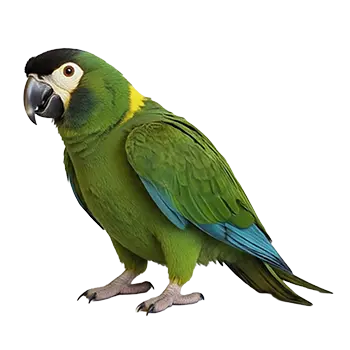

International Trade Regulations & CITES

The Yellow-Collared Macaw is listed on Appendix II of the Convention on International Trade in Endangered Species of Wild Fauna and Flora (CITES), the international treaty that regulates cross-border trade in wildlife and wildlife products. Appendix II listing means that the species is not currently considered threatened with extinction but that international trade must be controlled to prevent utilization levels that could become incompatible with the species' long-term survival. In practical terms, this means that any international shipment of a Yellow-Collared Macaw, whether a live bird, a preserved specimen, or even feathers, requires the issuance of a CITES export permit by the country of origin, confirming that the trade will not be detrimental to the species' wild populations.

The CITES framework operates through a system of national management and scientific authorities in each signatory country. When a Yellow-Collared Macaw is proposed for export, the scientific authority of the exporting nation must issue a non-detriment finding, a formal determination that the proposed trade will not harm the species' conservation status. The management authority then issues the permit, subject to confirmation that the specimens were legally acquired and that the receiving country's import requirements are met. This layered approval process is designed to ensure that trade is sustainable and traceable, though enforcement capacity varies significantly among CITES member states.

For captive-bred Yellow-Collared Macaws, the CITES requirements are somewhat streamlined. Birds bred in facilities that meet CITES criteria for captive breeding may be traded under simplified permit procedures, and several countries have registered breeding operations that are authorized to export captive-bred specimens with reduced documentation burdens. However, the distinction between truly captive-bred birds and laundered wild-caught individuals remains a concern in enforcement circles, and CITES authorities periodically review and audit registered facilities to maintain the integrity of the system.

Prospective owners and breeders involved in international transactions should be aware that CITES compliance is not optional and that violations can result in confiscation of birds, substantial financial penalties, and criminal prosecution. Even routine transactions, such as relocating a pet Yellow-Collared Macaw across national borders during an international move, require proper CITES documentation. Failure to obtain the necessary permits before transport can result in the bird being seized at the border, with recovery often proving difficult or impossible.

United States Federal Regulations

In the United States, the legal framework governing the Yellow-Collared Macaw is shaped primarily by the Wild Bird Conservation Act (WBCA) of 1992 and the Lacey Act. The WBCA effectively prohibits the importation of most CITES-listed parrot species into the United States for the pet trade, with limited exceptions for approved cooperative breeding programs, zoological institutions, and scientific research. This legislation was enacted in response to the massive scale of the wild bird trade during the 1970s and 1980s, which saw millions of parrots captured and exported from range countries under conditions that caused enormous mortality and contributed to population declines across many species.

The Lacey Act provides an additional layer of enforcement by making it a federal offense to trade in wildlife that has been illegally captured, transported, or sold under the laws of any U.S. state, foreign country, or tribal authority. For Yellow-Collared Macaw owners and breeders, this means that the provenance of each bird matters. A domestically captive-bred Yellow-Collared Macaw purchased from a licensed breeder within the United States is fully legal to own and sell in most circumstances, but a bird that was smuggled into the country or acquired through channels that violate foreign export laws could expose its possessor to prosecution under the Lacey Act.

The U.S. Fish and Wildlife Service (USFWS) is the primary federal agency responsible for enforcing both the WBCA and the Lacey Act as they apply to parrots. USFWS agents and inspectors operate at ports of entry and conduct investigations into suspected illegal trade. Breeders who sell Yellow-Collared Macaws across state lines may also be subject to USFWS licensing requirements, and commercial breeders are generally required to maintain records of sales and transfers that can be made available to federal inspectors upon request.

It is worth noting that federal law in the United States does not require individual permits for the personal ownership of a captive-bred Yellow-Collared Macaw within the country. The regulatory burden falls primarily on breeders, dealers, and anyone involved in importing or exporting the species. However, owners should retain documentation establishing the captive-bred status and legal acquisition of their birds, as this paperwork may be required if the bird is sold, transferred, or transported across state lines.

State & Local Ownership Laws

Beyond federal regulations, Yellow-Collared Macaw owners in the United States must contend with a patchwork of state and local laws that vary considerably in their scope and restrictiveness. Most states permit the ownership of captive-bred parrots, including the Yellow-Collared Macaw, without requiring special permits. However, a number of states impose additional requirements that owners must satisfy. Some states require exotic animal permits or registration for any non-native bird species, while others regulate parrot ownership through broader statutes governing the keeping of wildlife or exotic pets.

Certain municipalities and counties have enacted their own ordinances affecting parrot ownership, sometimes independently of state-level policy. Noise ordinances, for example, can become relevant for macaw keepers, as even the relatively modest vocalizations of a Yellow-Collared Macaw may attract complaints from neighbors in densely populated residential areas. Some local jurisdictions have specific provisions addressing the keeping of exotic birds, including requirements related to cage size, outdoor enclosure standards, and the number of birds that may be kept on a single property.

Homeowners associations and rental agreements represent another layer of legal consideration that prospective Yellow-Collared Macaw owners should investigate before acquiring a bird. Many HOAs restrict or prohibit the keeping of exotic animals, and lease agreements for rental properties frequently include clauses that limit pet ownership to conventional companion animals such as dogs and cats. Violating these agreements can result in fines, eviction proceedings, or the forced removal of the bird, making it essential for prospective owners to clarify the rules governing their specific living arrangement before bringing a macaw into the home.

Owners who breed Yellow-Collared Macaws may face additional regulatory requirements at the state and local levels. Some states require breeders to obtain specific permits or licenses, maintain records of sales and transfers, and comply with facility inspection requirements. Zoning laws may also restrict commercial breeding operations to designated areas, and breeders operating from residential properties may need to obtain variances or special use permits depending on the jurisdiction. Consulting a local attorney or contacting the relevant state wildlife agency is advisable for anyone considering breeding Yellow-Collared Macaws on a commercial or semi-commercial basis.

Regulations Outside the United States

The legal landscape for Yellow-Collared Macaw ownership outside the United States reflects a wide spectrum of regulatory approaches. In the European Union, the species is subject to EU Wildlife Trade Regulations, which implement CITES within the bloc and add supplementary controls. Under EU rules, Yellow-Collared Macaws are classified in Annex B, which corresponds broadly to CITES Appendix II and requires import permits for birds entering the EU from non-member countries. Intra-EU trade in captive-bred specimens is generally permitted without additional documentation, though some member states impose their own national requirements, including registration, microchipping, or closed-ring banding for birds sold domestically.

In the United Kingdom, post-Brexit wildlife trade regulations maintain alignment with CITES requirements but operate through a separate permitting system administered by the Animal and Plant Health Agency. Captive-bred Yellow-Collared Macaws may be kept and bred without special permits in most cases, but any import or export requires appropriate CITES documentation and, for live birds, compliance with veterinary health certification requirements. Keepers should also be aware of the Animal Welfare Act, which establishes a duty of care for all captive animals and can be enforced against owners who fail to provide adequate housing, nutrition, or veterinary attention.

Australia presents one of the most restrictive regulatory environments for parrot keeping in the world. The importation of live parrots into Australia has been broadly prohibited for decades, and the country's biosecurity and wildlife protection laws make it effectively impossible to legally bring a Yellow-Collared Macaw into the country as a pet. This prohibition reflects Australia's broader approach to invasive species management and its commitment to protecting native fauna, including its own substantial assemblage of native parrot species.

In the Yellow-Collared Macaw's range countries, Bolivia, Brazil, Paraguay, and Argentina, national laws governing the capture, trade, and keeping of native wildlife vary in both substance and enforcement. Bolivia and Brazil have enacted legislation prohibiting or heavily restricting the capture and domestic sale of native parrots, though enforcement in remote areas remains challenging. Paraguay and Argentina have their own regulatory frameworks, with varying provisions for captive breeding and domestic trade. Prospective owners in these countries should consult national wildlife authorities for current requirements, as regulations are periodically updated in response to conservation assessments and international treaty obligations.

Documentation & Proof of Legal Acquisition

Maintaining proper documentation for a Yellow-Collared Macaw is a practical necessity that protects both the owner and the bird. The most fundamental piece of documentation is proof that the bird was legally bred in captivity or legally acquired from a licensed source. For birds purchased from domestic breeders, a signed bill of sale that includes the breeder's name, contact information, and any applicable license or permit numbers establishes a chain of custody that can be referenced in the event of a regulatory inquiry or ownership dispute.

Closed leg bands and microchips serve as physical identifiers that link an individual bird to its documentation. Many breeders band their chicks with uniquely numbered, seamless stainless steel or aluminum bands shortly after hatching, and these bands cannot be applied to older birds, making them a reliable indicator of captive-bred status. Microchips, which are implanted subcutaneously and can be read with a standard scanner, provide an additional layer of identification that is particularly useful for birds that lose or damage their bands. Some jurisdictions and avicultural organizations require or strongly recommend one or both of these identification methods.

For birds that are sold, rehomed, or transferred between owners, maintaining an unbroken paper trail is important. Transfer documents should record the date of transfer, the identities of both parties, the bird's band number or microchip identifier, and any applicable permit references. In jurisdictions that require registration of exotic birds, the new owner may need to update the registration to reflect the change of ownership. Failure to maintain these records can create complications ranging from difficulty proving legal ownership in the event of theft to exposure to regulatory penalties if the bird's provenance is questioned.

Owners who intend to travel internationally with their Yellow-Collared Macaw or who may relocate to another country should begin assembling the necessary documentation well in advance. CITES permits, veterinary health certificates, import permits from the destination country, and proof of captive-bred status may all be required, and the processing time for these documents can be substantial. Working with a customs broker experienced in live animal shipments or consulting the CITES management authority in both the country of departure and the country of destination can help ensure that all requirements are identified and met before travel begins.

Ethical & Welfare Legislation

Beyond trade and ownership regulations, a growing body of animal welfare legislation affects how Yellow-Collared Macaws must be housed, cared for, and treated in captivity. In the United States, the Animal Welfare Act (AWA) sets baseline standards for the care of animals in commercial settings, including licensed bird dealers and exhibitors, though it does not directly regulate private pet owners. State-level animal cruelty statutes, however, apply to all animal owners and can be invoked against individuals who neglect or mistreat their birds, including through inadequate nutrition, unsanitary housing conditions, or denial of necessary veterinary care.

In Europe, the trend toward more prescriptive animal welfare standards has led to the adoption of species-specific guidelines for the keeping of parrots in several countries. Germany, the Netherlands, and Switzerland, among others, have established regulations or official guidance documents that address minimum cage dimensions, social companionship requirements, and environmental enrichment standards for captive parrots. These standards reflect a growing consensus among legislators and welfare organizations that the complex cognitive and social needs of species like the Yellow-Collared Macaw require legal protections that go beyond basic anti-cruelty provisions.

The question of whether parrots should be kept as pets at all has entered the legislative arena in some jurisdictions. The Netherlands, for example, has pursued a positive list approach, under which only species explicitly approved by the government may be kept as companion animals. While macaws remain on the Dutch positive list at present, the ongoing evaluation process means that the legal status of species like the Yellow-Collared Macaw could change if welfare or conservation concerns are deemed sufficient to warrant removal. This evolving regulatory model is being watched closely by avicultural organizations in other countries as a potential template for future legislation.

For Yellow-Collared Macaw owners, the practical implication of these welfare-oriented legal developments is a heightened expectation of responsible care. Owners who provide spacious, enriched housing, a balanced diet, regular veterinary attention, and adequate social interaction are not only meeting their ethical obligations but are also positioning themselves on the right side of an evolving legal landscape. As public awareness of avian intelligence and emotional complexity continues to grow, the legal standards governing the keeping of parrots are likely to become more demanding, making proactive compliance a wise investment for any responsible keeper.

Always consult a qualified professional before making any health-related decisions. This content is provided for informational reference only and should not replace professional guidance specific to your animal.