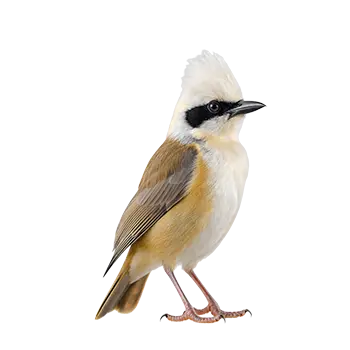

International Trade Regulations & CITES Status

The international legal framework governing the trade and transport of the White-crested Laughingthrush is shaped primarily by the Convention on International Trade in Endangered Species of Wild Fauna and Flora, commonly known as CITES. This treaty, which has been ratified by over 180 countries, regulates the cross-border movement of wildlife species through a system of appendices that impose varying levels of trade restriction based on conservation status. The White-crested Laughingthrush is not currently listed on any CITES appendix, which means that international trade in the species is not subject to the permit requirements that govern commerce in listed species.

The absence of a CITES listing does not, however, mean that the species can be traded without any regulatory oversight. CITES operates as a framework that supplements, rather than replaces, national wildlife legislation, and many countries within the White-crested Laughingthrush's native range have enacted domestic laws that restrict or prohibit the capture and sale of native bird species regardless of their CITES status. Furthermore, the European Union's Wildlife Trade Regulations, which implement CITES obligations for EU member states, include provisions that can impose stricter measures on species not listed under the convention when evidence of conservation concern warrants additional protection.

The broader context of the Asian songbird trade crisis has prompted calls for increased international regulation of passerine species that are heavily exploited for the cage bird market. Conservation organizations including TRAFFIC, BirdLife International, and the IUCN have advocated for closer scrutiny of trade in laughingthrush species, several of which have experienced severe population declines driven by trapping. While the White-crested Laughingthrush's relatively stable global population has not yet triggered a formal CITES listing proposal, the species' vulnerability to regional over-exploitation means that its regulatory status could change if population data indicate emerging threats.

Prospective keepers and breeders should be aware that CITES listings are periodically reviewed and updated at the Conference of the Parties, which meets approximately every three years. A species' regulatory status can change between meetings through emergency listing procedures in cases of acute conservation concern. Staying informed about current CITES listings and proposed amendments is an essential part of responsible ownership for anyone involved with species that are subject to or candidates for international trade regulation.

National Wildlife Laws in Range Countries

The countries spanning the White-crested Laughingthrush's native range maintain a diverse array of national wildlife protection statutes that directly affect the legality of capturing, keeping, and trading the species within their borders. In India, the Wildlife Protection Act of 1972 provides comprehensive legal protection for native bird species, and the White-crested Laughingthrush is listed in Schedule IV of the Act. This listing prohibits hunting and trapping without specific government authorization, and violations can result in significant fines and imprisonment. The Act also restricts the sale and purchase of listed species and their derivatives within Indian territory.

Nepal's National Parks and Wildlife Conservation Act provides similar protections for native avifauna within the country's protected area network, which encompasses many of the habitats where White-crested Laughingthrushes are found. While enforcement capacity varies across Nepal's diverse administrative landscape, the legal framework prohibits the capture and commercial exploitation of native bird species within national parks and wildlife reserves. Bhutan, which has positioned itself as a global leader in environmental conservation, maintains strict wildlife protection laws that extend to virtually all native vertebrate species.

In Southeast Asian range countries, the legal landscape is more variable. Thailand's Wildlife Reservation and Protection Act classifies native fauna into categories with differing levels of legal protection, and enforcement against illegal bird trapping has increased in recent years, particularly in national parks and wildlife sanctuaries. Vietnam's wildlife protection framework has undergone significant reform as international attention to the country's role in the global wildlife trade has intensified, though enforcement challenges persist. In Myanmar and Laos, where governance capacity in remote forested areas is often limited, legal protections for songbird species exist on paper but are inconsistently applied.

China's Wildlife Protection Law, substantially amended in recent years, governs the capture and trade of native bird species and has been increasingly enforced in the context of the country's broader crackdown on illegal wildlife commerce. The White-crested Laughingthrush's status within the Chinese legal framework depends on its classification under the national protection system, which categorizes species into tiers with corresponding levels of regulatory restriction. Prospective keepers in China must navigate both national and provincial regulations, which can differ in their specifics and enforcement priorities.

Ownership & Keeping Regulations Outside Range Countries

In countries outside the White-crested Laughingthrush's native range, the legal requirements for keeping the species as a companion bird vary considerably and are governed by a patchwork of national, state or provincial, and local regulations. In the United States, the keeping of exotic bird species is regulated at both the federal and state level. The Lacey Act prohibits the importation of wildlife taken in violation of foreign laws, meaning that any White-crested Laughingthrush brought into the United States must have been legally sourced and exported from its country of origin. Beyond federal law, individual states maintain their own exotic animal regulations that can range from outright bans on certain species to permitting systems that require keepers to demonstrate adequate facilities and knowledge.

The European Union regulates the importation of wild birds through its Wildlife Trade Regulations and the EU Bird Directive, which together establish a framework governing both trade and keeping. Since 2005, the EU has maintained a ban on the importation of wild-caught birds, a measure implemented in response to avian influenza concerns that has had the secondary effect of supporting captive breeding programs for species that were previously supplied primarily through wild capture. White-crested Laughingthrushes available in the European avicultural market are therefore overwhelmingly captive-bred, and buyers should expect to receive documentation of captive origin, typically in the form of closed leg bands and breeder certificates.

In the United Kingdom, the keeping of exotic bird species is generally legal provided that the birds have been legally acquired and are maintained in conditions that meet the Animal Welfare Act's requirements for appropriate housing, diet, and veterinary care. There is no specific licensing requirement for keeping White-crested Laughingthrushes in England or Wales, though Scotland and Northern Ireland may apply slightly different regulatory frameworks. Keepers should be aware that local council ordinances may impose additional restrictions on the keeping of birds in certain residential areas, particularly regarding noise and outdoor aviary construction.

Australia and New Zealand maintain among the strictest biosecurity and exotic species importation regimes in the world. Both countries generally prohibit the importation of exotic bird species not already established in the country, and the White-crested Laughingthrush is not an approved import species in either jurisdiction. These restrictions reflect broader biosecurity concerns about the potential for introduced species to establish feral populations and affect native ecosystems. Keepers in Australia and New Zealand who wish to acquire laughingthrushes must source them from established captive populations within the country, which are extremely limited for this species.

Captive Breeding Regulations & Documentation

Captive breeding of the White-crested Laughingthrush is subject to regulatory requirements that vary significantly by jurisdiction but share certain common themes centered on documentation, traceability, and welfare standards. In the European Union, captive-bred birds are typically required to carry closed leg bands applied within the first days of life, which serve as proof of captive origin and enable individual identification throughout the bird's life. Breeders participating in European Association of Zoos and Aquaria managed programs maintain detailed studbook records that track lineage, breeding outcomes, and genetic diversity across the captive population.

In the United States, the regulatory framework for captive breeding of exotic birds is less centralized. The United States Fish and Wildlife Service oversees compliance with federal import and trade regulations, while state wildlife agencies manage permits and inspections at the local level. Some states require breeders of exotic bird species to maintain records of all breeding pairs, offspring produced, and sales transactions, while others impose minimal reporting requirements. The lack of a uniform national standard means that breeders must familiarize themselves with the specific requirements of their state and, in some cases, their county or municipality.

Documentation is a critical concern for anyone acquiring a White-crested Laughingthrush from a breeder or dealer. Responsible purchasers should expect to receive a bill of sale identifying the bird by species and band number, a certificate or attestation of captive-bred origin, and any applicable health certificates or veterinary records. In jurisdictions where permits are required for keeping exotic birds, the purchaser may need to present these documents to obtain or update their permit. Retaining complete records is not merely a legal formality but also protects the owner in the event of future regulatory inquiries or changes in ownership.

Zoological institutions that breed White-crested Laughingthrushes operate within an additional layer of regulatory and institutional oversight. Accredited zoos in both Europe and North America are subject to regular inspections and must comply with standards set by their respective accrediting bodies, including the European Association of Zoos and Aquaria, the Association of Zoos and Aquariums in North America, and equivalent organizations in other regions. These standards address housing specifications, dietary protocols, veterinary care, and genetic management, and they ensure that captive breeding contributes to the long-term viability of the species within managed populations.

Conservation Law & the Songbird Trade Crisis

The legal landscape surrounding the White-crested Laughingthrush cannot be fully understood without reference to the broader songbird trade crisis that has reshaped conservation policy across Southeast Asia over the past two decades. The region's traditional practice of keeping songbirds, deeply embedded in the cultures of Indonesia, Vietnam, Thailand, and southern China, has scaled to an industrial level that has driven multiple species to the brink of extinction. Several laughingthrush species closely related to the White-crested Laughingthrush, including the critically endangered Black-hooded Laughingthrush and the Sumatran Laughingthrush, have experienced catastrophic population declines attributed primarily to trapping for the cage bird trade.

This crisis has prompted a wave of legislative and enforcement responses at both national and international levels. Indonesia, which is the epicenter of the Asian songbird trade, has strengthened penalties for illegal trapping and trading of protected species and has expanded the list of species receiving legal protection. Vietnam has introduced reforms to its wildlife protection framework and has cooperated with international organizations on enforcement operations targeting illegal bird markets. Thailand has increased penalties for wildlife trafficking and has invested in enforcement capacity within its national park system.

The implications of this evolving legal landscape for the White-crested Laughingthrush are significant even though the species itself is not currently classified as threatened. Conservation organizations have argued that the regulatory framework for Asian songbirds needs to be proactive rather than reactive, addressing trade in species before populations collapse rather than after. This perspective has led to proposals for broader listing of laughingthrush species under CITES and for harmonized regional regulations that would establish consistent trade controls across the countries where trapping pressure is greatest.

For keepers and breeders of White-crested Laughingthrushes, the songbird trade crisis underscores the importance of supporting and participating in legal, well-documented captive breeding programs. Demonstrating that captive populations can be maintained without reliance on wild-caught birds strengthens the case for continued legal keeping of the species and contributes to a culture of responsible aviculture that conservation authorities are more likely to support. Conversely, any association with illegally sourced birds risks drawing regulatory scrutiny and undermining the broader avicultural community's credibility.

Practical Guidance for Prospective Keepers

Navigating the legal requirements for keeping a White-crested Laughingthrush requires diligence, patience, and a commitment to full compliance with all applicable regulations. The first step for any prospective keeper is to determine the specific laws governing exotic bird ownership in their jurisdiction. This typically involves consulting national or federal wildlife legislation, state or provincial exotic animal statutes, and local municipal ordinances that may impose additional restrictions on bird keeping, aviary construction, or noise levels associated with vocal species.

Prospective keepers should source birds exclusively from reputable captive breeders who can provide complete documentation of the bird's origin, health history, and legal status. In jurisdictions where closed leg bands are required as proof of captive-bred origin, the band number should be recorded on all transaction documents and retained for the life of the bird. Purchasing from unlicensed dealers, bird markets of uncertain legality, or online sellers who cannot provide proper documentation exposes the buyer to legal risk and perpetuates demand that may ultimately support illegal trapping.

Veterinary care for the White-crested Laughingthrush should be established with a qualified avian veterinarian before or immediately upon acquisition. Many jurisdictions require health certificates for the transport of exotic birds across state or national borders, and a relationship with a knowledgeable veterinarian ensures that these certificates can be obtained promptly when needed. Regular veterinary examinations also serve as a form of welfare documentation that can demonstrate compliance with animal welfare statutes in the event of an inspection or inquiry.

Finally, keepers should remain informed about changes in the regulatory landscape that may affect their ability to keep, breed, or transport White-crested Laughingthrushes. Subscribing to updates from national wildlife agencies, joining avicultural societies that monitor legislative developments, and maintaining contact with other keepers of the species are all practical steps that help ensure ongoing compliance. The legal framework governing exotic bird keeping is not static, and a regulation that permits ownership today may be amended or replaced in the future. Responsible keepers treat legal compliance not as a one-time obligation but as a continuous responsibility that accompanies the privilege of caring for a wild-origin species.

Always consult a qualified professional before making any health-related decisions. This content is provided for informational reference only and should not replace professional guidance specific to your animal.