
Pre-Travel Veterinary Preparation

Any transport of a Victoria Crowned Pigeon should begin with a thorough veterinary evaluation performed by an avian veterinarian experienced with large columbids or, at minimum, exotic bird species. The examination should include a complete physical assessment, evaluation of body condition and weight, a fecal parasite screen, and a review of the bird's vaccination and health history. For international shipments, most destination countries require an official health certificate issued by a government-accredited veterinarian within a specified window prior to travel, typically 48 to 72 hours before departure. Keepers should confirm the exact requirements of the destination country well in advance, as processing times for government-endorsed certificates can add additional days to the timeline.

Stress is the single greatest health risk associated with transporting Victoria Crowned Pigeons. These birds are temperamentally calm in familiar surroundings but can become highly anxious when exposed to unfamiliar handling, confinement, noise, and vibration. Chronic or acute stress can suppress the immune system, trigger gastrointestinal upset, and in severe cases lead to capture myopathy, a potentially fatal condition in which sustained muscular exertion causes widespread tissue damage. Avian veterinarians may recommend acclimation protocols in the weeks before travel, gradually introducing the bird to its travel carrier and to short periods of confinement to reduce the novelty and alarm associated with transport.

Hydration management is another critical pre-travel consideration. Victoria Crowned Pigeons obtain a significant portion of their daily water intake from fresh fruits, and any disruption to their normal diet during transport can lead to dehydration. Veterinarians may advise increasing the fruit component of the bird's diet in the days before travel and providing electrolyte supplements to ensure optimal hydration at the point of departure. Birds that are dehydrated, underweight, molting, or showing any signs of illness should not be transported until they have recovered and been cleared by a veterinarian.

For international shipments, additional veterinary requirements may include testing for specific diseases such as avian influenza, Newcastle disease, or psittacosis, depending on the regulations of the destination country. Some countries require quarantine periods upon arrival, during which the bird will be held in a government-approved facility and monitored for signs of disease. Keepers should factor these requirements into their planning and budget, as quarantine fees and associated veterinary inspections can represent a significant additional expense.

Carrier Selection & Enclosure Design

Selecting an appropriate travel carrier is one of the most important decisions in preparing a Victoria Crowned Pigeon for transport. The species' large body size, typically 28 to 31 inches in length and weighing between five and nearly eight pounds, means that standard bird carriers designed for parrots or smaller pigeon species are generally inadequate. The carrier must be large enough to allow the bird to stand upright without its crest contacting the ceiling, to turn around without difficulty, and to lie down comfortably. At the same time, the carrier should not be so spacious that the bird is thrown around during movement, as excess space increases the risk of injury during sudden stops, turbulence, or rough handling.

For air transport, the carrier must comply with the International Air Transport Association (IATA) Live Animals Regulations, which specify construction materials, ventilation requirements, labeling standards, and size guidelines for shipping containers. IATA-compliant carriers are typically constructed of rigid plastic or fiberglass with metal mesh ventilation panels and secure locking mechanisms. The carrier should be labeled with live animal stickers, directional arrows indicating the correct upright orientation, and contact information for both the shipper and the recipient. Airlines may have additional carrier requirements beyond the IATA baseline, so it is essential to confirm the specific policies of the carrier airline before booking.

The interior of the carrier should be fitted with a non-slip substrate such as a rubberized mat or a layer of clean toweling that provides traction without creating a tripping hazard. Loose bedding materials such as wood shavings or shredded paper are generally discouraged for travel, as they can shift during transport, obstruct ventilation openings, and be ingested by a stressed bird. A shallow, spill-resistant water dish should be secured inside the carrier, and a small quantity of familiar food, ideally soft fruits that also provide hydration, should be made available. For longer journeys, an external water reservoir that can be refilled without opening the carrier door is a valuable feature.

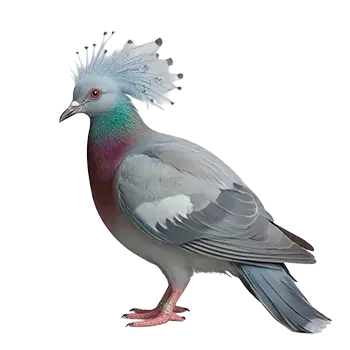
The bird's elaborate crest requires specific attention during carrier design and selection. The delicate, lace-like feathers of the crest can be damaged by contact with the carrier ceiling or walls, resulting in breakage and permanent cosmetic impairment. Carriers with smooth interior surfaces and generous headroom are preferred, and some experienced shippers recommend padding the upper interior of the carrier with soft, clean fabric to cushion any accidental contact. Protecting the crest is not merely a cosmetic concern; damaged crest feathers may not fully regrow until the next molt, which in this species occurs gradually over an extended period.

Air Transport Procedures

Air transport is the most common method for moving Victoria Crowned Pigeons over long distances, whether between cities within a country or across international borders. The species' CITES Appendix II status means that international air shipments require valid export and import permits, and these documents must accompany the bird throughout the journey. Airlines that accept live animal cargo typically require advance booking, and some restrict live animal shipments during periods of extreme heat or cold to minimize the risk of temperature-related stress or mortality during ground handling.

Most commercial airlines transport birds as manifest cargo rather than as checked baggage or cabin accompaniment, meaning the bird travels in a climate-controlled hold separate from the passenger cabin. Keepers should confirm that the aircraft and route offer a pressurized, temperature-controlled cargo hold, as not all aircraft types or routes are equipped for live animal transport. Direct flights are strongly preferred; layovers and plane changes introduce additional handling events, each of which increases the risk of injury, escape, or prolonged exposure to temperature extremes on the tarmac.

Ground handling at airports represents one of the highest-risk phases of air transport. Birds in shipping containers may be exposed to outdoor temperatures during loading and unloading, subjected to vibration and noise from ground support equipment, and handled by personnel who may not be trained in live animal care. Keepers can mitigate these risks by choosing flights that depart and arrive during cooler parts of the day, requesting priority handling for the live animal shipment, and clearly labeling the carrier with handling instructions that emphasize the need for gentle treatment, correct orientation, and avoidance of temperature extremes.

Upon arrival, the bird should be retrieved as quickly as possible and moved to a quiet, climate-controlled space for recovery. The first hours after a long flight are a critical period during which the bird should be offered fresh water, familiar foods, and minimal handling. Keepers should observe the bird closely for signs of stress, dehydration, respiratory distress, or injury, and should contact an avian veterinarian immediately if any concerns arise. A post-travel veterinary checkup within 24 to 48 hours of arrival is advisable, even if the bird appears to have tolerated the journey well.

Ground Transport Considerations

Ground transport by personal vehicle is often the most practical option for moving a Victoria Crowned Pigeon over short to moderate distances, such as trips to the veterinarian, transfers between local breeders, or relocations within the same region. The primary advantages of ground transport are the keeper's ability to maintain direct control over the bird's environment throughout the journey, to monitor the bird's condition in real time, and to stop and address any issues immediately. The primary risks are temperature fluctuation within the vehicle, road vibration and sudden movements, and the potential for prolonged confinement if the journey takes longer than anticipated.

The carrier should be secured in the vehicle in a position that minimizes movement and vibration, typically on the floor of the rear seat area or in the cargo area of a larger vehicle with the carrier braced against shifting. The vehicle's climate control system should be used to maintain a stable temperature within the bird's comfort range, generally between 65 and 85 degrees Fahrenheit, and direct sunlight on the carrier should be avoided by positioning it away from windows or using window shades. In hot weather, the vehicle should be pre-cooled before the bird is loaded, and the bird should never be left unattended in a parked vehicle, where temperatures can rise to lethal levels within minutes.

For longer ground journeys, planned rest stops should be incorporated into the itinerary. During stops, the bird should be offered water and a small amount of food, and the carrier should be inspected for cleanliness and any signs of damage. If the journey spans multiple hours, it may be advisable to allow the bird a brief period outside the carrier in a secure, enclosed space, such as a bathroom or small room with windows and doors closed, to stretch and relieve the stress of confinement. This option should be exercised with caution, as an unfamiliar environment can itself be a source of stress.

Commercial ground transport services specializing in live animals are available in some regions and may be a suitable option for keepers who do not wish to transport the bird themselves. These services vary widely in quality and expertise, and keepers should thoroughly vet any transport provider before entrusting a Victoria Crowned Pigeon to their care. Key considerations include the provider's experience with large birds, the condition and climate control capabilities of their vehicles, their insurance coverage, and their protocols for handling emergencies en route.

International Shipping & Border Documentation

International transport of a Victoria Crowned Pigeon involves a multi-layered documentation process that requires careful planning, typically beginning several months before the intended shipping date. The core requirement is a valid set of CITES permits: an export permit from the country of origin and, in many cases, a corresponding import permit from the destination country. The application process for these permits involves demonstrating the legal provenance of the bird, confirming its captive-bred status through documentation such as breeder certificates and closed leg band records, and paying applicable fees. Processing times vary by country and can range from a few weeks to several months, so early initiation of the permitting process is essential.

In addition to CITES permits, most countries require an official veterinary health certificate issued by a government-accredited veterinarian within a narrow window before departure. The health certificate confirms that the bird has been examined, found free of specified diseases, and is fit for travel. Some countries require additional testing for diseases such as avian influenza (specifically, high-pathogenicity strains) or Newcastle disease, and the results of these tests must be included in the health certificate documentation. The specific disease testing requirements vary by destination country and can change on short notice in response to disease outbreaks, so keepers should verify the current requirements with the destination country's veterinary import authority.

Customs clearance procedures at the destination add another layer of complexity. Live animal shipments must be declared to customs officials and are subject to inspection by veterinary and wildlife enforcement personnel. In some countries, the bird will be transferred to a government-approved quarantine facility upon arrival and held for a specified period, typically ranging from 14 to 30 days, during which it will be monitored for signs of disease. Quarantine costs, including facility fees, veterinary inspection charges, and daily care, are the responsibility of the importer and can represent a substantial additional expense.

Keepers who are unfamiliar with the international shipping process are strongly advised to engage the services of a licensed customs broker or animal transport agent with experience in live bird shipments. These professionals can navigate the permitting, documentation, and logistics on the keeper's behalf, reducing the risk of costly errors or delays. The investment in professional assistance is generally well justified by the complexity of the process and the value of the animal, both financially and in terms of its contribution to the managed captive population.

Post-Travel Recovery & Acclimation

The period immediately following transport is among the most critical in the entire travel process for a Victoria Crowned Pigeon. Even a well-planned and smoothly executed journey imposes significant physiological and psychological stress on the bird, and the manner in which the post-travel recovery period is managed can determine whether the bird returns to full health quickly or develops complications that may take weeks to resolve. The first priority upon arrival is to place the bird in a quiet, dimly lit, climate-controlled space that is free from the presence of other animals, loud noises, and unnecessary human activity.

Fresh water should be made available immediately, and the bird should be offered familiar foods, particularly soft fruits with high moisture content such as grapes, papaya, blueberries, and diced melon. Appetite may be suppressed for the first 12 to 24 hours after a stressful journey, and keepers should not be alarmed by initial reluctance to eat, provided the bird is drinking and appears otherwise alert. If the bird refuses food and water for more than 24 hours, or if it appears lethargic, fluffed, or shows signs of respiratory distress such as open-mouth breathing or tail bobbing, veterinary attention should be sought without delay.

The transition from the recovery space to the bird's permanent enclosure should be gradual. If the bird is being introduced to a new aviary or facility for the first time, a staged acclimation process is recommended. This may involve housing the bird in a smaller, secure holding area within or adjacent to the main aviary for several days to a week, allowing it to observe its new surroundings, become accustomed to the ambient sounds and activity patterns of the facility, and begin to explore at its own pace. Rushing this transition by placing a stressed, newly arrived bird directly into a large, unfamiliar aviary can provoke panic flights, collisions with enclosure walls, and social conflict with resident birds.

If the newly arrived Victoria Crowned Pigeon is being introduced to an existing group of conspecifics or other compatible species, the introduction should be managed with particular care. Visual and auditory contact through a barrier, such as a mesh partition, allows the birds to become familiar with each other before physical contact is permitted. Monitoring for signs of aggression, submission, or excessive stress during the introduction period is essential, and the keeper should be prepared to separate the birds if the introduction does not proceed smoothly. A successful introduction may take days or weeks, and patience during this process is far preferable to the injuries and setbacks that can result from a hasty or forced integration.

A follow-up veterinary examination within 48 hours of arrival is strongly recommended, even if the bird appears to have tolerated the journey well. This examination provides an opportunity to assess hydration status, body condition, respiratory function, and overall stress level, and to address any subclinical issues that may not be apparent to the keeper. For birds entering a new collection, the post-arrival veterinary workup may include fecal screening, blood work, and testing for diseases of concern in the destination region. This investment in post-travel veterinary care is a prudent safeguard that protects both the newly arrived bird and any existing collection it is joining.

Always consult a qualified professional before making any health-related decisions. This content is provided for informational reference only and should not replace professional guidance specific to your animal.