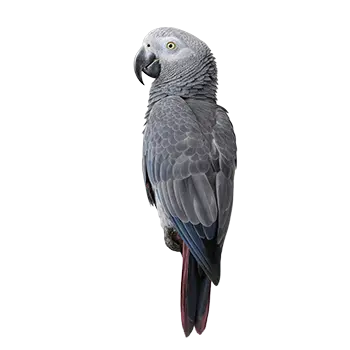

The African Grey Parrot as a group occupies a singular position in the public imagination, recognized worldwide as the quintessential talking bird. This reputation rests primarily on the Congo African Grey, whose larger size, striking red tail, and prominent role in scientific research have made it the more visible of the two species. The Timneh African Grey, while sharing many of the cognitive and vocal traits that fuel this fascination, has historically occupied a more understated position in popular awareness. Its media presence, though less extensive, has grown steadily as broader recognition of the Timneh as a distinct species has reshaped how aviculturists, content creators, and journalists discuss Grey Parrots.
Public perception of parrots in general has been shaped by centuries of cultural association with pirates, tropical exoticism, and comic mimicry. These stereotypes, while persistent, have been gradually complicated by media coverage of avian cognition research and by the personal accounts of parrot owners who describe their birds as emotionally complex and intellectually demanding companions. The Timneh has benefited from this broader shift in understanding, as audiences exposed to stories about Grey Parrot intelligence increasingly seek out information about both species rather than treating the Congo Grey as the sole representative.
The distinction between the Timneh and Congo Grey remains poorly understood by general audiences, and media producers have not always been careful about specifying which species appears in a given production or story. This ambiguity has sometimes worked in the Timneh's favor, as positive media portrayals attributed to African Greys in general have elevated the profile of both species. However, it has also meant that the Timneh's unique characteristics, including its somewhat smaller size, darker plumage, and reputation for temperamental steadiness, are not yet widely recognized outside avicultural circles.
As the Timneh gains more dedicated media attention, its identity as a species with its own story, rather than a variant of the Congo Grey, continues to solidify. Content creators, journalists, and filmmakers who take the time to distinguish between the two species contribute to a more accurate and complete public understanding of Grey Parrot diversity, conservation status, and suitability as companion animals.