
Origins & Natural Habitat

The Timneh African Grey (Psittacus timneh) is native to the moist forests and forest margins of the Upper Guinea region in West Africa. Its natural range extends from southern Guinea-Bissau and western Guinea through Sierra Leone and into the western portions of Liberia and the Ivory Coast. Unlike its larger relative, the Congo African Grey, which occupies a vast swath of Central Africa, the Timneh inhabits a comparatively restricted geographic corridor characterized by dense lowland and mid-altitude tropical forest, as well as coastal mangrove edges and gallery forests along major waterways.

The species evolved within a mosaic of primary rainforest and regenerating secondary growth, feeding on the seeds, nuts, and fruits of native trees including oil palms, which remain a dietary staple across its range. Wild Timneh flocks tend to be smaller than those of the Congo Grey, often numbering in the dozens rather than hundreds, though communal roosting sites in tall forest trees can attract larger aggregations during the evening. Seasonal movements tied to fruiting cycles carry flocks between lowland forest and adjacent farmland or plantation borders, a behavior that has historically brought them into contact with human agricultural communities.

The Upper Guinea forest ecosystem that supports the Timneh has experienced severe fragmentation over the past century. Logging, slash-and-burn agriculture, mining, and the expansion of palm oil and rubber plantations have reduced available habitat significantly. Sierra Leone and Liberia, which together harbor the largest remaining Timneh populations, lost substantial portions of their primary forest cover during periods of civil conflict and subsequent reconstruction. These pressures have concentrated wild Timneh populations into increasingly isolated forest patches, raising concerns about long-term genetic viability.

Geologically and ecologically, the Upper Guinea forests represent one of the most biodiverse regions in West Africa and are recognized as a global biodiversity hotspot. The Timneh African Grey is one of several endemic or near-endemic avian species that depend on the persistence of this forest system. Its ecological role as a seed disperser gives it functional importance within the forest community, linking its survival to the broader health of the ecosystems it inhabits.

Early History with Humans

Indigenous communities across the Upper Guinea region have coexisted with the Timneh African Grey for centuries, weaving the bird into local tradition and daily life long before European contact. Among the Mende, Temne, and other peoples of Sierra Leone, Grey Parrots were recognized as distinctively intelligent creatures whose calls and vocalizations carried meaning beyond simple birdsong. In some communities, the parrot's ability to mimic human speech was regarded as evidence of a spiritual connection between the bird and the human world, and captured Timnehs were occasionally kept in villages as communal companions rather than purely personal pets.

European awareness of the Timneh as a distinct form within the African Grey complex emerged gradually. Portuguese navigators trading along the coast of present-day Guinea and Sierra Leone in the late 15th and early 16th centuries encountered Grey Parrots and transported them back to Europe, though early records rarely distinguished between the Timneh and its larger Congo relative. The smaller size, darker plumage, and horn-colored upper mandible of the Timneh were noted by some naturalists, but for centuries the bird was treated as a regional variant rather than a separate taxonomic entity.

The colonial period intensified contact between the Timneh and the wider world. British and French colonial administrations in West Africa documented the bird's presence in trade records and natural history surveys, and live specimens found their way into European aviaries and zoological collections. The pet trade in Timnehs grew steadily during the 19th and early 20th centuries, though it remained modest compared to the massive extraction of Congo Greys from Central Africa. Traders operating along the Sierra Leonean and Liberian coasts supplied birds to ship captains and merchants who carried them to markets in Liverpool, Lisbon, and beyond.

By the mid-20th century, the Timneh was a recognized presence in the European and North American pet bird trade, though it continued to be overshadowed by the Congo African Grey in both popularity and price. This secondary status would persist for decades, shaping the way breeders, retailers, and the public perceived the Timneh relative to its larger cousin.

Cultural Symbolism & Folklore

In the oral traditions of West African communities within the Timneh's range, parrots frequently appear as characters endowed with cleverness, curiosity, and the power of speech. Among the Mende of Sierra Leone, stories featuring parrots often cast the bird as a mediator or messenger capable of crossing boundaries between the human and natural worlds. The parrot's talent for mimicry is treated with a mixture of admiration and caution in these tales, reflecting a cultural awareness that the ability to reproduce speech does not necessarily imply understanding, a theme that resonates across many African storytelling traditions.

The feathers of the Timneh African Grey, while less visually striking than the bright red tail feathers of the Congo Grey, have nonetheless held ceremonial and decorative value in certain regional traditions. Grey parrot feathers have been incorporated into ritual garments, masks, and headpieces used during initiations and seasonal festivals in parts of Guinea and Sierra Leone. The specific use of Timneh feathers as opposed to those of other parrot species varied by community, but the bird's local abundance made it a practical and symbolically meaningful source of plumage.

In broader West African artistic and literary traditions, the parrot serves as a symbol of communication, duplicity, and the unpredictable power of language. Contemporary writers from Sierra Leone and Liberia have drawn on this symbolism in fiction and poetry, sometimes using the Grey Parrot as a metaphor for the complexities of postcolonial identity, where mimicry of colonial languages and customs coexists with indigenous knowledge and expression. The Timneh, as the Grey Parrot native to this specific region, carries particular resonance in these literary contexts.

Outside Africa, the Timneh's cultural symbolism has been shaped largely by its identity as a companion bird. In European and North American aviculture, the Timneh has gradually emerged from the shadow of the Congo Grey to develop its own reputation as a steadier, less anxious, and often more adaptable companion. This perception, whether fully accurate or somewhat idealized, has become central to the Timneh's cultural identity among parrot enthusiasts and has influenced how the bird is marketed, discussed, and valued in the global pet community.

Taxonomic Recognition & Scientific Study

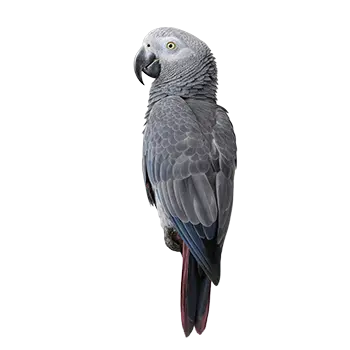
The taxonomic history of the Timneh African Grey reflects the broader evolution of ornithological classification over the past two centuries. The bird was first described by Louis Fraser in 1844 as a subspecies of the African Grey Parrot, designated Psittacus erithacus timneh. For more than 150 years, the Timneh was treated by most authorities as one of two recognized subspecies within Psittacus erithacus, distinguished from the nominate Congo form by its smaller body size, darker charcoal-grey plumage, maroon rather than bright red tail, and a distinctive horn-colored or pinkish upper mandible.

The elevation of the Timneh to full species status as Psittacus timneh gained momentum in the early 21st century. Molecular phylogenetic studies published in the 2000s and 2010s revealed that the genetic divergence between the Timneh and Congo populations was consistent with species-level separation rather than mere subspecific variation. BirdLife International and the International Ornithological Congress formally recognized the split, treating the two as distinct species. This reclassification had immediate conservation implications, as it meant the Timneh's smaller population and more restricted range could no longer be averaged into the larger Congo Grey's numbers when assessing extinction risk.

Scientific research specifically focused on the Timneh has been more limited than work on the Congo African Grey, which has dominated avian cognition studies. However, behavioral observations and comparative studies have suggested that Timnehs mature socially somewhat earlier than Congo Greys and may adapt more readily to new environments and social situations. Aviculturists have long noted that Timnehs tend to begin talking at a younger age and are often described as more resilient in the face of changes in routine or household composition, observations that are consistent with but not yet fully validated by controlled research.

The Timneh's recognition as a separate species has also spurred interest in field studies within its native range. Conservation biologists working in Guinea, Sierra Leone, and Liberia have begun efforts to census wild Timneh populations, assess habitat connectivity, and evaluate the impact of ongoing trapping. These studies are critical to informing conservation strategy, as the species' relatively small and fragmented range makes it potentially more vulnerable to local extirpation than its Central African counterpart.

The Timneh Today

The Timneh African Grey occupies a distinctive niche in the modern companion bird world. Once considered the lesser sibling of the Congo African Grey, the Timneh has steadily gained recognition among experienced aviculturists and parrot enthusiasts for qualities that set it apart. Its somewhat smaller size, typically ranging from nine to eleven inches in length and weighing between 275 and 375 grams, makes it a slightly more manageable household companion. Its reputation for emotional resilience and adaptability has attracted keepers who appreciate a parrot that can integrate into varied domestic environments without the degree of anxiety sometimes observed in Congo Greys.

Captive breeding programs for the Timneh have expanded significantly since the species received full taxonomic recognition. Breeders in the United States, the United Kingdom, Germany, and the Netherlands have established sustainable lines, and domestically bred Timnehs are increasingly available through specialist aviculturists and avian rescue organizations. The distinction between wild-caught and captive-bred birds remains an important consideration for prospective owners, as wild-caught Timnehs, though now rarely available through legal channels, may carry behavioral and health challenges rooted in the stress of capture and transport.

In the avicultural community, the Timneh is valued for its vocal abilities, which rival those of the Congo Grey in clarity and contextual use, even if its vocabulary may develop slightly differently. Timneh owners frequently report that their birds demonstrate a playful and sometimes mischievous personality, with a tendency to vocalize in a more modulated and less startling manner than the Congo Grey. These temperamental characteristics have contributed to a growing community of dedicated Timneh keepers who advocate for the subspecies through breed-specific forums, social media groups, and regional bird clubs.

Conservation remains a pressing concern for the Timneh in the wild. The species was listed on Appendix I of CITES in 2017, effectively banning international commercial trade in wild-caught specimens. Despite this protection, illegal trapping continues in parts of its range, driven by persistent demand and limited enforcement capacity. Habitat loss compounds the problem, and the Timneh is currently classified as Endangered on the IUCN Red List. Conservation organizations working in West Africa have identified the Timneh as a priority species, and community-based programs in Sierra Leone and Guinea are exploring models that link forest protection with sustainable livelihoods for rural communities.

The Timneh African Grey's trajectory from overlooked subspecies to recognized species and sought-after companion encapsulates broader themes in aviculture, taxonomy, and conservation. Its story underscores the importance of scientific classification in shaping how species are perceived, protected, and valued, and it highlights the ongoing tension between the desire to keep intelligent, charismatic birds as companions and the imperative to ensure their survival in the wild.

Notable Individuals & Community Legacy

While the Congo African Grey has produced the most famous individual parrots in scientific and popular history, the Timneh has generated its own notable figures within the avicultural community. Individual Timnehs have gained followings on social media platforms and YouTube, where their vocal performances, problem-solving demonstrations, and interactions with their human families have attracted audiences numbering in the tens of thousands. These birds have served as ambassadors for the species, introducing viewers to the Timneh's personality and capabilities in ways that specialist literature and breed profiles cannot replicate.

Within the research community, Timnehs have participated in comparative cognition studies alongside Congo Greys, contributing to a more nuanced understanding of how the two species differ in learning style, social behavior, and problem-solving approach. Though no single Timneh has achieved the individual fame of Alex, the Congo Grey who worked with Dr. Irene Pepperberg, the collective contribution of Timneh subjects to avian cognition research has helped establish that the species possesses cognitive abilities fully comparable to those of its larger relative.

The Timneh's community legacy extends beyond individual birds to the networks of keepers, breeders, and rescue organizations that have formed around the species. Timneh-focused rescue groups operate in several countries, providing rehabilitation and rehoming services for birds surrendered by owners unable to meet the demands of long-term parrot care. These organizations play a vital role in educating the public about the realities of Timneh ownership and in ensuring that birds displaced from their original homes find suitable permanent placements.

The broader parrot-keeping community has increasingly recognized the Timneh as a species deserving of attention and respect on its own terms, rather than as a secondary option for those who cannot obtain a Congo Grey. Breed-specific clubs, online communities, and avicultural publications now devote dedicated coverage to the Timneh, reflecting a shift in perception that mirrors the bird's taxonomic elevation to full species status. This evolving legacy speaks to the Timneh African Grey's capacity to inspire devotion, curiosity, and advocacy among those who come to know it.

Always consult a qualified professional before making any health-related decisions. This content is provided for informational reference only and should not replace professional guidance specific to your animal.