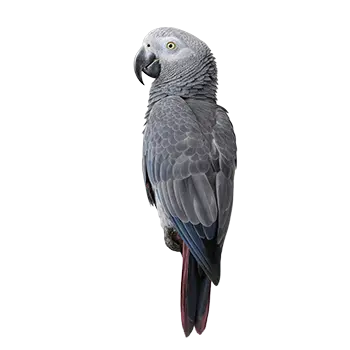

The Timneh African Grey is governed at the international level by the Convention on International Trade in Endangered Species of Wild Fauna and Flora, commonly known as CITES. Originally listed on CITES Appendix II alongside the Congo African Grey, the Timneh received significantly stronger protections when both species were uplisted to Appendix I at the 17th Conference of the Parties in 2016, with the listing taking effect in January 2017. Appendix I designation prohibits all commercial international trade in wild-caught specimens and permits trade in captive-bred individuals only under strictly regulated conditions that require export and import permits issued by the management authorities of both the sending and receiving countries.
The Appendix I listing reflected growing alarm over the scale of wild capture affecting both Grey Parrot species. Decades of trapping for the international pet trade had dramatically reduced wild populations across West and Central Africa, and the Timneh's comparatively restricted range in the Upper Guinea region made it especially vulnerable. Studies conducted by conservation organizations estimated that millions of Grey Parrots had been removed from the wild since the 1970s, with mortality rates during capture, holding, and transport often exceeding fifty percent. The uplisting was supported by a broad coalition of range states, conservation organizations, and avicultural groups that recognized the unsustainability of the existing trade regime.
Under Appendix I, the trade in captive-bred Timneh African Greys requires breeders and dealers to demonstrate that the birds were bred in a controlled environment by parents legally acquired and maintained in accordance with national law. Breeding facilities must be registered with the relevant CITES management authority, and individual birds must be accompanied by documentation verifying their captive-bred status. These requirements are designed to prevent the laundering of wild-caught birds through fraudulent breeding claims, a practice that has historically undermined CITES enforcement across multiple parrot species.
The effectiveness of the Appendix I listing depends on the compliance and enforcement capacity of individual signatory nations. While the listing has significantly reduced the legal international trade in wild-caught Timnehs, illegal trafficking persists, particularly in West Africa where limited resources for wildlife law enforcement and porous borders complicate monitoring. International cooperation among CITES authorities, INTERPOL, and regional enforcement networks remains essential to closing the gaps that allow illegal trade to continue.