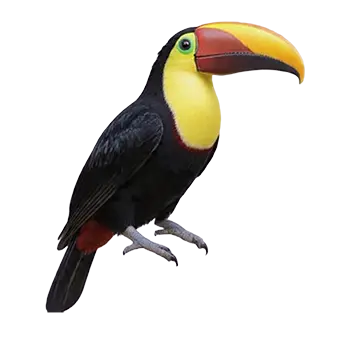

Transporting a Swainson's Toucan requires preparation that begins well before the day of travel. Because toucans are soft-billed frugivores with specialized dietary and environmental needs, the logistics of moving them safely differ substantially from those involved in transporting parrots, finches, or other commonly kept companion birds. The first step in any travel plan is a pre-travel veterinary examination. An avian veterinarian experienced with ramphastids should assess the bird's overall health, confirm that it is fit to travel, and issue any health certificates or documentation that may be required by airlines, state agencies, or destination jurisdictions.
Acclimating the bird to its travel carrier is equally important. Swainson's Toucans are active, inquisitive birds that can become stressed in unfamiliar, confined spaces, so introducing the carrier days or even weeks before the trip allows the bird to explore and settle into the enclosure at its own pace. Placing favorite food items inside the carrier, leaving the door open during acclimation sessions, and positioning the carrier in a familiar part of the bird's living area all help to reduce the novelty and anxiety associated with confinement.
Dietary management in the days surrounding travel deserves careful attention. Toucans produce loose, watery droppings, particularly when their diet is high in fresh fruit, and managing hydration and mess during transit is a practical concern. Some experienced keepers adjust the fruit-to-pellet ratio slightly in the 24 hours before travel to reduce the volume of liquid waste, though this adjustment should be modest and discussed with a veterinarian to avoid any dietary disruption. Providing small pieces of fruit during transit helps maintain hydration and blood sugar, as toucans have rapid metabolisms and limited energy reserves compared to similarly sized seed-eating birds.
Finally, assembling a travel kit ensures that the keeper is prepared for contingencies. This kit should include a supply of the bird's regular diet (both pellets and fresh fruit), paper towels or absorbent liners for the carrier floor, a small water dish that can be secured against spilling, a contact list for avian veterinarians at the destination, copies of all health certificates and CITES documentation if applicable, and any medications the bird takes regularly. Having these items organized and accessible reduces stress for both the bird and the keeper during what can be an inherently disruptive experience.