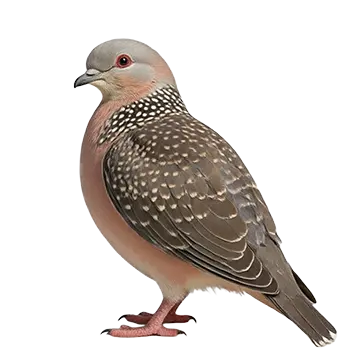

Preparing Your Spotted Dove for Travel

Successful transport of a Spotted Dove begins well before the day of travel. Doves are sensitive to sudden environmental changes, and an unprepared bird is far more likely to experience dangerous levels of stress during transit. The preparation process should ideally begin several weeks in advance, giving both the bird and the keeper time to address health, conditioning, and logistical requirements in a methodical sequence.

A pre-travel veterinary examination is an essential first step. An avian veterinarian can assess the bird's overall health, identify any conditions that might be exacerbated by the stresses of travel, and provide the health certificates and documentation that many carriers and jurisdictions require. During this visit, discuss your travel plans in detail with the veterinarian, including the mode of transport, expected duration, and destination. The veterinarian can advise on any vaccinations, parasite treatments, or prophylactic medications that may be recommended or required for your specific itinerary.

Carrier acclimation is equally important. The Spotted Dove should be introduced to its travel carrier or crate well in advance of the departure date. Place the carrier in the bird's living area with the door open, allowing the dove to explore it at its own pace. Over a period of days or weeks, encourage the bird to spend increasing amounts of time inside the carrier by placing food, water, and familiar items within it. A dove that has come to associate the carrier with routine and comfort will be significantly calmer during actual transport than one that encounters the enclosure for the first time on the day of travel.

Dietary preparation is another consideration that experienced keepers take seriously. In the days leading up to travel, avoid introducing new foods or supplements that could cause digestive upset. Ensure the bird is well hydrated and in good nutritional condition. Some keepers offer a slightly lighter meal on the morning of travel to reduce the likelihood of regurgitation during transit, while still providing enough sustenance to maintain energy levels throughout the journey. Fresh water should be available up to the point of departure and restored as soon as possible upon arrival.

Choosing & Equipping a Travel Carrier

Selecting an appropriate travel carrier is one of the most consequential decisions a Spotted Dove keeper will make in the transport process. The carrier must balance safety, ventilation, security, and compliance with any regulatory or airline specifications that apply to the planned journey. For a medium-sized dove like the Spotted Dove, the carrier should be large enough for the bird to stand, turn, and adjust its position comfortably, but not so spacious that the bird can be thrown about during movement or turbulence.

Hard-sided carriers constructed from durable, non-toxic plastic with secure metal-grated doors are generally preferred for air travel and long-distance ground transport. These carriers provide structural protection against impacts, resist the stacking and handling pressures of cargo environments, and meet the specifications required by most commercial airlines that accept avian passengers. The carrier should have ventilation openings on at least three sides to ensure adequate airflow, and the door mechanism should be robust enough to prevent accidental opening during handling.

The interior of the carrier should be outfitted with a low, stable perch positioned so the dove can grip it comfortably without its tail pressing against the back wall. A non-slip substrate on the carrier floor, such as a layer of paper towels or a textured mat, prevents the bird from sliding during acceleration, braking, or turbulence. Avoid loose substrates such as wood shavings or sand, which can shift during transit and create dust or ingestion hazards. A small, spill-resistant water container attached to the inside of the carrier door provides hydration access without the risk of a large water dish tipping and soaking the bird.

For shorter ground trips, soft-sided carriers or well-ventilated cardboard transport boxes may be acceptable, depending on the specific circumstances and duration of the journey. However, these options offer less protection than rigid carriers and are generally unsuitable for air travel or any transport scenario involving cargo holds, multiple handling stages, or extreme temperatures. Regardless of the carrier type chosen, labeling the outside with clear identification information, a directional arrow indicating the upright orientation, and the words "Live Bird" in visible lettering is standard practice and often a regulatory requirement.

Before the day of travel, inspect the carrier thoroughly for sharp edges, loose components, or gaps through which a small bird could push a wing or foot. Test the door latch repeatedly to confirm that it closes securely and cannot be nudged open by the bird from inside. These precautions, while basic, prevent the kind of in-transit emergencies that are difficult to address once the journey is underway.

Ground Transportation

Ground transport by personal vehicle is the most common method of moving a Spotted Dove over short to moderate distances, whether for veterinary appointments, relocations, or travel to shows and exhibitions. While generally less complex than air travel, car journeys present their own set of risks and considerations that deserve careful attention. Temperature regulation, vibration, noise, and the risk of sudden stops all pose potential hazards to a bird in transit.

Temperature management is perhaps the most critical factor during ground transport. The Spotted Dove, adapted to the warm climates of tropical and subtropical Asia, is sensitive to cold drafts and sudden temperature drops. During cooler months or in regions with significant temperature variation, the vehicle's interior should be preheated before the bird is loaded, and the carrier should be positioned away from direct exposure to air conditioning vents or open windows. Conversely, in hot weather, the vehicle must be adequately cooled and the carrier kept out of direct sunlight. Under no circumstances should a bird be left in a parked vehicle, even briefly, as interior temperatures can reach lethal levels within minutes.

Position the carrier on a flat, stable surface within the vehicle, ideally on the floor behind the front passenger seat or on the rear seat secured with a seatbelt. Placing the carrier on a seat without securing it risks the carrier sliding or falling during braking or turns. The carrier should be oriented so that the ventilation openings face the interior of the vehicle rather than directly toward a window, which can expose the bird to drafts, direct sunlight, and visual stimulation that may increase stress.

During the drive, maintain a smooth, steady driving style. Sudden acceleration, sharp braking, and aggressive cornering can unbalance the bird and increase anxiety. Keep the vehicle's audio system at a low volume and avoid sudden loud sounds such as horn use. If the journey exceeds two hours, consider a brief stop in a shaded, quiet area to check on the bird, offer water, and assess its condition. However, do not open the carrier in an unsecured environment, as a startled dove can escape with remarkable speed and is extremely difficult to recapture outdoors.

For longer ground journeys or professional transport services, some keepers use specialized animal transport companies that operate climate-controlled vehicles equipped for live cargo. These services are particularly useful for interstate or cross-country moves where the journey spans multiple days and the bird will need feeding, watering, and monitoring beyond what a single driver can manage while also operating the vehicle.

Air Travel Policies & Procedures

Transporting a Spotted Dove by air requires careful navigation of airline policies, which vary significantly between carriers and are subject to frequent revision. Most commercial airlines that accept live birds do so only as checked baggage or cargo, not in the passenger cabin. A limited number of carriers may allow small birds in the cabin under specific conditions, but availability is inconsistent and policies can change with little advance notice. Contacting the airline's live animal transport division well in advance of the intended travel date is essential for confirming current policies, understanding documentation requirements, and reserving space for an avian passenger.

Airlines that accept birds typically impose requirements regarding carrier dimensions, construction materials, ventilation, labeling, and feeding and watering provisions. The carrier must usually be airline-approved, leak-proof, and labeled with the shipper's contact information, the consignee's contact information, and directional arrows. Some airlines require a health certificate issued within a specified window prior to departure, often 10 days, and may also require documentation that the bird has been examined by a veterinarian and found fit for air travel. Failure to present the required paperwork at check-in can result in the bird being refused for transport.

Temperature restrictions are a significant operational constraint for avian air travel. Most airlines enforce temperature embargoes that prohibit the transport of live animals when ground temperatures at the departure, arrival, or connecting airports fall below or exceed specified thresholds, typically around 45 degrees Fahrenheit at the low end and 85 degrees Fahrenheit at the high end. These restrictions are designed to protect animals from exposure during the ground-handling phases of the journey, when carriers may be on open tarmac or in uninsulated holding areas. For the Spotted Dove, which is intolerant of cold temperatures, winter travel through northern airports may be impractical or impossible under these rules.

When booking air transport, direct flights are strongly preferred over itineraries with connections. Each layover introduces additional handling, ground time, and environmental variability that increase the cumulative stress on the bird. If a direct flight is not available, choose the routing with the shortest and fewest layovers, and avoid connecting through airports known for extreme weather conditions. Upon arrival, retrieve the bird as quickly as possible and move it to a temperature-controlled environment where it can recover from the journey in quiet, familiar surroundings.

Health Certificates & Quarantine Requirements

Health certification and quarantine protocols represent some of the most important and potentially complex elements of traveling with a Spotted Dove, particularly for international journeys. The specific requirements depend on the origin and destination countries, the species being transported, and the current disease status of the regions involved. Failing to comply with these requirements can result in the bird being refused entry, placed in extended quarantine at the owner's expense, or in extreme cases, euthanized by border authorities.

For domestic travel within most countries, a veterinary health certificate issued by a licensed veterinarian is typically sufficient. In the United States, for example, interstate transport of birds generally requires a Certificate of Veterinary Inspection, commonly known as a health certificate, issued within 30 days of travel. This document certifies that the bird has been examined and found free of signs of communicable disease. Some states impose additional requirements, such as negative test results for specific avian diseases, and keepers should verify the regulations of both the origin and destination states before traveling.

International travel introduces substantially more complex documentation and quarantine requirements. Many countries require an import permit obtained in advance from the destination country's agricultural or veterinary authority. The importing country may also require specific disease testing, such as tests for avian influenza, Newcastle disease, psittacosis, or other reportable avian diseases, with negative results obtained within a narrow time window before departure. The health certificate for international travel must often be endorsed by the national veterinary authority of the exporting country, adding an additional administrative step to the process.

Quarantine upon arrival is a standard requirement in many countries, particularly those with stringent biosecurity regimes such as Australia, New Zealand, and several European Union member states. Quarantine periods for imported birds can range from 30 to 90 days, during which the bird is housed in a government-approved quarantine facility at the owner's expense. During quarantine, the bird is monitored for signs of disease and may be subjected to additional testing. The costs associated with quarantine, including facility fees, veterinary inspections, and feeding, can be substantial and should be factored into the overall cost of international relocation.

Given the complexity and variability of these requirements, engaging a professional animal transport agent or customs broker with experience in live bird shipments is strongly advisable for international travel. These specialists maintain current knowledge of importing country requirements, can coordinate the sequencing of veterinary appointments, testing, and documentation, and can navigate the administrative processes that would be time-consuming and error-prone for an individual keeper to manage independently.

Post-Travel Care & Stress Recovery

The period immediately following travel is a critical phase in the Spotted Dove's experience, and the quality of post-travel care can significantly influence how quickly the bird recovers its normal behavior and physiological equilibrium. Even under the best transport conditions, the combination of confinement, unfamiliar sounds, temperature fluctuations, and disrupted routine creates a cumulative stress load that requires deliberate management during the recovery period.

Upon arrival at the destination, move the bird to its permanent or temporary housing as quickly as practicable. The receiving environment should be quiet, warm, and free from the presence of other animals that might cause alarm. If the bird is being introduced to a new aviary or cage, the enclosure should be fully prepared in advance with appropriate perching, food, water, and shelter so that the dove can begin settling in immediately rather than waiting in its travel carrier while arrangements are made.

Offer fresh water and familiar food items as soon as the bird is placed in its enclosure. Travel often results in some degree of dehydration, and prompt access to clean water is essential. Familiar foods provide both nutritional support and psychological reassurance; this is not the time to introduce new dietary items or experiment with supplements. Observe the bird's feeding and drinking behavior over the first 24 to 48 hours. A Spotted Dove that refuses food or water for more than a day after travel, or that shows signs of lethargy, fluffed plumage, labored breathing, or discharge from the eyes or nares, should be evaluated by an avian veterinarian promptly.

Minimize handling and disturbance during the recovery period. While it may be tempting to interact with the bird to reassure it, most doves recover more quickly when allowed to rest undisturbed in a secure environment. Keep ambient noise levels low, maintain a consistent light-dark cycle, and avoid rearranging the enclosure or introducing new objects for at least several days after arrival. The goal is to reestablish predictability and routine as quickly as possible, allowing the dove's stress hormones to return to baseline levels.

For birds that have undergone international travel involving extended quarantine, the recovery process may be longer and more nuanced. Quarantine facilities, while necessary for biosecurity, are inherently stressful environments for birds that are accustomed to spacious aviaries and consistent human interaction. A dove emerging from a 30- to 90-day quarantine period may exhibit behavioral changes including increased wariness, reduced vocalization, or temporary reluctance to fly. Patient, consistent, and gentle reintroduction to normal housing and social routines is the most effective approach, and keepers should be prepared for a transition period that may extend over several weeks before the bird fully regains its pre-travel demeanor and activity levels.

Always consult a qualified professional before making any health-related decisions. This content is provided for informational reference only and should not replace professional guidance specific to your animal.