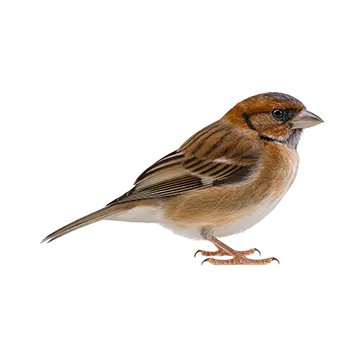

The Society Finch has occupied a steady and prominent position in avicultural literature for well over a century. From the earliest English-language bird-keeping manuals of the late 19th century to the comprehensive breed guides published today, the Society Finch appears with remarkable consistency as a recommended species for beginners and a trusted foster parent for advanced breeders. Early texts such as those by Arthur G. Butler and other Victorian-era naturalists described the Bengalese Finch, as it was commonly known in British publications, with a blend of practical advice and genuine admiration for its cooperative temperament.
Throughout the 20th century, the Society Finch became a staple chapter in virtually every general aviculture handbook published in English, German, Dutch, and Japanese. Authors devoted sections not only to husbandry and breeding but to the bird's unusual status as a fully domestic species with no wild counterpart. This distinction consistently drew commentary from writers who recognized that the Society Finch occupied a unique position in the avian world, more analogous in some respects to domestic dogs or cattle than to other caged birds that retained wild-type behavior and could, theoretically, survive if released.
Specialized finch-keeping publications gave the Society Finch even more detailed treatment. Journals such as those produced by the National Finch and Softbill Society in the United States and the Foreign Bird Federation in the United Kingdom regularly featured articles on Society Finch color genetics, breeding strategies, show standards, and fostering techniques. These publications served as both technical references and community-building tools, connecting breeders across geographic boundaries and establishing the Society Finch as a serious subject of study rather than a mere beginner's bird.
The Japanese-language avicultural tradition, which gave rise to the Society Finch in the first place, has produced an especially rich body of literature on the species. Japanese breeders have documented color mutations, lineage records, and breeding methodologies with a level of detail and rigor that reflects the deep cultural significance of bird keeping in Japan. These texts, while largely inaccessible to English-speaking audiences without translation, represent some of the most thorough and historically grounded writing on the Society Finch anywhere in the world.